United States – Iran: Between peace and war




Editor’s note: Moses Becker is a special political commentator for News.Az. He holds a PhD in political science and specializes in interethnic and interreligious relations. The views expressed in this article are the author’s own and do not necessarily reflect the position of News.Az.
History is repeating itself, and in this case, not after many years, as is often the pattern, but within less than a year. In 2025, on the eve of the June war, the United States and Iran were also engaged in indirect negotiations in Muscat, the capital of Oman, over the Islamic Republic’s nuclear and missile programs. At that time, both sides projected cautious optimism. Iran appeared to hope the issue could be drawn out in endless talks, while Israel and the United States were actively preparing a preventive strike against nuclear infrastructure, missile launch sites, and the Islamic Republic’s air defense systems.
Today, we are witnessing a mirror image of that earlier scenario. The only difference is that this time the United States has concentrated significantly larger forces in the region, and Israel, having taken into account the shortcomings of its previous strike, has prepared for an even more devastating one. It can be assumed that the current objective is to combine internal opposition activity with external pressure and with those elements within the Iranian military that may be prepared to support the public.
RECOMMENDED STORIES
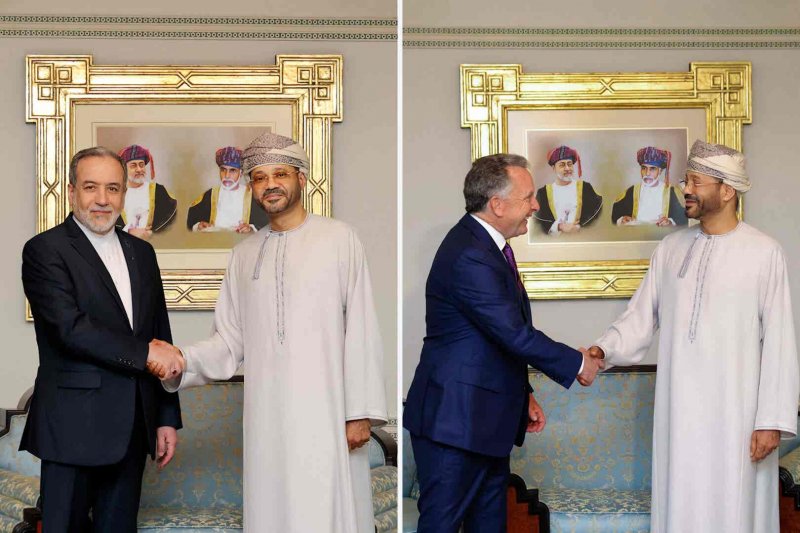
Thus, on Friday, February 6, 2026, at the insistence of the Islamic Republic of Iran, indirect negotiations between the United States and Iran once again began in Muscat instead of Istanbul, the venue proposed by Sunni countries. The format followed the now-familiar pattern. The position of the Iranian leadership has changed little compared to last year. According to RIA FederalPress, during the talks “Iran insisted on discussing only nuclear issues and emphasized its right to the peaceful use of atomic energy. The Americans, in turn, demanded a moratorium on uranium enrichment, restrictions on the range of ballistic missiles, and the cessation of support for regional allies.”
Immediately after the meeting, the United States imposed sanctions on 15 organizations and individuals linked to Iran’s oil sector in order to increase pressure on Tehran. These measures demonstrated a clear lack of confidence in the dialogue’s outcome. As noted by The Jerusalem Post, one Israeli military official described the current moment as a “historic opportunity” to deliver a crushing blow to the Islamic Republic’s missile infrastructure in order to neutralize threats to Israel and neighboring states.
On February 6, the United States and Iran held negotiations mediated by Oman. Although both sides assessed the talks positively and agreed to continue consultations, significant disagreements remain. Tehran stated that it is prepared to reach a reliable agreement on uranium enrichment without a total ban but refused to negotiate its missile program, calling it a “defensive matter.” President Donald Trump stated that a condition for any acceptable deal for the United States is that Iran have “no nuclear weapons.”
Two days before the negotiations, in what appeared to be an attempt to intimidate the United States and its Middle Eastern allies, Iran unveiled an underground missile complex and the long-range Khorramshahr-4 ballistic missile. At the same time, an adviser to the Supreme Leader issued a firm response to perceived threats and hinted that the country is prepared for military conflict.
In response, Israeli Prime Minister Benjamin Netanyahu declared his readiness to carry out a large-scale strike against Iran — and these are not empty threats. According to The Jerusalem Post, Israeli officials directly informed their American counterparts of their position and outlined their red lines regarding ballistic missiles. Israeli military officials have already presented the United States with several possible operational scenarios, including strikes on key missile production facilities. One senior official described the current moment as a “historic opportunity” to inflict serious damage on Iran’s missile infrastructure.
How realistic this scenario is may become clearer following Prime Minister Benjamin Netanyahu’s visit to the United States on February 11, when he is scheduled to meet with President Donald Trump. According to a statement from the Israeli Prime Minister’s Office, Netanyahu believes that “any negotiations must include restrictions on Iran’s ballistic missiles.”
Axios described Netanyahu’s visit as “urgent,” noting that it had originally been scheduled for February 18. In January, President Trump, as a precaution, dispatched an “armada” to the Middle East led by the aircraft carrier USS Abraham Lincoln and called on Iran to agree to a nuclear deal. Otherwise, the White House warned, the country would face an attack “far more powerful” than the one in the summer of 2025.
According to The Wall Street Journal, the United States is strengthening its air defense capabilities in the Middle East to protect its forces and regional allies in the event of a retaliatory Iranian strike. Judging by these actions, the parties do not appear to be counting on a mutually acceptable agreement, despite publicly describing the talks as positive and agreeing to continue consultations.
Tehran has stated that it is prepared to reach a reliable agreement on uranium enrichment without a complete ban but has refused to negotiate its missile program, describing it as a “defensive matter.” President Trump has stated that any acceptable agreement for the United States requires that Iran possess “no nuclear weapons.” In addition, the Islamic Republic is being required to halt efforts to upgrade its missiles and reduce their range to a level necessary solely for territorial defense.
If Tehran refuses to meet these conditions, President Trump may conclude that only one option remains: to swiftly and decisively defeat Iran by eliminating its spiritual and political leadership. Notably, even countries that until recently opposed the overthrow of the Islamic regime are now calling for decisive action.
On Friday, February 6, during a visit to Washington, Saudi Defense Minister Prince Khalid bin Salman Al Saud — son of King Salman and brother of Crown Prince Mohammed bin Salman — stated during a closed White House meeting that if Donald Trump fails to carry out his threats against Tehran, the Iranian regime will ultimately become stronger and more dangerous. Axios reported this, citing four sources present at the meeting.
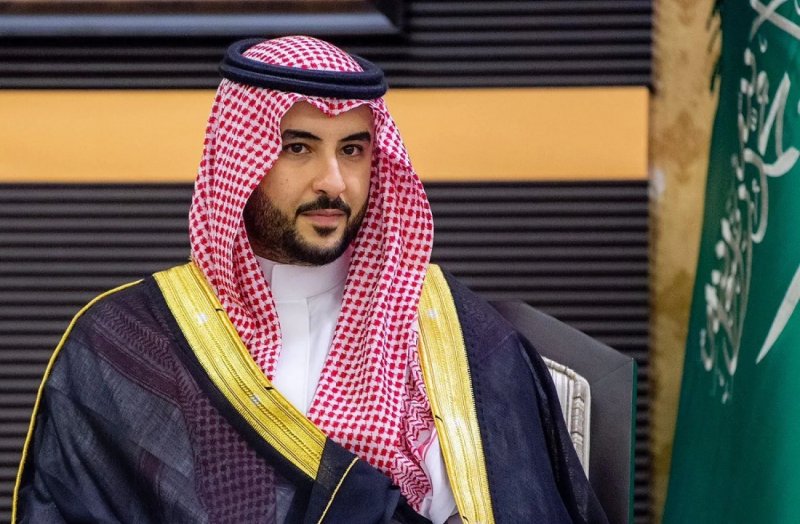
This illustrates how significantly Riyadh’s position has shifted compared to its earlier public statements, when Saudi Arabia opposed “escalation.” One may recall the “deep concern” expressed by Crown Prince Mohammed bin Salman to Trump three weeks earlier. According to the U.S. president, that warning was one of the reasons he decided to postpone a strike on Iran.
One reason for the shift in the Saudi leadership’s position appears to be the recognition that if the regime of the ayatollahs survives, it will quickly rebuild its military capabilities, resume uranium enrichment, fully suppress internal opposition, and once again threaten neighboring states through Hezbollah, Ansar Allah, and other proxies.
Moreover, it should be understood that under President Trump, there is a perceived opportunity to definitively remove the threat posed by Iran in the Middle East, a state that seeks to establish Shiite hegemony across the Islamic world.
(If you possess specialized knowledge and wish to contribute, please reach out to us at opinions@news.az).


Similar news