U.S. Arctic strategy enters new era: Intensifying race with Russia and China


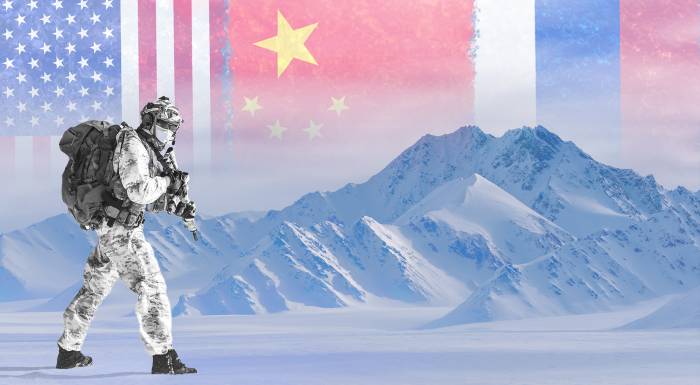
Photo: trendsresearch.org
By Samir Muradov
On January 6, 2026, the U.S. Coast Guard officially announced the commissioning of the icebreaker supply vessel Aiviq, renamed CGC Storis. At first glance, this event might seem routine, but in reality, it reflects significant shifts in the United States' Arctic strategy. After over 25 years of stagnation in icebreaker construction, America is taking critical steps to strengthen its presence in the Arctic. Amid intensifying competition from Russia and China, and given the region's historical significance, modernizing the U.S. icebreaker fleet serves not only as a military upgrade but also as a political statement.
The U.S. icebreaker fleet is, to put it mildly, lacking. At the time of the decision to acquire Aiviq, the fleet's primary operational vessels consisted of two aging icebreakers: Healy, commissioned in 1997, and Polar Star, built in 1973. Both ships have long been due for replacement.
In contrast, Aiviq was constructed relatively recently, in 2012, originally intended for civilian purposes such as towing, anchor handling for drilling rigs, and oil spill response. Despite its limited suitability for military operations, acquiring Aiviq became a necessity. The $125 million contract includes restoration, modifications, crew training, spare parts supply, and testing. This will enable the CGC Storis to patrol Arctic waters starting in 2026.
The Arctic race: Russia, China, and the U.S.
Year by year, the Arctic is becoming an increasingly significant arena for international competition. Russia remains the undisputed leader in this region, boasting the world's largest icebreaker fleet, including nuclear-powered vessels such as the Leader. The Northern Sea Route (NSR), actively developed by Russia, is emerging as a vital transport corridor linking Europe and Asia. Meanwhile, China, positioning itself as a "near-Arctic state," is heavily investing in regional infrastructure and scientific research.
Against this backdrop, the U.S., long indifferent to the Arctic, has found itself playing catch-up. It was not until 2023 that construction began on the first heavy icebreaker in half a century at the Bollinger Shipbuilding yard as part of the Polar Security Cutter (PSC) program. A key milestone was the signing of the ICE Pact in 2024 between the U.S., Canada, and Finland, aimed at advancing icebreaker technology cooperation. However, these efforts fall short of matching Russia and China's capabilities.
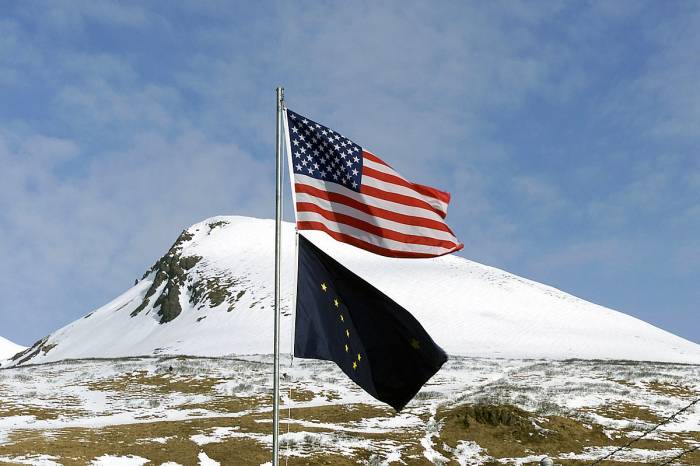
Photo:egmontinstitute.be
The role of Canada and Greenland in U.S. strategy
Canada holds a special place in the U.S.' Arctic strategy. In recent years, it has taken steps to strengthen its icebreaker fleet. Notably, in 2023, the icebreaker Vincent Massey was commissioned, and control over the Finnish Helsinki Shipyard Oy opened new opportunities for Arctic technology development. However, despite these achievements, the size and capabilities of Canadian icebreakers remain limited compared to those of Russia.
U.S.-Canada cooperation in the Arctic region has deepened following the ICE Pact, but the Trump administration may elevate it to a new level. Among Trump's proposed initiatives is the potential annexation of Canada by the U.S., which would not only be a geopolitical bombshell but also a strategic move to bolster Arctic dominance.
Greenland also plays a crucial role in U.S. Arctic policy. During his first presidency, Trump proposed acquiring Greenland from Denmark. If realized, this scenario would give the U.S. access to the Northwest Passage, an alternative to Russia's NSR. Moreover, control over Greenland would provide a strategic advantage in relations with Europe, which would weaken without access to Arctic resources.
Impact on global politics
The development of the U.S. Arctic fleet is closely tied to global political shifts. During Biden's presidency, Arctic initiatives slowed somewhat, but Trump's return could reinvigorate them. His team, which includes ambitious figures like Elon Musk, has already expressed interest in territorial expansion and accelerating icebreaker fleet modernization.
These initiatives could lead to significant changes on the global stage. The U.S. might shift its focus from the conflict in Ukraine to developing northern regions. In turn, Russia might consider concessions in the Arctic in exchange for reduced NATO pressure. Such a redistribution of power and interests could fundamentally reshape the political landscape of Europe and Asia.
Historical symbolism
An intriguing aspect of the new U.S. Arctic policy is the symbolic significance of the name Storis. The first vessel bearing this name served the Coast Guard for 65 years and participated in Arctic operations during World War II. The new Storis is intended to continue this tradition, acting as a counterweight to the growing influence of Russia and China in the region.
The commissioning of CGC Storis and the modernization of the U.S. icebreaker fleet represent more than a technological advancement—they are part of a larger geopolitical strategy. The U.S. seeks to strengthen its Arctic presence, which will inevitably escalate competition with Russia and China. Meanwhile, domestic political changes linked to Trump's return could accelerate these processes, potentially creating a new center of power in the northern latitudes.
The Arctic race is only beginning, and its outcomes will have far-reaching consequences for global politics. The question remains whether the U.S. can realize its ambitions and regain leadership in a region that is becoming central to the future of the global economy and security.


Similar news