US punishes Georgia


By Sabina Alizade
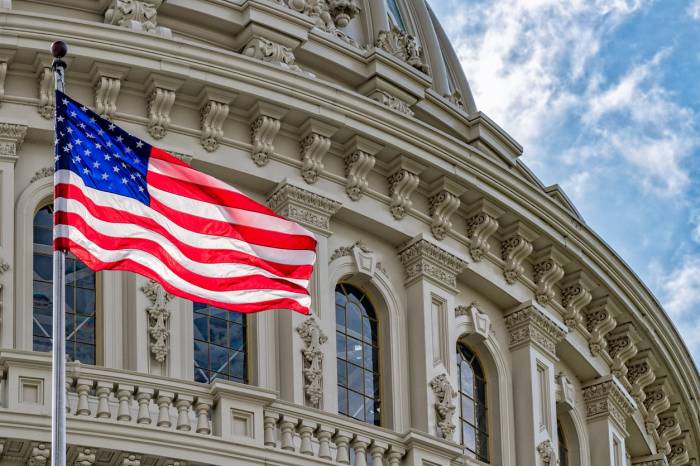
In response to Georgia's new "transparency of foreign influence" law, the United States has decided to suspend financial aid to the country amounting to over $95 million. This decision, announced by Secretary of State Antony Blinken, marks a significant turning point in U.S.-Georgian relations and could have substantial implications for Georgia's foreign economic policy.
On May 14, 2024, the Georgian Parliament approved a law requiring non-governmental organizations and media outlets funded from abroad to register in a special registry and publish financial reports. This move came amid growing concerns over the influence of foreign NGOs on Georgian politics and domestic affairs.The law sparked heated reactions both within the country and internationally. Georgian President Salome Zurabishvili vetoed the law, but the Parliament overrode this veto, and the law came into effect. In June, Parliament Speaker Shalva Papuashvili outlined the deadlines for developing regulatory acts for the law, and in July, Justice Minister Rati Bregadze announced the creation of a registry for the registration of organizations starting August 1.
U.S. Reaction - On May 23, 2024, Antony Blinken announced a review of bilateral cooperation between the U.S. and Georgia. As a result, a decision was made to suspend the aid allocated to the Georgian government. Blinken emphasized that the actions of the Georgian government contradict the norms of EU and NATO membership and reflect serious disagreements with Washington on issues of democracy and human rights.
Despite the suspension of aid, the U.S. continues to support programs aimed at strengthening democracy, the rule of law, and independent media in Georgia. This demonstrates America's commitment to supporting the Georgian people even amid political disagreements.
Reaction of the Georgian Authorities - The Georgian government expressed concern and criticism over the U.S. decision. Prime Minister Irakli Kobakhidze described the statements by American officials as blackmail and reminded that the U.S. had not imposed sanctions even when human rights violations were evident in the past. He stated that the decision to halt aid is politically motivated and aims to pressure Georgia.
It is also noteworthy that the foreign agents law has strained Georgia's relations not only with the U.S. but also with the European Union. The EU expressed concern over the new legislative initiative and its potential negative impact on democratic institutions.
The suspension of U.S. aid could significantly impact Georgia, given its reliance on international support to strengthen democratic institutions. The lack of substantial financial assistance may hinder the implementation of several social and economic programs, which could negatively affect the country's internal stability.
On the international stage, worsening relations with the West could affect Georgia's reputation as a reliable partner and complicate its integration into the EU and NATO. It may also push Tbilisi to seek new international partnerships and alliances.

Historian and political expert Rizvan Huseynov told News.Az that the U.S. actions are a clear example of Western double standards. He noted that Armenia significantly lags behind Georgia in establishing democratic institutions.
"We know that during the Kocharyan-Sargsyan era, Armenia was completely dependent on Russia, and now, under Pashinyan, it has supposedly chosen the path of democracy. From the standpoint of democratization and institutionalization, Georgia is more integrated with the West. However, the current Georgian government did not follow some directives from Washington and the EU, which led to Western dissatisfaction. Georgia, which was praised for its democratic achievements, is now out of favor for defending its national interests. We see this pattern throughout history: countries that start to protect their interests are labeled as dictatorships, while countries like Armenia, sacrificing their interests, are considered democratic," Huseynov said.
The expert also pointed out that Armenia is involved in gray schemes with Russia, and goods subject to sanctions are reaching global markets through Armenia.
"The West turns a blind eye to this and instead increases financial support for Armenia because it serves Western interests in the South Caucasus and destabilizes the region. Unlike Armenia, Georgia plays a crucial role in regional security within the Azerbaijan-Georgia-Turkey trio. However, as it began to defend its national interests, it found itself on the West's blacklist. The decision to halt funding results from the influence of Democrats in power in America. Democrats, who have traditionally maintained positive relations with Armenia, such as Joe Biden, who is also one of the leaders of the Armenian caucus in America, play a significant role in shaping these decisions," the expert said.
Rizvan Huseynov expressed hope that if Republicans come to power, the West would adopt a more positive attitude toward Georgia and Azerbaijan.
"For Armenia, the situation could worsen. In this transition period, Georgia is heading into elections in the fall, and the West, the ruling Democrats, and their like-minded partners in Brussels are trying to create pressure for the elections in Georgia to turn into unrest. They will strive to ensure that political circles promoting their interests form the government or come to power," the expert said.
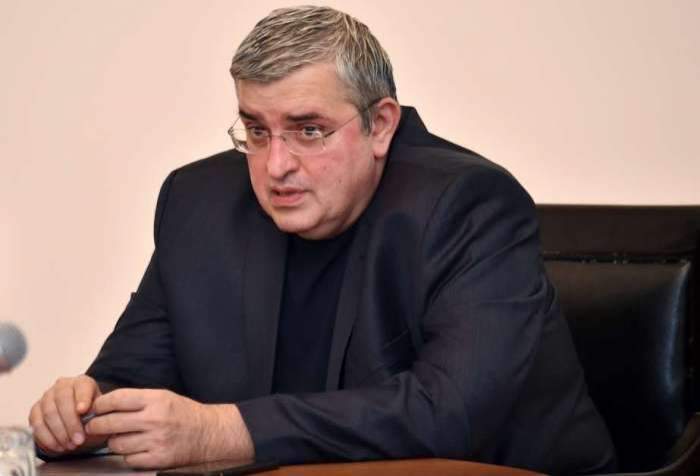
Georgian political analyst Gela Vasadze told News.Az that the actions of the Georgian authorities openly demonstrate a refusal to cooperate with the current U.S. administration, which they call a party to the global war.
"Under these conditions, any form of cooperation, especially military cooperation, is impossible. This is the choice of our government. The law is only an indicator of the general trend. I assume that after their victory in the elections, our authorities will try to revise everything, but whether this will be possible remains a question," the political analyst said.


Similar news