What awaits Moldova after Sandu's victory


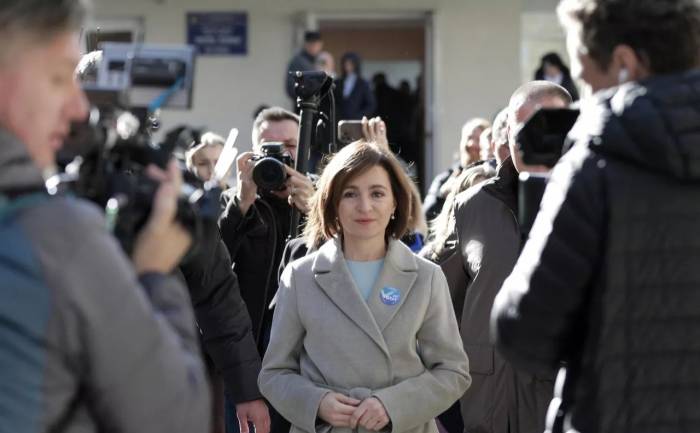
Maia Sandu's victory in the elections and the loss of her competitor A. Stoianoglo are not only a reflection of political rivalry but also a testament to profound shifts within Moldovan society.
How Sandu managed to secure the support of the Western diaspora, the impact of limiting Russian diaspora participation on the election results, and the continued importance of the European direction for Moldova are all examined in the context of the upcoming parliamentary elections, which could shape the country's future.Why did Maia Sandu win?
Ironically, Sandu lost among voters residing in Moldova, garnering 48.81% of the votes, while her opponent, A. Stoianoglo, representing Kremlin interests, secured 51.19%. Sandu’s victory was achieved solely through the support of the Western diaspora, with an overall 55.35% of the vote (930,238 votes). Her opponent received 44.65% (750,370 votes).
The reasons for her loss domestically were outlined in our previous article (failed judicial reforms, rising corruption, lack of economic growth and improvement in people’s lives, misuse of European credits and grants, etc.). Nevertheless, despite these unfavorable factors, Sandu still emerged victorious. There are several reasons for this, which we will outline below.
Firstly , the Moldovan diaspora living in Western countries, despite their significant disappointment with the results of three years under Sandu and the PDS, remains largely (up to 80%) convinced of Moldova's irreversible path toward the West. Unambiguous support from EU and U.S. politicians for Sandu signaled to them that, despite their differences with her, she still needed their support this time, as Stoianoglo’s victory could mean a turn towards Russia, economic and political isolation, sanctions, a retreat from European prospects, and a gradual decline of the nation—an outcome that the "European" diaspora, many of whom still hope for positive change in Moldova and the chance to return home, firmly opposes.
Secondly, the Russian diaspora, which is almost as numerous as the European one (at least 500-600 thousand people), was largely excluded from the voting process. This diaspora, influenced by both personal beliefs and Russian propaganda in Moldova and Russia, is predominantly pro-Russian, skeptical of the EU and U.S., and solidly supports the "Russian vector." Only two polling stations were set up in Moscow (with a limit of 10,000 ballots), which couldn’t significantly impact the election results. If this part of the Moldovan diaspora had fully participated, the results could have been disastrous for Sandu. Thus, they were largely barred from voting. Another reason for restricting their participation was the ongoing Russian propaganda campaign against the current Moldovan government. Ensuring control over numerous polling stations across Russia would have been impossible for Moldovan authorities, creating opportunities for massive vote-rigging in favor of pro-Kremlin candidates led by Stoianoglo.
Thirdly, the ruling PDS succeeded in mobilizing its core activists and leading political figures, who frequently traveled to Western countries, urging fellow citizens to vote for Sandu, regardless of their personal opinion of her.
Fourthly, the Western press and EU politicians played a significant role by being openly supportive of Sandu and refraining from sharp criticism of her.
Fifthly, Sandu also benefited from the fact that pro-Russian forces, despite attempts to organize entire flights of Moldovan voters from Moscow to Minsk, Baku, and Ankara to vote against her, remained fragmented and failed to reach a compromise even during the election period.
As we see, there were more than enough reasons for Stoianoglo's failure, clearly explaining why he lost the presidential election. However, his political future remains bright. He still faces no criticism from Moldova’s left-wing forces, and there is a possibility that the Socialist Party may nominate him as the “flag-bearer” for their faction in the parliamentary elections in the fall of 2025.
What has happened to Moldova’s path toward the EU?
The results of the referendum on constitutional changes aimed at aligning Moldova with EU requirements, which showed a marginal victory for pro-Western supporters over opponents (50.35% vs. 49.65%), should not be disheartening. Moldova has always had a large number of Western supporters under any administration, especially as the diaspora in EU countries has grown.
This is a natural process for Moldova. Under right-wing, pro-Western administrations, support for the West traditionally declines as voters observe the shortcomings of their policies and compare them unfavorably with the West. Conversely, under left-wing rule, Western supporters rally, and their numbers grow as pro-Russian forces often evoke memories of the past and attempt to restore connections, even symbolically, with former USSR countries, particularly Russia. This approach triggers strong resistance among much of the population, renewing their desire to look Westward. It’s also notable that even many leftist Moldovan politicians are keen on expanding ties with the West and enjoy visiting there (though they are met with growing skepticism due to the ongoing Ukraine war). They also frequently acknowledge the EU's positive aspects.
These factors suggest that the ambivalent results of the October 20, 2024 referendum stem more from dissatisfaction with Sandu's policies than from a rejection of the EU. The EU remains a guiding star for Moldovan citizens and is strongly supported by the Moldovan diaspora in EU countries, with whom close ties are maintained. Thus, in the near future—after the fall 2025 parliamentary elections, which are likely to see a surge in left-wing deputies, leading to a coalition government (possibly PDS + “Our Party” with Sandu’s control over the Socialist Party's spoiler R. Usatyi, or other configurations involving pro-Russian sympathizers)—the number of European vector supporters in Moldova will likely rise again. Therefore, there is no need to worry about the future of Moldova’s European course.


Similar news