What benefits will Azerbaijan gain from building a nuclear power plant?


By Sabina Alizade
The idea of building a nuclear power plant in Azerbaijan originated during the Soviet era.
The proposed site for the nuclear power plant was chosen in the village of Navahi in the current Hajiqabul District, taking into account strategic and technical aspects. However, the collapse of the Soviet Union led to the suspension of the project, and only now, after many years, it is becoming relevant again.
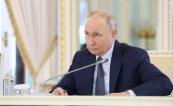
The proposal to revive the project was made during President Ilham Aliyev's visit to Moscow, when Russian leader Vladimir Putin supported the idea of building a nuclear power plant in Azerbaijan. This step initiated a new phase in discussions and raised the question of whether the country needs additional power capacity in the energy sector.
The main motivation for reviving the project is the outdated condition of the Mingachevir power plant, which not only has become unusable but also significantly harms the environment. In this context, the need for a new, modern, and environmentally friendly power plant is growing.
However, the implementation of this project faces several challenges and obstacles. Firstly, it is necessary to overcome financial problems related to the construction and operation of a nuclear power plant. In addition, safety issues and environmental risks require serious attention and the provision of appropriate safeguards and control measures.
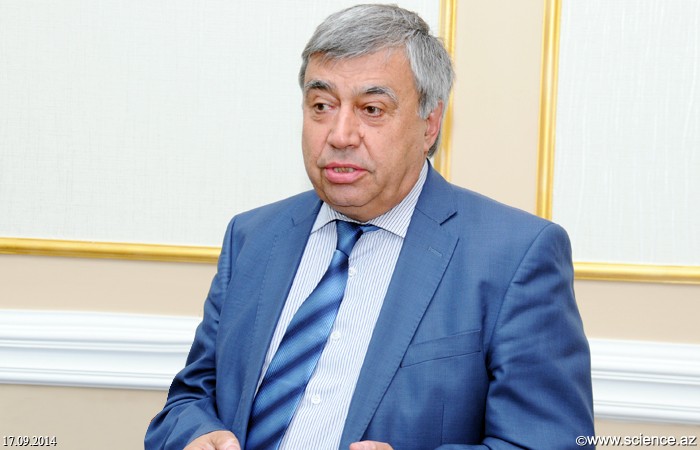 According to Adil Garibov, director of the Institute for Radiation Problems of the National Academy of Sciences of Azerbaija n, the history of using nuclear energy began in 1954. The world's first nuclear power plant was built in Obninsk, Russia, in 1954 (with a capacity of 5 MW). The main energy source in a nuclear power plant is a nuclear reactor, where a chain reaction causing the fission of certain heavy elements occurs.
He noted that the use of nuclear energy increased sharply before 1986, but after the Chernobyl disaster in 1986, a period of stagnation began with a decrease in the share of nuclear power plants. This process continued until about 1990-1992. Development resumed in 1992, but in 2011, a disaster occurred at the Fukushima nuclear power plant in Japan, after which it was decided to create a new type of nuclear power plant with a passive accident protection system.
"Accidents at nuclear power plants most often occur due to temperature rises. The cause of the Chernobyl disaster was an unauthorized experiment in the reactor. Graphite was used as a neutron moderator, and since the reactivity coefficient of this reactor was positive, it made it very dangerous. New generation reactors (generation 3+) have already been built in Belarus and Turkey, and their safety has been enhanced," the expert said.
The process of applying nuclear energy in Azerbaijan began in 1969 after the country joined international programmes for the peaceful use of nuclear energy. In 1982, a decision was made to build a nuclear power plant consisting of four units, each with a capacity of 1000 MW, near Navayi village outside Baku. However, after the Chernobyl disaster in 1986, the project was halted at the behest of Gorbachev. In subsequent years, the use of nuclear energy for power generation was abandoned following the actions of public organizations like the European Seniors' Union.
The sale of electricity is one of the priority contracts. Azerbaijan is a country with energy resources, including carbon and methane reserves. Despite the presence of these resources, Azerbaijan has decided to contribute to green energy. The construction of the Garadagh solar power plant emphasizes its participation in this field. Azerbaijan responds to international calls to reduce carbon emissions and participates in COP29 to showcase its green projects.
Adil Garibov stated that in the context of responsibility for the use of nuclear energy, it is important to note that the use of nuclear energy in Azerbaijan is becoming inevitable and necessary. This is confirmed by the research results presented five years ago. The construction of 1000 MW nuclear power plants will reduce the use of carbon-based fuel and lower carbon dioxide emissions. This will also increase revenue from the sale of electricity. We produce 6 billion kilowatt-hours of energy annually in a 1000 MW plant. To produce this much energy, we can save approximately 700-800 million dollars annually from the sale of gas. If we sell this energy for 2-3 dollars, we can earn $1 billion annually. Considering that the construction and commissioning of a 1000 MW nuclear power plant costs $4.8 billion, we can recoup the capital invested in 4-5 years, at the very least 5 years.
"Modern reactors have a service life of 60-65 years, which ensures long-term benefits from nuclear energy investment. Within the next 4-5 years, you can expect the return of the invested capital. It is important to emphasize that nuclear energy will help diversify the country's energy complex and ensure stable energy supply," he noted.
Among the advantages of nuclear energy ethics are the lack of emissions and pollution, and the long-term use of uranium-238, which is sufficiently abundant in nature. However, it is necessary to ensure the supply of raw materials for nuclear power plants, as uranium-235 and uranium-238 are not universally available. International organizations such as the IAEA oversee this issue.
Focusing on the cooling process, the expert noted that the cooling system plays a crucial role in preventing accidents at nuclear power plants. In the future, it is planned to use metals as coolants, which will enhance safety. Third and fourth-generation reactors have high safety due to water cooling, and the use of seawater for cooling requires special treatment because of its corrosive effects on technical systems.
"Despite potential safety issues, attention has recently shifted to nuclear energy due to its high efficiency and accessibility. However, with the development of third and fourth-generation reactors and the lessons learned from the Fukushima disaster, safety concerns have diminished.
The current energy system, based on the burning of carbon-based fuels, is one of the main causes of global warming. This leads to glacier melting, rising ocean levels, and frequent natural disasters. Although alternative energy sources such as solar and wind energy seem to be a solution to the problem, their efficiency is limited.
For this reason, nuclear energy is back in the spotlight. The 28th decision of the Climate Conference highlights the need to increase the use of nuclear power plants and nuclear energy gas by at least 3-4 times in the next five years. In this context, Azerbaijan stands out as a country always at the forefront of developing new technologies. The President of Azerbaijan has signed a wind-hydrogen energy ethics pact with Romania and Bulgaria, demonstrating the importance of developing sustainable energy sources.
Thus, returning to nuclear energy not only helps address the global warming issue but also ensures a stable and efficient energy source for future generations.
Energy sales were one of the first contracts for Azerbaijan. The Garadagh solar power plant was built. Despite having significant carbon and methane reserves, the country responded to the international community's call to enter the green energy business.
Carbon and carbon dioxide emissions are a serious problem, and Azerbaijan aims to reduce them. Participating in COP29 provides an opportunity to showcase achievements in the field of green energy and discuss the use of nuclear energy.
The use of nuclear energy to reduce carbon dioxide emissions and ensure a stable energy supply is becoming a necessity. Calculations show that nuclear energy can create significant benefits, making it a cost-effective solution for the country. Azerbaijan is actively exploring its opportunities. Russian-type reactors are considered the most reliable and high-quality.
The construction of nuclear power plants will help ensure a stable energy supply and reduce dependence on hydrocarbons, water, sun, and wind. The responsible use of nuclear energy involves creating the necessary conditions and processes to ensure safety. If we use wind and solar energy as an energy-saving system, the more we use them, the less we need fuel, including nuclear energy. Currently, nearly 90% of the main thermal energy in the country is produced using nuclear energy.
Azerbaijan is actively committed to reducing carbon dioxide emissions by joining international conventions. In this context, the development of nuclear energy in the country is of great importance.
However, the presence of nuclear energy in Azerbaijan's neighbours, particularly Armenia, may create potential risks in the future, including the possibility of using advanced nuclear technologies for military purposes. This situation underscores the necessity for Azerbaijan to develop its nuclear technologies.
It is planned that the share of nuclear energy in the country's energy system will significantly increase in the coming years, reaching 27-30%.


Similar news