Why the division of Gaza could become the Middle East’s next frozen war


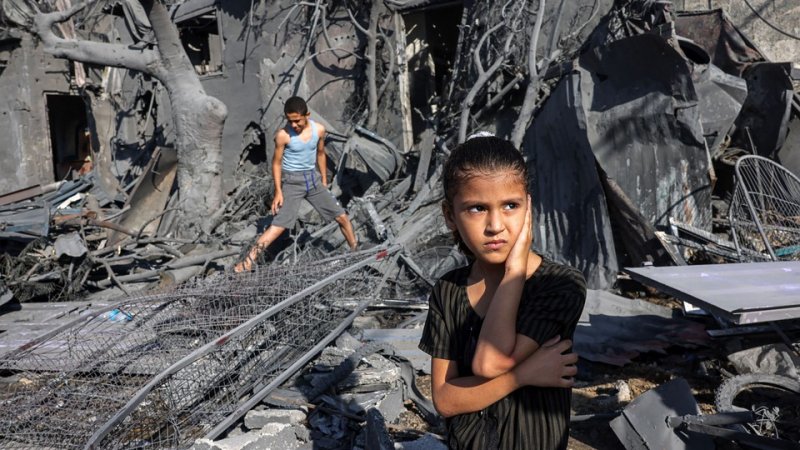
The Middle East may be approaching one of its most dramatic and controversial developments in decades — the de facto division of Gaza between Israel and Hamas. What was once dismissed as speculation is now increasingly discussed by diplomats and international observers. According to Reuters, at least 18 officials, including Europeans directly involved in mediation, have acknowledged that the idea of partition is not merely theoretical but a genuine plan circulating within diplomatic circles.
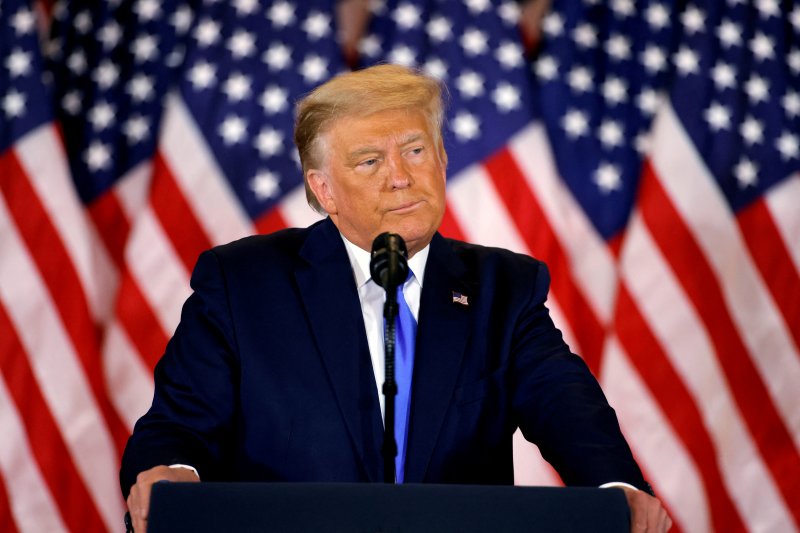
The shift in tone follows the collapse of Donald Trump’s peace plan, once touted as a roadmap to stability. In reality, it has produced more uncertainty than hope. Now, instead of reconciliation, the region may face an outcome that freezes the conflict rather than resolves it: a divided Gaza, two administrations, and a fragile ceasefire that could collapse at any moment.
The so-called plan for a “New Gaza,” the portion under Israeli control, is causing anxiety throughout the Arab world. As one Arab diplomat told The Financial Times, such a project would “look catastrophic,” creating the impression that the reconstruction effort is being carried out for Israel, not the Palestinians. That blunt statement reflects a deeper truth: no Arab state wants to finance a political arrangement that turns Gaza into a limbo — neither war nor peace, just another frozen front line.
And that is precisely what may happen. According to multiple sources, under the U.S.-backed framework, international donors would channel funds only to the areas of Gaza not controlled by Hamas. The rest would remain isolated and deprived of reconstruction assistance. For many Arab governments, this looks less like peacebuilding and more like quiet segregation — an arrangement that legitimizes Israel’s territorial gains without addressing Palestinian sovereignty.
Israel’s military already controls more than half of the enclave — roughly 53 percent of Gaza’s land — most of it emptied of its original population. The two million residents have largely moved south into Hamas-controlled zones. Yet even this demographic shift has not clarified the next steps. Trump’s plan assumes that both sides will eventually agree on firm security guarantees and timelines. None of that has happened. The deadlines are undefined, the procedures vague, and the political will absent.
In theory, Israel should later withdraw from the so-called “yellow line” — the boundary now separating zones of control — and transfer authority to an international peacekeeping mission. But such an outcome looks increasingly utopian. The Israel Defense Forces have made it clear they will not leave until Hamas is fully disarmed. Hamas, in turn, refuses to surrender its weapons or authority. The yellow line, then, risks becoming a permanent border between “New Gaza” and “Old Gaza” — a border that will symbolize unfinished war, not peace.
Washington continues to promote the plan with optimism but few specifics. In October, Donald Trump told reporters that stabilization forces would be deployed “fairly quickly,” yet he could not name a single date. Egypt is expected to lead the mission, though no country has formally confirmed troop contributions. Türkiye has expressed readiness to join, but Israel’s objection is categorical. Azerbaijan, mentioned among possible participants, has set a clear condition: any deployment must operate under a United Nations mandate.
So far, the only tangible result of Trump’s peace effort has been the exchange of prisoners and hostages — an important but modest achievement compared to the vast political ambition of the original proposal. The real challenge lies ahead: rebuilding Gaza. The United Nations estimates that this will require around $70 billion, an astronomical sum even by Gulf standards.
The U.S. hopes the wealthy monarchies of the Gulf will foot the bill. Vice President J.D. Vance has said publicly that these states will bear the main financial burden, while Washington’s role will be limited to “diplomatic participation.” But such diplomacy costs nothing and offers little.
Saudi Arabia, facing declining oil revenues, has ended its policy of unconditional grants. The United Arab Emirates demands political clarity and Hamas’s disarmament before releasing funds. Qatar, meanwhile, insists on firm guarantees that Israel will uphold any agreement.

These conditions expose the core problem: the Middle East is too unstable for anyone to gamble billions on another untested peace formula. Without credible guarantees — military, political, and moral — no donor will invest in Gaza’s reconstruction. The United States, despite its grand rhetoric, appears unwilling to shoulder that responsibility.
The region’s fragile calm could collapse at any moment. Israel is determined to maintain its security perimeter, and after the trauma of October 7, 2023, there is no appetite in Tel Aviv for compromise. Hamas, emboldened by growing international sympathy and a sense of survival, refuses to yield. Both sides believe time works in their favor, yet time is precisely what Gaza no longer has.
Meanwhile, reports suggest Washington plans to build a military base near the Gaza border, officially for peacekeeping coordination, though some sources say it will be a U.S.-operated installation with thousands of troops and half a billion dollars in funding. The Pentagon remains silent, but the symbolism is striking: America is preparing for a long stay, not a quick peace.
The risk now is that “temporary” arrangements will become permanent. The partition of Gaza may stabilize the conflict for a year or two, but it will not bring peace. It will only formalize division — political, geographic, and human. If that is the future envisioned by Washington and Tel Aviv, the world must ask: is this peace, or just a new map for the next war?
By Tural Heybatov


Similar news