Will Donald Trump continue to build an Arab Nato or change policy over the Middle East?


.png)
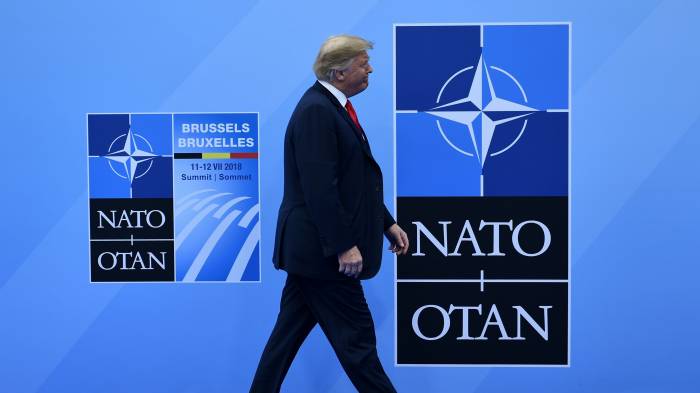
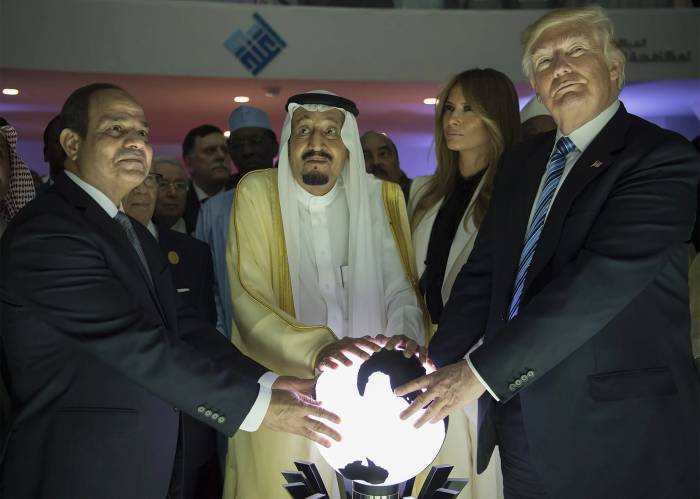
During his presidency from 2017 to 2021, Donald Trump's policies in the Middle East were characterized by a combination of assertive diplomatic actions, military choices, and a departure from the U.S.'s conventional approach to the region.
Trump in the first term of presidency made several significant decisions in the Middle East, such as choosing Saudi Arabia for his first foreign visit, enhancing Israel's regional relationships through the " Abraham Accords ," and intensifying pressure on Iran.Known that on Tuesday, November 5th, Americans went to the polls to elect the next head of state. Republican nominee Donald Trump secured a majority of vices and was elected as the 47th president of the United States.
On Tuesday night, after Trump's victory, Israeli Prime Minister Benjamin Netanyahu, who shared a complicated relationship with the president , was among the first global leaders to congratulate the U.S. President-elect, describing his win as "history's greatest comeback."
As the Biden administration struggles to broker a ceasefire in Gaza and with Israel facing new conflicts involving Iran and Hezbollah in Lebanon, Trump must outline a clear position on the U.S.'s role in these developments.
Saudi Arabia's King Salman and Crown Prince Mohammed bin Salman offered their congratulations, while the United Arab Emirates emphasized the "enduring partnership based on shared ambitions for progress." In contrast, Iran downplayed the election, with government spokesperson Fatemeh Mohajerani stating, "There is no significant difference" in U.S. policies, regardless of who is in power.
Saudi Arabia and the UAE, which forged strong ties with Trump during his first term, are likely to maintain alignment with the U.S., albeit with more caution. Gulf states have progressively broadened their diplomatic and economic partnerships, especially with China, and have become members of BRICS and the Shanghai Cooperation Organization.
News.Az reached out a political scientist Sadraddin Soltan, Head of the Center for Middle East Studies for forecasts over what policy Donald Trump will pursue during the second term of presidency.
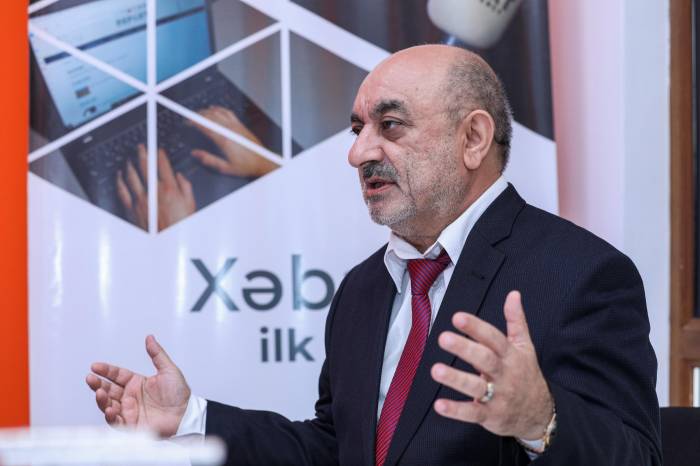
Political Scientists noted that the US foreign policy course is one of the basic principles of the state, that is, state policy: “Presidents don't change this policy, they usually improve it. From this point of view, I do not think that the policy of the United States in the Middle East will change. But this policy can be improved. For example, the US warned Iraq not to allow someone to target Israel from the territory of Iraq. America can deepen this policy. That is, it will bomb the Iraqi territory, which allows Israel to be hit from it's territory. Or he can conduct a similar operation on the territory of Syria. Therefore, I do not think that the escalation will decrease, and the tension will disappear. Imagine that during his 2016-2020 presidency, Donald Trump made an effort to create a joint military alliance between Israel and Arab countries for the defense of Israel and the defense of Arab countries. He tried to form a military bloc called Arab NATO. Therefore, Donald Trump's Middle East policy will be a continuation of the US state's interests.”
“It is clear that the Houthi rebels in Yemen are operating with the support and full assistance of Iran. Along with Iran, there are also Russia and China. So, the Houthis operate with the participation of Iran and with the support of Russia and China. In this regard, in the future, the United States, together with Great Britain, will try to destroy the military power of the Houthis to ensure the security of Israel and international navigation in the region. In this direction, it will tighten the activity in the next stage. Maybe Israel will join them in the next period. Because Israel has already weakened Hezbollah and Hamas, the Houthis are next. When the region engages in disruptive activities in the region, it is these pro-Iranian armed groups that make the region tense. Therefore, there is no second version of the problem regarding the new Houthi rebels. That is, its only and main solution for current conditions is through harsh measures and operations. Because Houthis do not go for dialogue. They are an expression of Iran's interest. In this regard, even if the main negotiations can be conducted in the direction of securing Iran's interests. This does not satisfy the interests of the United States and its allies, including Israel and Great Britain”, said Mr Soltan.
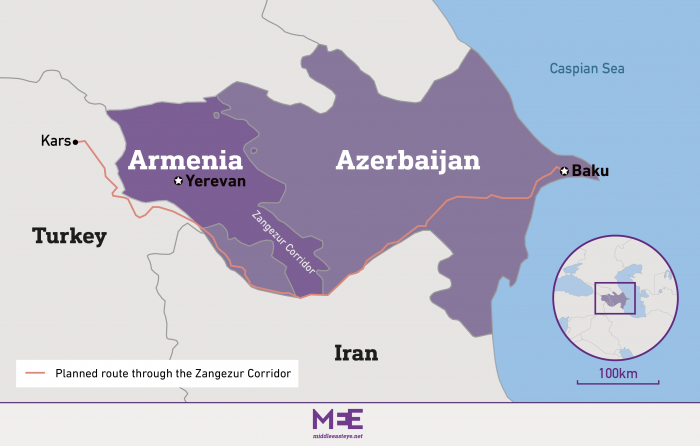
Touching upon Trump's policy on the South Caucasus the political expert said that during the last period of Trump's rule, Azerbaijan liberated its lands from occupation: “Relations with Turkey and Azerbaijan have been normal during Trump's rule. There have indeed been some tensions between Ankara and Washington due to the activities of the terrorist PKK, as well as issues related to separatism in Syria and Iraq and the territorial integrity of Syria and Iraq. But as a result, the elimination of this tension was achieved. In this perspective, there is the question of developing and strengthening the corridor passing through the Caspian Sea. Therefore, in the future, the policy of the USA towards the Caucasus, especially the policy towards the normalization of relations between Azerbaijan and Armenia, will continue and it will not withdraw from its position in this direction. I believe that Zangezur Road will be opened during the Presidency period of Donald Trump. The opening of the Zangezur road is related to the Caucasus and can be considered another contribution of the US to the South Caucasus policy."


Similar news