Today, the Durand Line has once again become not merely a border, but a front line. If diplomatic channels are not urgently activated, the region risks facing its most serious crisis since the Taliban returned to power in Kabul.
By Tural Heybatov
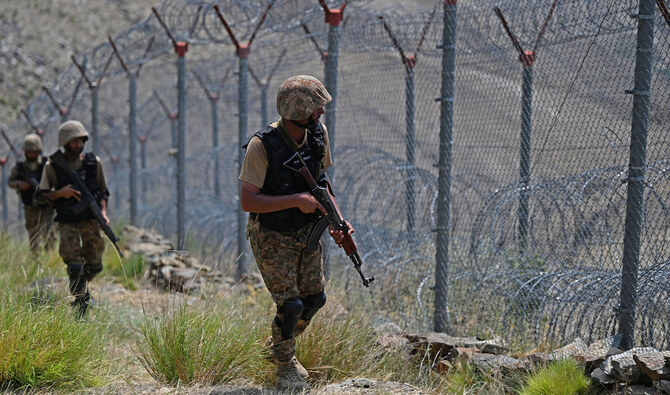
South Asia has once again found itself on the brink of a large-scale conflict. Pakistani authorities have officially stated that months of rising tensions have escalated into an “open war” with the Taliban movement that controls power in Afghanistan. What was once limited to border incidents has now developed into a direct interstate confrontation involving aircraft, heavy equipment, and missile strikes. In other words, it is a war.
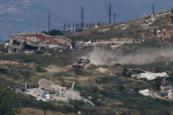
On the night of February 27, the Pakistani army carried out a series of airstrikes on Afghan territory. According to Pakistani officials, the strikes targeted military facilities in Kabul as well as in the provinces of Kandahar and Paktia. Pakistan’s Defense Minister Khawaja Asif stated that after months of armed clashes, the conflict had turned into an “open war.” Information Minister Attaullah Tarar confirmed the strikes, emphasizing that they were directed at military targets.
Prime Minister Shehbaz Sharif issued a firm statement declaring the readiness of the Pakistani army to crush any aggressive ambitions and stressing the consolidation of society around the armed forces.
“Pakistan has concrete evidence that the recent explosions in the country were carried out by Tehrik-e Taliban Pakistan (TTP). In response to these attacks, Pakistan struck seven locations along the border with Afghanistan that it classifies as terrorist camps,” the Ministry of Defense said in a post on X.
In response, the Afghan side announced the launch of a large-scale retaliatory operation along the Durand Line, the disputed border separating the two countries.
The confrontation is unfolding along the Durand Line, a boundary drawn by the British administration in 1893. It divided the territories of Pashtun tribes and remains disputed to this day: Islamabad considers it an internationally recognized border, while Kabul has traditionally avoided formally recognizing it as final.
This historical factor turns every border incident into an issue of national sovereignty and political prestige. The colonial powers left, but the line they drew remains a persistent source of bloodshed.
In the fall of 2025, Islamabad accused the Afghan authorities of failing to act against Tehrik-e Taliban Pakistan (TTP), which has carried out attacks on Pakistani territory. According to Pakistani officials, militants use Afghan territory as a base for planning sabotage operations. A war between the two countries could have begun even then. After intense fighting and exchanges of artillery fire, a large-scale escalation was averted through mediation by Qatar and Türkiye. A temporary ceasefire was reached, but negotiations on a comprehensive peace agreement stalled.
In effect, the current escalation demonstrates that the truce was merely a pause before a new round of confrontation. It is likely to continue until one side achieves its objectives.
For Pakistan, that objective is the elimination of terrorist strongholds and TTP camps based in Afghanistan. A series of terrorist attacks across the country has strengthened the argument for tough measures.
Since the beginning of 2026, the security situation in Pakistan has sharply deteriorated. On February 6, a suicide bomber detonated an explosive device during Friday prayers at a Shia mosque in Islamabad. At least 36 people were killed and around 170 were injured.

Source: NYT
Earlier, on January 31, a series of coordinated attacks on security forces and civilians took place in Balochistan province, claimed by the Balochistan Liberation Army. According to Pakistani authorities, 18 civilians, 15 security personnel, and 177 militants were killed in the attacks and subsequent counterterrorism operations.
Islamabad accuses India and Afghanistan of supporting the terrorists, alleging that Afghan territory was used by the militants. The government of Narendra Modi and the Taliban reject these accusations.
On February 26, the Inter-Services Public Relations (ISPR), the media wing of the Pakistani Armed Forces, reported the elimination of 34 terrorists. The agency stated that Pakistan would continue efforts to eradicate the threat of terrorism financed and supported by foreign forces.
Islamabad’s concerns appear well founded. One terrorist attack has followed another. On February 25, four police officers were killed and three injured in a suicide bombing in the city of Bhakkar in Punjab province. The attack occurred near a police station.
The government in Islamabad maintains that Tehrik-e-Taliban Pakistan is based in Afghanistan. Pakistani media reported that on Thursday, February 26, Taliban forces began attacking Pakistani border posts. Following these attacks, Pakistan launched Operation Ghazab lil-Haq, translated as “Wrath of Justice.”
According to official Pakistani data, dozens of Afghan military posts were destroyed, more than a hundred Taliban fighters were killed, and armored vehicles and artillery were destroyed. The Afghan side, in turn, claims that dozens of Pakistani servicemen were killed and that several strongholds were captured. Media reports also mention a Pakistani aircraft shot down over Afghanistan.
No one is yet prepared to predict the outcome of the outbreak of hostilities. Meanwhile, the situation continues to deteriorate. Media reports indicate that Afghanistan struck a nuclear-related site and a military base in Pakistan, resulting in casualties. Specifically, the Kakul Military Academy and a nuclear facility were reportedly targeted.
Developments are taking on an increasingly dangerous character. Pakistan is a nuclear power. Its nuclear arsenal is considered one of the fastest growing in the world; as of 2025, it is estimated to possess around 170 warheads, comparable to India’s arsenal. The country has plutonium production facilities which, according to media reports, suggest plans to expand its plutonium-based nuclear weapons stockpile.
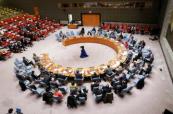
UN High Commissioner for Human Rights Volker Türk called for political dialogue between Afghanistan and Pakistan amid border clashes and airstrikes that have resulted in casualties. “The situation requires urgent political dialogue, not further escalation of force,” the UN press service quoted Türk as saying. He also referred to reports of a sharp increase in civilian casualties.
Will international mediators succeed in containing the conflict this time? Russia has already offered its services. Other countries have so far remained silent.
Meanwhile, war in this region affects the interests of many actors. The conflict is unfolding at a time when Central and South Asia are seeking to expand trade and transit connections. These plans depend directly on stability in Afghanistan. Escalation between Kabul and Islamabad could undermine logistical corridors, increase migration pressure, and jeopardize investment projects across the region. In particular, the Lapis Lazuli Corridor, which runs through Afghanistan, could be disrupted.