What we know about Pakistan and Afghanistan tension


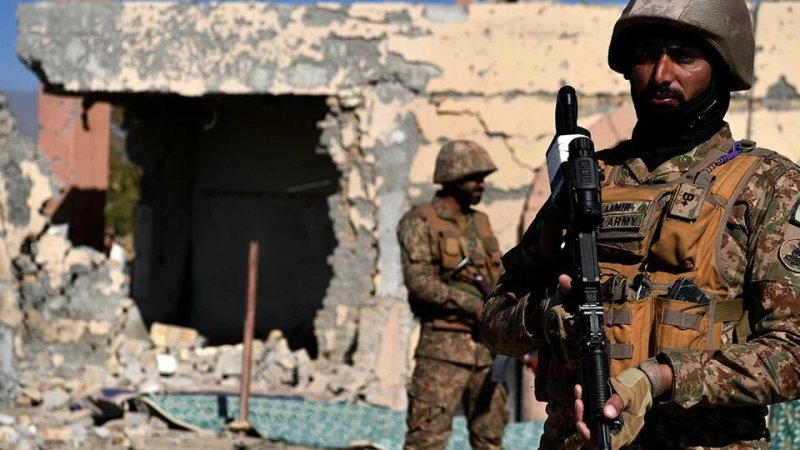
Clashes have been reported along the Afghanistan–Pakistan border, particularly near the Durand Line, the disputed frontier separating the two countries.
Afghan broadcaster Tolo News reported fighting in several eastern and southeastern Afghan provinces, including Nangarhar, Nuristan, Kunar, Khost, Paktia and Paktika.
RECOMMENDED STORIES
According to Afghan authorities, heavy fighting took place near the Durand Line, a border demarcated in 1893 between British India and Afghanistan and still not formally recognized by Kabul as a legitimate international boundary.
On the night of February 27, Taliban authorities in Afghanistan announced what they described as a large scale retaliatory operation targeting Pakistani military positions on both sides of the border. Afghan officials stated that the operation began at 8:00 PM local time on February 26 and lasted roughly four hours before ending at midnight by order of the Taliban chief of staff.
Afghan version of events
Afghanistan’s Ministry of National Defense said the operation was carried out in response to alleged violations of Afghan airspace and civilian casualties caused by recent Pakistani airstrikes. Afghan officials claimed that dozens of Pakistani soldiers were killed and that multiple Pakistani border posts were destroyed.
Afghan sources reported that as many as 15 Pakistani border posts were destroyed during the confrontation. Some Afghan media outlets cited figures suggesting 55 Pakistani soldiers were killed, although such claims have not been independently verified.
The Afghan narrative frames the clashes as defensive retaliation following what it describes as cross border air and artillery strikes by Pakistan.
Pakistan’s response and claims
Pakistan’s officials presented a sharply different version of events. According to statements attributed to Pakistani government representatives, the clashes resulted in heavy losses for Afghan Taliban forces. Pakistani figures claimed that more than 100 Taliban fighters were killed and over 200 wounded. Islamabad also stated that dozens of Afghan positions were destroyed or captured.
Pakistani media, including Geo TV, reported that the Pakistan Air Force struck a large ammunition depot in Nangarhar province, allegedly destroying it completely.
Pakistan’s Defense Minister Khawaja Asif described the confrontation as an “open war,” signaling a sharp escalation in rhetoric. He argued that after the withdrawal of NATO forces from Afghanistan, expectations had been that the Taliban would stabilize the country and prevent militant groups from operating. Instead, he accused the Taliban of harboring and exporting militancy.
Pakistani officials have increasingly linked cross border violence to militant groups operating from Afghan territory, particularly Tehrik e Taliban Pakistan, which Islamabad considers a direct security threat.
Why the Durand Line remains a flashpoint
The Durand Line remains one of the most sensitive and contested borders in South Asia. Afghanistan has historically refused to formally recognize it as an international boundary, arguing that it divided Pashtun tribal territories during the colonial period.
Pakistan, however, treats the Durand Line as a settled international border and has invested heavily in fencing and fortifying it over the past decade. These fortifications have themselves triggered clashes, as Afghan forces and local communities have objected to construction activities.
Because of this unresolved status, even minor tactical incidents can quickly escalate into broader military confrontations.
What triggered the latest escalation
The immediate trigger appears to be alleged Pakistani airstrikes inside Afghan territory, which Afghan authorities say caused civilian casualties, including women and children. Pakistan has not publicly confirmed targeting civilians and typically frames its cross border strikes as counterterrorism operations against militant safe havens.
In recent years, Pakistan has accused Afghanistan’s Taliban government of failing to prevent anti Pakistani militants from using Afghan soil to stage attacks. Afghan authorities deny that they permit such activities and often counter that Pakistan violates Afghan sovereignty.
This cycle of accusation and retaliation has produced repeated flare ups.
Historical context of the current tensions
Military clashes along the Durand Line intensified after the Taliban returned to power in Kabul in 2021. While some observers initially speculated that relations between Islamabad and the Taliban would improve, the opposite has occurred.
Since March 2024, cross border firefights have been reported more frequently. In October 2025, Pakistani forces reportedly seized multiple Afghan border posts during clashes with Taliban fighters. These confrontations have involved artillery exchanges, airstrikes and ground engagements.
The structural drivers of tension include:
Disputes over border recognition
Militant group activity in frontier areas
Pakistan’s fencing of the border
Refugee and cross border movement issues
Competing security narratives
These factors create a volatile environment in which local incidents can rapidly escalate.
Are these clashes a full scale war
Although Pakistani officials have used the phrase “open war,” the situation so far appears to remain localized along the border. Both sides are engaging primarily in cross border strikes, artillery exchanges and limited ground assaults on frontier posts rather than launching deep offensives into each other’s territory.
However, the rhetoric marks a significant escalation. When senior officials frame confrontations as war, it reduces diplomatic flexibility and increases the risk of sustained military engagement.
If airpower continues to be used and casualty figures rise, the risk of broader conflict increases.
What are the strategic implications
The clashes have several regional implications.
First, they increase instability along a border already plagued by militancy and smuggling networks. Second, they complicate Pakistan’s internal security situation, particularly in Khyber Pakhtunkhwa and Balochistan provinces, where militant violence has surged in recent years.
Third, they place additional pressure on Afghanistan’s Taliban government, which is seeking international recognition and economic normalization. Sustained military confrontation with a nuclear armed neighbor could undermine diplomatic efforts.
Finally, the escalation affects broader regional dynamics, including relations with China, Central Asia and the Gulf states, all of which have strategic interests in stability along key transit corridors.
How credible are the casualty figures
Both sides have released casualty claims that are difficult to independently verify. In border conflicts, reported numbers are often contested and sometimes inflated for political or psychological effect.
Without independent verification from neutral observers or international monitoring bodies, casualty figures should be treated cautiously. In previous confrontations, both Kabul and Islamabad have presented sharply divergent statistics.
What happens next
Several scenarios are possible.
The first scenario is rapid de escalation through military to military communication channels, with both sides reducing fire and returning to tense but contained standoffs.
The second scenario involves continued tit for tat strikes, with intermittent artillery and air engagements becoming normalized along certain sectors of the border.
The most dangerous scenario would involve sustained air campaigns, deeper incursions and mobilization of additional forces, effectively transforming border clashes into a broader interstate conflict.
Diplomatic engagement, whether bilateral or mediated by regional actors, will likely determine which path unfolds.
Why this matters beyond the border
The Afghanistan–Pakistan frontier is not just a bilateral issue. It sits at the intersection of South Asia, Central Asia and the Middle East. Instability here can influence militant flows, refugee movements and trade routes.
With NATO forces gone and Afghanistan under Taliban rule, regional powers are recalibrating their strategies. Renewed military confrontation between Kabul and Islamabad adds another layer of uncertainty to an already fragile geopolitical environment.
For now, the situation remains fluid. What is clear is that the Durand Line continues to be a flashpoint where historical grievances, militant activity and contemporary security concerns converge, making periodic escalation a persistent risk.
By Faig Mahmudov


Similar news