Are electric vehicles the future of transportation?


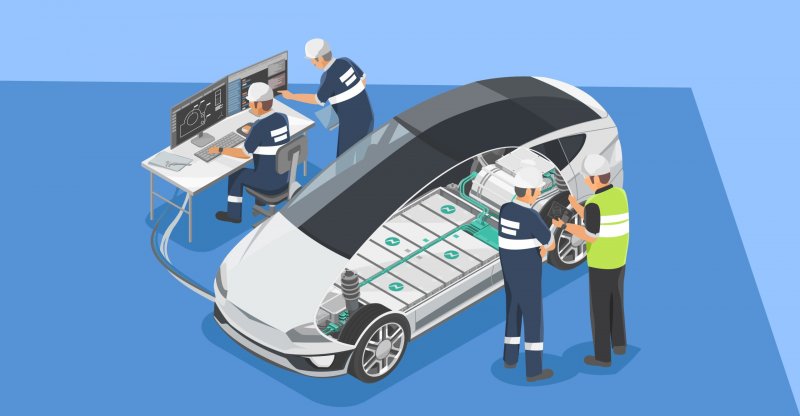
As electric vehicles move beyond early adoption into a transformative phase of global mobility, technology and the future of EVs have become one of the most searched and strategically important themes.
Unlike earlier concerns focused on range, charging, and cost, this theme reflects a forward looking perspective. Consumers are no longer just evaluating current capabilities, News.Az reports.
They are trying to understand where the technology is heading and whether today’s purchase decisions will remain relevant in a rapidly evolving landscape.
Innovation is at the core of the EV transition. Companies such as Tesla, BYD, and Changan Automobile are not simply producing vehicles. They are developing integrated technological ecosystems that combine hardware, software, energy systems, and artificial intelligence. This FAQ explainer addresses the most searched questions related to the future of EV technology and what it means for consumers, industries, and global markets.
Are electric vehicles the future of transportation
Electric vehicles are widely considered the dominant direction of future transportation. Governments, manufacturers, and energy companies are aligning strategies around electrification due to environmental, economic, and technological factors.
Many countries have announced long term plans to reduce or phase out internal combustion engine vehicles. At the same time, investments in EV production, battery manufacturing, and charging infrastructure are accelerating.
While alternative technologies such as hydrogen are also being explored, EVs currently hold the strongest position due to their efficiency, scalability, and existing infrastructure development.
What technological innovations are driving EV development
The evolution of EVs is driven by several key technological advancements.
Battery innovation remains the most critical factor. Improvements in energy density, charging speed, and durability are expanding vehicle capabilities and reducing costs.
Software integration is transforming vehicles into digital platforms. Features such as over the air updates, real time diagnostics, and connected services are redefining the ownership experience.
Power electronics and motor efficiency are also improving, allowing vehicles to achieve better performance with lower energy consumption.
Artificial intelligence is increasingly used for energy management, driver assistance, and predictive maintenance.
What is autonomous driving and how does it relate to EVs
Autonomous driving refers to the ability of a vehicle to operate without human intervention. While not exclusive to electric vehicles, it is closely associated with them due to their advanced electronic architecture.
Tesla has been a leader in developing driver assistance systems and pursuing full self driving capabilities. These systems rely on sensors, cameras, and machine learning algorithms to interpret the driving environment.
Fully autonomous vehicles are not yet widely available, and regulatory frameworks are still evolving. However, progress in this area is expected to play a significant role in the future of mobility.
How will battery technology evolve in the future
Battery technology is expected to undergo significant transformation in the coming years.
Solid state batteries are one of the most anticipated developments. They promise higher energy density, faster charging, and improved safety compared to current lithium ion batteries.
Research is also focused on reducing reliance on scarce materials such as cobalt, improving sustainability and lowering costs.
Recycling technologies are advancing, enabling more efficient recovery of valuable materials and supporting a circular economy.
These innovations could dramatically increase range, reduce charging time, and extend battery lifespan.
Will EV charging become as fast as refueling
One of the key goals of the industry is to reduce charging time to levels comparable to traditional refueling.
Ultra fast charging technology is already making progress, with some systems capable of delivering significant range in 10 to 15 minutes.
Future advancements may further reduce charging times, making long distance travel more convenient.
Wireless charging is another area of development. Although still in early stages, it could enable seamless energy transfer without physical connections.
How will EVs integrate with renewable energy
Electric vehicles are expected to play a major role in the transition to renewable energy.
Charging systems can be integrated with solar and wind power, reducing reliance on fossil fuels and lowering environmental impact.
Vehicle to grid technology allows EVs to store energy and supply it back to the grid when needed. This transforms vehicles into mobile energy storage units.
Such integration enhances grid stability and supports the broader adoption of renewable energy sources.
What is the role of software in the future of EVs
Software is becoming as important as hardware in defining vehicle capabilities.
Over the air updates allow manufacturers to improve performance, fix issues, and add new features without requiring physical modifications.
Connected services provide real time data on vehicle performance, charging status, and navigation.
Artificial intelligence enables smarter energy management, predictive maintenance, and enhanced driver assistance.
Companies that excel in software development are likely to gain a competitive advantage in the EV market.
Will EVs become more affordable with technological progress
Technological advancements are expected to reduce costs over time.
Improvements in battery production, increased manufacturing scale, and competition among manufacturers are driving prices down.
As technology matures, electric vehicles are likely to become more accessible to a broader range of consumers.
This trend is essential for achieving mass adoption and replacing traditional vehicles on a global scale.
What impact will EV technology have on traditional automakers
The rise of EV technology is reshaping the automotive industry.
Traditional manufacturers are investing heavily in electrification to remain competitive. This includes developing new platforms, forming partnerships, and restructuring supply chains.
Companies that fail to adapt risk losing market share to more agile and technology focused competitors.
The transition is not only technological but also strategic, affecting production, distribution, and business models.
How will infrastructure evolve alongside EV technology
Infrastructure development is closely linked to technological progress.
Charging networks will expand and become more efficient, supporting higher power levels and faster charging speeds.
Smart grids will enable better management of electricity demand and integration of renewable energy.
Digital platforms will improve user experience by providing real time information and seamless payment systems.
Infrastructure innovation is essential to support the growing number of electric vehicles.
Are EVs truly environmentally friendly in the long term
Electric vehicles offer significant environmental benefits, particularly in reducing emissions during operation.
However, their overall impact depends on factors such as electricity generation, battery production, and recycling.
As renewable energy adoption increases and battery technologies improve, the environmental advantages of EVs are expected to grow.
Sustainability is becoming a key focus for manufacturers, influencing design, materials, and production processes.
What challenges remain for future EV development
Despite rapid progress, several challenges remain.
Battery supply chains must scale to meet growing demand while maintaining sustainability.
Charging infrastructure needs to expand further, particularly in developing regions.
Regulatory frameworks must adapt to new technologies such as autonomous driving.
Consumer education is also important to address misconceptions and build confidence.
Overcoming these challenges will determine the pace of EV adoption.
How are leading companies shaping the future of EVs
Tesla continues to focus on innovation in software, autonomous driving, and large scale battery production.
BYD leverages its expertise in battery manufacturing to deliver cost effective and scalable solutions.
Changan Automobile is investing in new platforms and partnerships to expand its presence in the global EV market.
These companies represent different strategies within the same technological transformation.
What is the long term vision for electric mobility
The long term vision for electric mobility extends beyond individual vehicles.
It includes integrated energy systems, smart cities, and connected transportation networks.
Vehicles will become part of a broader ecosystem that combines mobility, energy storage, and digital services.
This transformation has the potential to reshape not only transportation but also urban planning and energy infrastructure.
Conclusion
Technology and the future of EVs represent the most forward looking dimension of the electric vehicle revolution. This theme reflects a shift from present concerns to long term expectations and possibilities.
Innovation in batteries, software, and energy systems is driving continuous improvement and expanding the role of EVs in society. While challenges remain, the trajectory is clear.
Electric vehicles are evolving from a technological alternative into a foundational component of future mobility. As advancements continue, they will not only change how people travel but also how energy is produced, stored, and consumed on a global scale.
By Faig Mahmudov


Similar news