Armenian mines continue to threaten the future


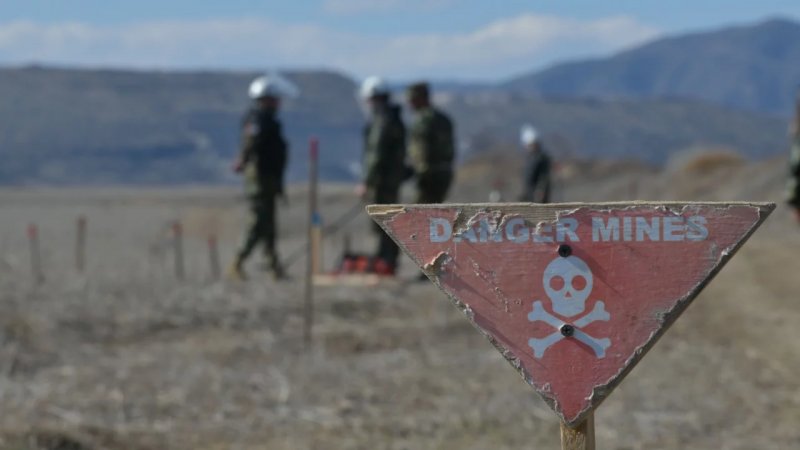
The mine threat remains one of the most severe and long-term consequences of conflict, affecting not only security but also the development prospects of entire regions. For Azerbaijan, this problem has assumed a particularly large scale. It represents a humanitarian, social, and economic challenge.
According to the Azerbaijan National Agency for Mine Action (ANAMA), from November 2020 to 4 April 2026, a total of 259 mine-related incidents were recorded in the country. During this period, 421 people were affected: 72 were killed and 349 were injured to varying degrees of severity. These figures highlight the persistent danger even years after the end of active hostilities.
RECOMMENDED STORIES
Looking at the broader picture, the situation appears even more alarming. Over the past three decades, the total number of mine victims has exceeded 3,500, including 362 children and 38 women. This demonstrates that mine contamination affects the most vulnerable groups in society and has long-term social consequences.
The scale of contamination remains extremely high. According to official estimates, approximately 11,667 square kilometres — more than 13 per cent of the country’s territory — are contaminated with landmines and unexploded ordnance. It is believed that around 1.5 million mines, as well as a significant but undetermined number of other explosive devices, may be present in these areas. This places Azerbaijan among the countries most affected by mine contamination in the world.
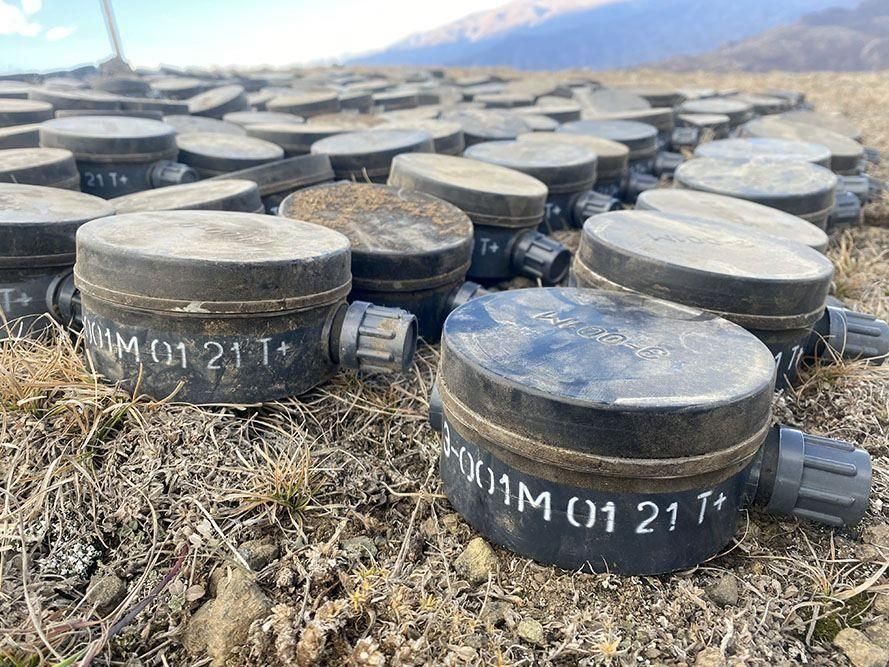
Source: APA
The nature of the contaminated areas adds further complexity. These are not limited to former front lines. Agricultural land, orchards, roads, and even cemeteries have been mined. Mines are located in places closely linked to everyday life, significantly increasing the level of risk. This helps explain the high number of civilian casualties in the post-conflict period, while the threat itself remains ongoing.
Despite the scale of the challenge, progress is being made. From November 2020 to April 2026, a total of 261,551 hectares of land have been cleared, and 246,463 mines and unexploded ordnance have been detected and neutralised. These figures reflect not only the magnitude of the problem but also the achievements in demining efforts. Neutralising a quarter of a million mines is a significant accomplishment, with each device removed representing a life potentially saved.
Special attention is being given to the clearance of socially significant sites. As part of targeted projects to clear cemeteries, more than 761,000 square metres have been surveyed, with dozens of mines and explosive devices discovered and neutralised. This work carries not only practical importance but also deep social and psychological value, contributing to the restoration of normal life and traditional practices.
Alongside demining operations, measures are being implemented to minimise risks. Dangerous areas are fenced off, warning signs are installed, and public awareness campaigns are conducted. Educating the population on safe behaviour remains a top priority.
The mine problem is one of the key obstacles to the accelerated implementation of the “Great Return” programme. Contamination slows post-conflict reconstruction, hinders infrastructure development, restricts agricultural activity, and prevents the safe return of internally displaced persons. In this context, demining is seen not only as a humanitarian task but also as a crucial factor in sustainable development. For instance, in March, local residents were injured by mines in the Aghdam and Khojavend districts, and on 1 April, a resident of Aghdara district stepped on a mine.
Given the level of threat, demining has become one of the main priorities on the national agenda. In 2023, Azerbaijan officially declared humanitarian demining as its 18th National Sustainable Development Goal, aiming to draw attention to the extensive contamination of its territories. This initiative seeks to address the mine threat that hinders recovery and endangers civilians. Azerbaijan also advocates for including demining on the global United Nations agenda.
The issue of mines also holds an important place on the international agenda. 4 April, observed as the International Day for Mine Awareness and Assistance in Mine Action, highlights the global nature of the problem. Azerbaijan actively promotes mine action on international platforms and calls for expanded cooperation. In particular, there is strong emphasis on increasing international support, both financial and technical.
Various countries and international organisations, including UN structures, are already involved in these efforts. However, given the scale of contamination and the high cost of operations, further expansion of partnerships remains critically important.
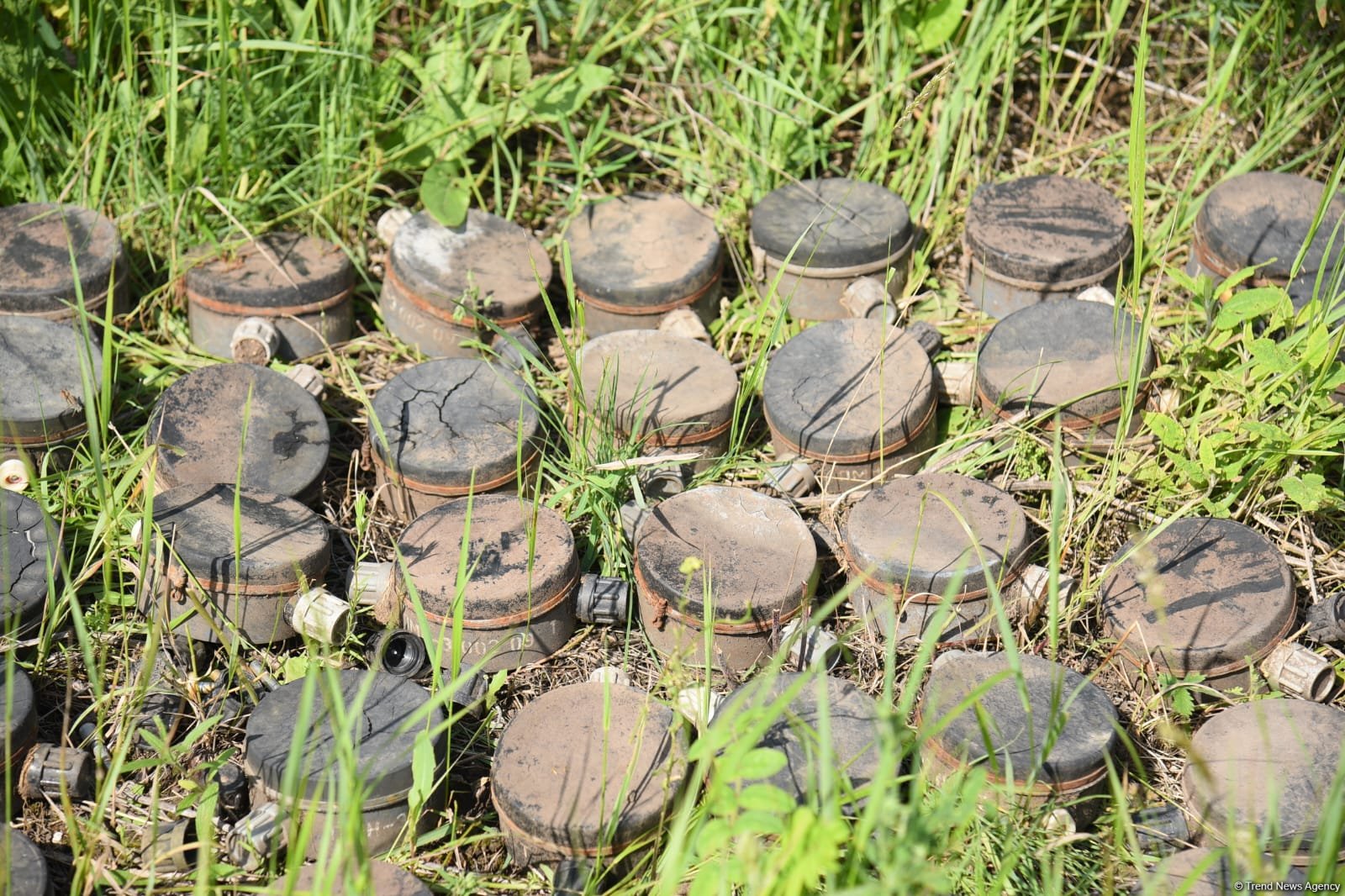
Source: Trend
Speaking at the 80th session of the UN General Assembly in September 2025, President Ilham Aliyev stated that “one of the most serious humanitarian problems Azerbaijan faces in the post-conflict period is the danger posed by mines planted by Armenia during the occupation. This large-scale mine threat prevents the safe return of displaced persons and the implementation of reconstruction projects.”
Today, mines and unexploded ordnance remain among the most acute threats to human security in many parts of the world, and Azerbaijan is among the affected countries. As President Aliyev noted at an international conference on demining held in Baku, “mine explosions not only endanger human life and call into question the right to life itself, but also cause significant environmental damage. Plastic waste generated by explosions negatively affects soil structure, leading to ecological consequences. Mines buried in the ground for long periods cause harmful chemical reactions. Land left unused due to mines is subject to natural erosion and degradation.”
Mines threaten not only human life but also the environment. Azerbaijan has not been able to obtain reliable minefield maps from Armenia, and the maps provided by the Armenian side were only about 25 per cent accurate.
Azerbaijan is not alone in addressing this problem. Assistance has been provided by the United Kingdom, the United States, Germany, China, Italy, the United Arab Emirates, and others.
In October last year, a delegation from ANAMA and other state institutions visited NATO headquarters in Brussels. During the meetings, discussions focused on the current state of cooperation between Azerbaijan and NATO in humanitarian demining, the importance of support from international partners, the progress of ongoing projects involving innovative methods under the “Science for Peace and Security” programme, and participation in future projects involving advanced technologies and innovative approaches. Joint training sessions and seminars under the NATO Trust Fund for Azerbaijan were also discussed.


Similar news