Can a partial Israel-Hezbollah de-escalation hold while fighting continues?


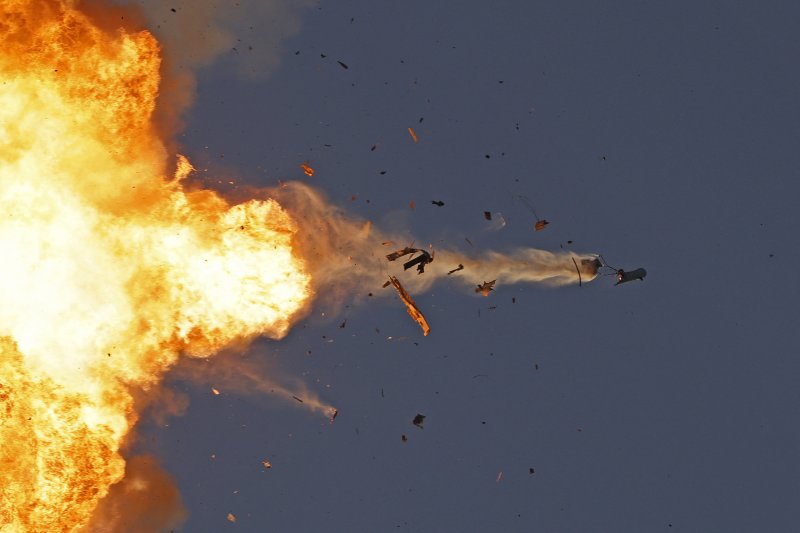
U.S. President Donald Trump has claimed that a partial de-escalation arrangement has been reached between Israel and Hezbollah, helping avert an immediate expansion of the conflict toward Beirut. Yet military operations continue in southern Lebanon, and both Israeli leaders and Hezbollah have shown little sign that the broader confrontation is nearing an end.
The situation has raised an important question: Can a limited de-escalation agreement succeed when fighting is still taking place, News.az reports.
The answer could have major implications not only for Israel and Lebanon but also for the wider Middle East, where fears of a broader regional conflict remain high.
What did Trump announce?
Trump said that Israel had agreed not to proceed with planned strikes against Beirut and that efforts to reduce tensions had achieved a degree of success.
His comments suggested that diplomatic channels had managed to secure a limited understanding aimed at preventing the conflict from expanding into Lebanon's capital.
The announcement was viewed as a significant development because attacks on Beirut could have dramatically escalated the confrontation and increased the risk of a wider regional war.
However, Trump's statement did not amount to a declaration of a full ceasefire.
Instead, it pointed to a partial de-escalation focused on preventing certain military actions while allowing others to continue.
If there is a de-escalation, why is fighting still continuing?
This is the key issue.
Israeli Prime Minister Benjamin Netanyahu and Defense Minister Israel Katz both made clear that military operations against Hezbollah in southern Lebanon would continue.
Israeli officials emphasized that while operations against Beirut may have been paused, strikes against Hezbollah fighters, weapons sites, and military infrastructure would proceed.
In other words, the reported agreement appears designed to prevent the conflict from widening geographically rather than ending it altogether.
Such arrangements are not uncommon in modern conflicts.
Parties sometimes agree to limit specific actions while continuing military operations in other areas.
What is the difference between a ceasefire and a de-escalation agreement?
A ceasefire generally requires both sides to stop military operations entirely or within a defined area.
A de-escalation agreement is usually more limited.
It may involve restrictions on certain targets, specific weapons, or particular regions while allowing military activities elsewhere.
In this case, the apparent understanding seems focused on preventing attacks against Beirut while leaving southern Lebanon as an active military zone.
This distinction is important because many observers initially interpreted Trump's announcement as a sign that hostilities were ending.
The reality appears considerably more complicated.
Why is Beirut so important?
Beirut carries enormous political, economic, and symbolic significance.
As Lebanon's capital, it serves as the country's main political center and economic hub.
Any major Israeli strike against Beirut would likely trigger international concern and could dramatically increase regional tensions.
Attacks on the capital would also risk causing significant civilian casualties and infrastructure damage, potentially drawing stronger international reactions.
For this reason, preventing military operations from expanding into Beirut has become a major diplomatic priority.
Why is Israel continuing operations in southern Lebanon?
Israeli officials argue that Hezbollah remains an active threat.
The group possesses a substantial arsenal of rockets, missiles, drones, and other military capabilities.
Israel's stated objective is to degrade Hezbollah's military infrastructure and reduce the threat posed by the organization.
According to Israeli leaders, stopping operations entirely while Hezbollah retains these capabilities would leave northern Israel vulnerable to future attacks.
As a result, Israeli military planners appear determined to continue operations despite diplomatic efforts aimed at reducing tensions.
What is Hezbollah's position?
Hezbollah has continued to portray itself as resisting Israeli military pressure.
The organization maintains that its operations are part of a broader regional struggle and has not signaled any intention to abandon its military posture.
While Hezbollah may welcome efforts to prevent strikes on Beirut, it has also continued military activity along the border.
This creates a situation in which neither side appears prepared to fully disengage.
Why is the United States involved?
Washington has a strong interest in preventing a wider Middle East war.
A major conflict between Israel and Hezbollah could destabilize Lebanon, increase regional tensions, disrupt energy markets, and potentially involve additional actors.
The United States has therefore been working through diplomatic channels to reduce the risk of escalation.
Trump's announcement reflects those efforts and suggests that U.S. officials remain actively engaged in trying to manage the crisis.
American policymakers generally view containment as a priority even if a comprehensive peace agreement remains out of reach.
Could the conflict still escalate despite the agreement?
Yes.
The risk of escalation remains significant.
Whenever military operations continue, there is a possibility of miscalculation.
A strike causing large civilian casualties, an attack on a high-profile target, or an unexpected battlefield development could rapidly increase tensions.
History shows that conflicts often escalate not because leaders initially intended them to do so, but because events on the ground spiral beyond political control.
This remains one of the primary concerns facing diplomats and security officials.
How serious is the current confrontation?
The confrontation is among the most serious periods of tension between Israel and Hezbollah in recent years.
Cross-border exchanges have intensified, military activity has expanded, and both sides have demonstrated significant capabilities.
At the same time, neither side appears eager to launch a full-scale war.
This creates a paradoxical situation in which military operations continue while both sides attempt to avoid crossing certain red lines.
Such environments are inherently unstable because those red lines can shift quickly.
Could this become another Israel-Hezbollah war?
The possibility cannot be ruled out.
The 2006 war demonstrated how quickly border clashes can evolve into a large-scale conflict.
Today, the risks are arguably even greater.
Hezbollah possesses more advanced weapons than it did two decades ago, while Israel has significantly enhanced its military capabilities.
Any future war would likely be more destructive than previous confrontations.
This prospect explains why regional and international actors are working intensely to prevent further escalation.
What role does Iran play in the situation?
Iran is Hezbollah's principal backer and plays an important role in the broader regional security environment.
Although the current confrontation is primarily focused on Israel and Hezbollah, developments involving Iran inevitably influence calculations on all sides.
Regional tensions involving Tehran, Israel, and various allied groups often intersect, making crisis management particularly complex.
This interconnected nature of Middle Eastern conflicts means that local clashes can sometimes have wider geopolitical consequences.
How is Lebanon affected?
Lebanon faces enormous challenges regardless of whether fighting reaches Beirut.
The country's economy has already experienced years of severe difficulties.
Continued military operations create additional pressure on infrastructure, public services, investment, and tourism.
Many Lebanese citizens fear that a wider conflict would deepen existing economic and social hardships.
For Lebanon, preventing further escalation is not only a security issue but also an economic necessity.
Can diplomacy succeed while military operations continue?
Diplomatic efforts frequently occur alongside military action.
History contains many examples where negotiations progressed even as fighting continued.
The objective is often not to achieve an immediate peace agreement but rather to prevent conditions from deteriorating further.
The reported de-escalation arrangement appears to fit this pattern.
Rather than ending the conflict, it seeks to establish limits that reduce the risk of a broader war.
Whether those limits hold will depend on the actions of all parties involved.
What should observers watch next?
Several developments will be critical.
Whether Israeli operations remain confined primarily to southern Lebanon.
Whether Hezbollah continues launching attacks.
Whether Beirut remains outside the immediate conflict zone.
Whether additional diplomatic initiatives emerge.
Whether regional actors increase efforts to mediate.
Each of these factors will help determine whether the current de-escalation effort succeeds or collapses.
The bottom line
Trump's announcement of a partial de-escalation between Israel and Hezbollah may have reduced the immediate risk of attacks on Beirut, but it has not ended the conflict. Military operations continue in southern Lebanon, Hezbollah remains active, and tensions along the border remain high. The current arrangement appears less like a ceasefire and more like an attempt to prevent a wider regional crisis. While diplomacy has achieved a temporary measure of restraint, the situation remains fragile, and the possibility of renewed escalation continues to loom over the region.
By Faig Mahmudov


Similar news