China–Philippines tensions: Scarborough Shoal at the center of a renewed dispute


.png)

Editor's note: Faig Mahmudov is an Azerbaijan-based journalist. The article expresses the author's personal opinion and may not coincide with the view of News.Az.
The waters of the South China Sea, long one of the world’s most contested maritime zones, have once again become a flashpoint as tensions rise between the People’s Republic of China and the Republic of the Philippines. The latest series of incidents around Scarborough Shoal and Second Thomas Shoal demonstrate not only the persistence of sovereignty disputes but also the growing risks of miscalculation in an already complex geopolitical environment.
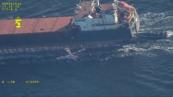
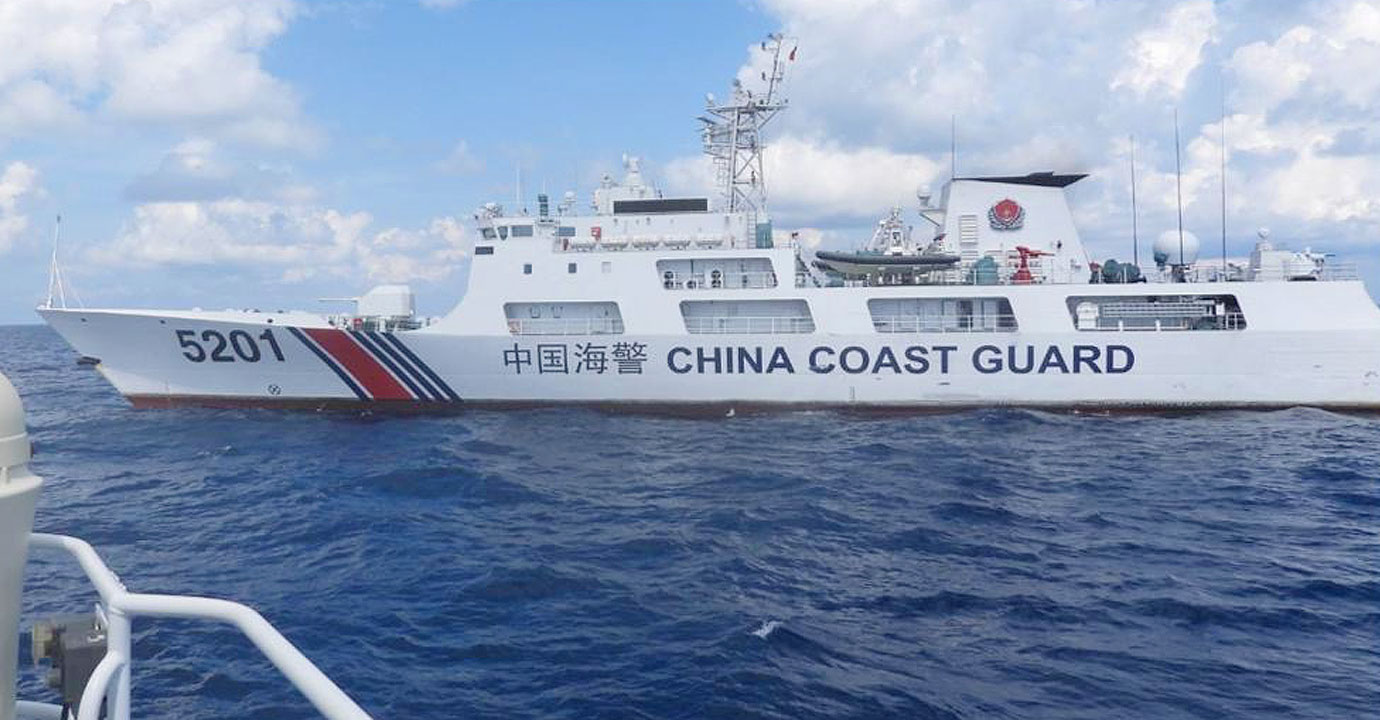
On September 16, 2025, a confrontation near Scarborough Shoal led to a collision between vessels from the Chinese Coast Guard and the Philippine Coast Guard. Manila reported that its fisheries vessel 3014 was damaged after being hit by high-pressure water cannons, with one Filipino crew member sustaining injuries. Philippine officials condemned the action as an aggressive violation of their rights, and the Department of Foreign Affairs immediately lodged a diplomatic protest. The Philippine Coast Guard emphasized that the mission’s purpose had been to escort over thirty local fishing boats in the vicinity of the shoal.
Beijing provided a sharply different account. The Chinese Coast Guard stated that over ten Philippine vessels had “illegally intruded” into what it describes as Chinese territorial waters, and alleged that vessel 3014 deliberately rammed a Chinese patrol ship after ignoring repeated radio warnings. In its official statement, the Chinese side characterized the use of water cannons and blocking maneuvers as “lawful control measures,” arguing that they were necessary to safeguard China’s sovereignty.
Source: Washington Times
This incident did not occur in isolation. Only a few days earlier, on September 11, China’s State Council announced the designation of a 3,524-hectare national nature reserve at Scarborough Shoal. The move, presented as an environmental protection measure aimed at preserving coral reef ecosystems, was immediately rejected by Manila. The Philippine Department of Foreign Affairs declared the measure “illegitimate and unlawful,” stressing that it was a direct infringement on the country’s Exclusive Economic Zone (EEZ) under the United Nations Convention on the Law of the Sea (UNCLOS). National Security Adviser Eduardo Año described it as “a clear pretext for eventual occupation.”
The United States swiftly backed the Philippines. In a statement, U.S. Secretary of State Marco Rubio said that Washington “rejects any coercive attempt to alter maritime rights” and reaffirmed that Scarborough Shoal lies within the Philippines’ EEZ as defined by UNCLOS. The U.S. also recalled the 2016 Permanent Court of Arbitration ruling, which invalidated China’s sweeping “nine-dash line” claim and declared that Beijing had violated Manila’s rights by interfering with fishing and petroleum exploration. China has consistently rejected the arbitration decision and maintains that the tribunal lacked jurisdiction.
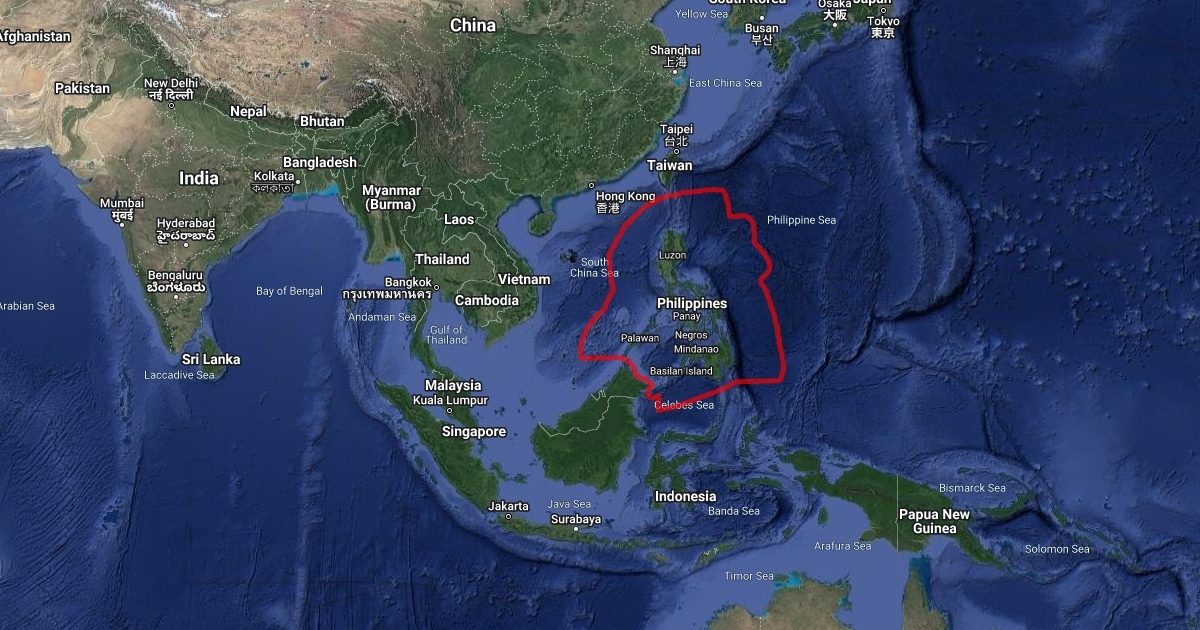
Scarborough Shoal, also known as Huangyan Island in China and Bajo de Masinloc in the Philippines, is located about 200 kilometers west of Luzon. Though it is a small atoll, its surrounding waters are among the richest fishing grounds in the region. Since 2012, when Chinese vessels effectively took control following a standoff, the shoal has been a source of recurring confrontation. While both sides claim sovereignty, the arbitration ruling affirmed that the shoal falls within the Philippines’ EEZ, granting Manila rights to its living resources even if the question of sovereignty over the rocks themselves was left unsettled.

Source: Scribblemaps
Beyond the legal arguments, the situation has significant human and economic consequences. Filipino fishermen, who have traditionally relied on Scarborough’s waters, report increasing difficulties accessing the area. Accounts of harassment, water cannon incidents, and blockades have become common. Many are forced to sail farther offshore, raising fuel costs and exposing them to greater dangers. Local fishing communities see the shoal not only as a livelihood but as a vital symbol of national sovereignty. On the Chinese side, the government frames its presence as a duty to safeguard ecological resources and uphold territorial integrity, portraying Philippine activities as illegal incursions.
The crisis also underscores the importance of Second Thomas Shoal, where the Philippines maintains a small military outpost aboard the grounded vessel BRP Sierra Madre. In recent months, reports have described an increased presence of Chinese boats, including small armed craft, operating around the shoal to limit resupply missions. Analysts warn that this location, even more than Scarborough, carries a high risk of direct military confrontation.
Internationally, the standoff is being watched closely. Other Southeast Asian countries, such as Vietnam and Malaysia, have overlapping claims with China and are observing how Manila navigates its disputes. For Washington, the stakes are especially high. The U.S.–Philippines Mutual Defense Treaty of 1951 obligates both parties to come to each other’s aid in the event of an armed attack on public vessels, aircraft, or armed forces. U.S. officials have repeatedly clarified that this commitment extends to incidents in the South China Sea. While both sides seek to avoid escalation, a serious casualty or the sinking of a ship could trigger treaty consultations and raise the risk of direct confrontation between China and the United States.

Source: Contemporary Security Policy
From a strategic perspective, Beijing appears to be pursuing a dual approach. On one hand, it applies gray-zone tactics—using coast guard ships, maritime militia, and non-lethal coercion like water cannons to pressure Manila. On the other, it employs administrative acts such as the creation of a nature reserve, which help normalize its control and reinforce its narrative of sovereignty. Manila, by contrast, has chosen to internationalize the dispute, invoking legal rulings, strengthening alliances, and publicizing incidents to build global awareness.
Yet despite these efforts, the law-versus-power gap remains unresolved. While the 2016 arbitration award provides Manila with strong legal backing, Beijing’s ability to enforce control at sea has so far proved decisive in shaping realities on the water. This imbalance is what perpetuates the cycle of confrontations.
The broader implications are significant. If Manila is unable to translate legal victories into effective control, other regional claimants may question the utility of pursuing arbitration or relying on international law. Conversely, if China’s “nature reserve” evolves into a system of permits, patrol quotas, or ecological enforcement, it could further entrench Chinese presence and marginalize Filipino access.
Source: Bworldonline
The South China Sea dispute thus remains both a local livelihood issue and a strategic test case. It affects fishermen and coastal communities, but also shapes regional alignments and global debates about the rule of law at sea. Without risk-reduction measures—such as codes of conduct, incident-prevention protocols, or shared fisheries management—each encounter risks spiraling into a broader crisis.
The latest incidents at Scarborough Shoal reflect a pattern that has defined the region for over a decade: China consolidates its presence through a mix of coercion and administrative moves, while the Philippines pushes back with legal and diplomatic tools supported by allies. Neither side shows signs of backing down, ensuring that the shoal will remain one of Asia’s most volatile maritime flashpoints.
(If you possess specialized knowledge and wish to contribute, please reach out to us at opinions@news.az).


Similar news