EU intensifies pressure: New sanctions against Russian LNG and their consequences


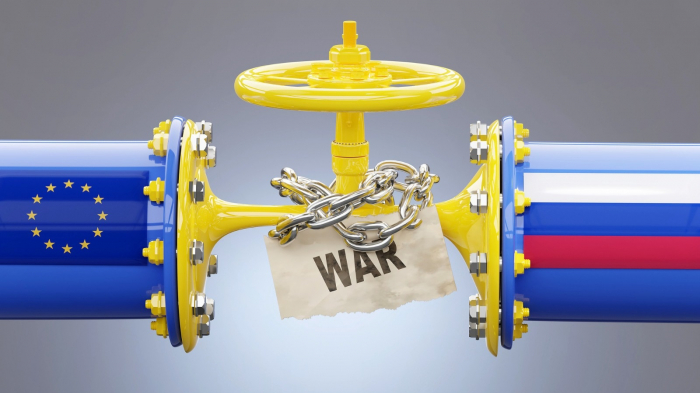
The European Union has approved a new, 14th package of sanctions against Russia, which includes restrictive measures against another 116 individuals and legal entities, the EU Council reports. The EU is imposing a ban on services for the transshipment of Russian liquefied natural gas (LNG) within the EU for shipment to third countries. The new restriction covers both ship-to-ship and ship-to-shore transshipment.
It is noted that the European Commission will monitor the implementation and development of this decision and, if necessary, may soften the measures. In addition, the EU will prohibit new investments as well as the supply of goods and services for the completion of ongoing LNG projects, such as Arctic LNG-2 and Murmansk LNG. Restrictions are also being imposed on the import of Russian LNG through EU terminals not connected to the pipeline system.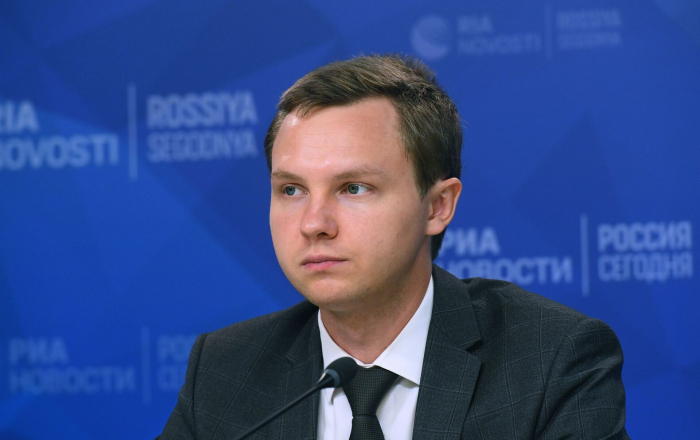
According to Igor Yushkov, a leading analyst at the National Energy Security Fund and an expert at the Financial University under the Government of the Russian Federation, there is actually nothing fundamentally new.
"For example, the ban on new investments in Russian LNG projects and the ban on the supply of technologies effectively duplicate the 2022 sanctions . In one of the first sanctions packages, the EU already banned the supply of technologies and equipment for the construction of LNG plants to Russia. So, in fact, it's the same thing — since 2022, nothing from this package has been supplied to Russia. Formally, there was no ban on investments in Russian LNG projects, but what can be invested in if equipment and technologies are not supplied there? Moreover, companies applied some self-sanctions — they themselves refused new investments in Russian LNG projects. In particular, the French company Total announced in 2022 that it was stopping investments in Russian projects. This company was the only one investing in Russian LNG projects. Specifically, Total has nearly 20% of shares in Novatek, which is building the Arctic LNG-2 project. Plus, Total had 10% of shares in Arctic LNG-2 itself and another 10% in the Arctic Transshipment Company, which owns hubs in Murmansk Region and Kamchatka, through which gas from the Arctic LNG-2 project was supposed to be transshipped. Since 2022, Total has voluntarily refused new investments, so there is nothing new here," Yushkov told News.Az.
The relatively new element in the sanctions package is the ban on the transshipment of Russian LNG at European ports, the expert said.
"A significant portion of LNG from Yamal goes westward, including to European ports for loading. Some LNG is supplied via pipelines to Europe, while another part, transported on Arctic LNG tankers to Asia from Yamal, will now be banned. For Europe, these are the most rational sanctions at the moment, as there was a discussion about a complete ban on LNG imports. This would have led to shortages and price increases. Russia is currently the second largest LNG supplier to Europe, second only to the US. If Europeans refused Russian supplies, they would have to raise prices to attract LNG from the US, Qatar, Algeria, and Norway. Accordingly, the European economy would suffer. High gas prices stimulate the rise in electricity costs, which affects the economy," he added.
The expert noted that on the other hand, EU sanctions aim to hit Russian revenues, but in reality, these sanctions against Russian LNG hardly affect the budget. "For Russia, it does not matter whether there is LNG or not. There is no export duty on LNG in Russia, and the Yamal LNG project has tax benefits. During its development, the project was granted tax benefits for 12 years. Therefore, for another 6-8 years, depending on annual production, the project will not pay taxes as it has a zero rate on mineral extraction tax. The state receives nothing from this project, and it is not correct to say that Western sanctions are dealing a blow. Even if the EU banned LNG exports by the private company Novatek, the blow would fall on the company, not on the Russian budget. Thus, Europeans have dealt a blow to their own economy," Yushkov said.
The current ban on transshipment is rational from an economic standpoint, the expert noted.
“They are trying to lock even more Russian LNG on the domestic market so that prices do not rise, and ideally, even decrease. The calculation is that the volumes currently transshipped in European ports will remain on the European market. Politically, these sanctions look absurd. It turns out that the Europeans are imposing sanctions against Russia, which will increase the share of Russian LNG in the market. The state budget does not receive this money, but it still looks bad. Economically, it is rational to try to lock more Russian LNG on their market," he said.
"In practice, it will turn out that in terms of transshipment, if relocation is needed, this transshipment from Arctic tankers to non-Arctic ones occurs at three points: in the waters of Murmansk Region, in Norwegian waters, and in European ports. If gas exporters from Yamal LNG still need to deliver it to the Asian market from November to June, when there is heavy ice load on the eastern part of the Northern Sea Route, the transshipment will be maximized in the waters of Murmansk Region from ship to ship. This already exists but in small volumes. Then the tanker will calmly head to the Asian market via the Suez Canal or around Africa via the Cape of Good Hope. In the summer period, when the ice load on the Northern Sea Route is less or nonexistent, the most favorable period — August-September — it will be possible to immediately supply LNG to Asia through the eastern part of this route," he added.
He went to say that Yamal LNG has a contract for 3 million tons with a Chinese company, and it is quite possible that we will see such seasonality when in the summer period (August-September), these 3 million tons in total will go to the Asian market via the eastern part of the Northern Sea Route, and the rest of the year, the gas will be sold on the European market. "This is basically what is happening, because prices for gas in Asia and Europe are roughly the same, slightly higher in Asia. Under these conditions, it is more profitable for Yamal LNG to sell gas to Europe because the transportation distance is shorter and it is possible to return the Arctic tanker for a new batch faster.
The plant's productivity is limited by the ability to export products. The plant has a capacity of 17.4 million tons, and the enterprise is operating at almost 20 million tons per year. So, this is a significant excess of the design capacity, and it is very important to return for a new batch as quickly as possible. When prices are roughly the same, it is more profitable to sell to Europe. These prices will remain roughly the same in the long-run because Europe has also increased its dependence on LNG, and the global price arbitrage system leads to a strong interconnection of prices in European and Asian markets. When prices rise in Asia, all LNG goes there, and Europeans have to raise prices to retain LNG. Or vice versa. Therefore, prices will be roughly the same in the long-run, and Yamal LNG will focus on supplies to Europe," the expert pointed out.
"There are also sanctions on tankers, but they are insignificant because entering European ports for repairs and maintenance is prohibited. They have not entered European ports since 2022, and tankers are repaired and maintained in Asia. These sanctions are aimed not at hitting the oil fleet but at creating additional costs for Russia in exporting its oil, to make freight costs high," Yushkov said.


Similar news