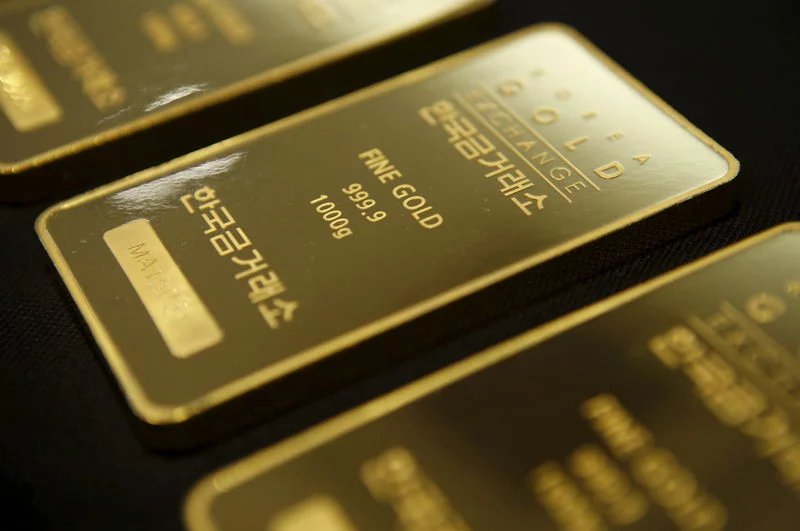
The price of gold, commonly tracked through the XAU/USD pair, rose modestly in the latest session, gaining around 2.6%. However, despite the recent uptick, overall gains remain limited, with gold futures up less than 4% since the start of the year, News.Az reports, citing Reuters.
Strategists at Bank of America say the broader outlook suggests continued weakness following a multi-year rally that pushed prices to record levels earlier this year.
Dollar strength and rates pressure gold
Analysts point to a stronger US dollar and rising interest rate expectations as key factors weighing on bullion. Gold, which does not yield interest, typically becomes less attractive when borrowing costs rise and the dollar strengthens.
From a macroeconomic standpoint, these conditions tend to reduce investor demand for safe-haven assets such as gold, particularly when alternative returns in fixed-income markets improve.
Positioning amplifies downside risks
Market positioning has also played a significant role. Gold and silver entered March in what analysts describe as “overbought” territory, leaving them vulnerable to sharp corrections.
During periods of market stress, leveraged investors often unwind positions quickly, accelerating declines. Similar patterns have been observed in past episodes, including during the 2008 global financial crisis, when gold briefly fell despite wider financial turmoil.
Central bank demand shows signs of cooling
Another factor adding pressure is a potential shift in central bank behaviour. Some countries appear to be slowing gold purchases or even considering sales.
Reports suggest that Poland may sell part of its reserves to fund defence spending, while Türkiye has already sold gold to support its currency. Meanwhile, reduced export revenues may be prompting several Gulf economies to scale back buying.
Together, these developments point to softer demand from the official sector, which has been a major pillar of support for gold in recent years.
Technical signals indicate extended correction
From a technical perspective, analysts believe gold has entered a corrective phase often referred to as a “wave-four” pattern. This stage typically follows a strong upward trend and can last for several months.
According to Bank of America strategists, current price patterns suggest this consolidation could extend through the second and even third quarters of the year.
The metal has struggled to maintain its January peak, reinforcing expectations that prices may trade within a range while facing downside risks.
Downside targets emerge after record rally
Analysts highlight key technical levels that could shape gold’s trajectory. The 50-week moving average, currently near $3,967, is seen as an important support zone.
Further declines could push prices toward the $4,000 level, with some projections suggesting a potential retracement to around $3,700.
Such a pullback would not be unusual given the scale of the previous rally. Gold prices surged dramatically from roughly $1,810 in late 2023 to nearly $6,000 in early 2026.
In that context, analysts argue that the current correction reflects a typical market adjustment rather than a fundamental shift in long-term demand. However, in the near term, gold is likely to remain range-bound, with risks tilted to the downside.