Editor's note: Faig Mahmudov is a journalist based in Azerbaijan. The views expressed in this article are his own and do not necessarily reflect those of News.Az.
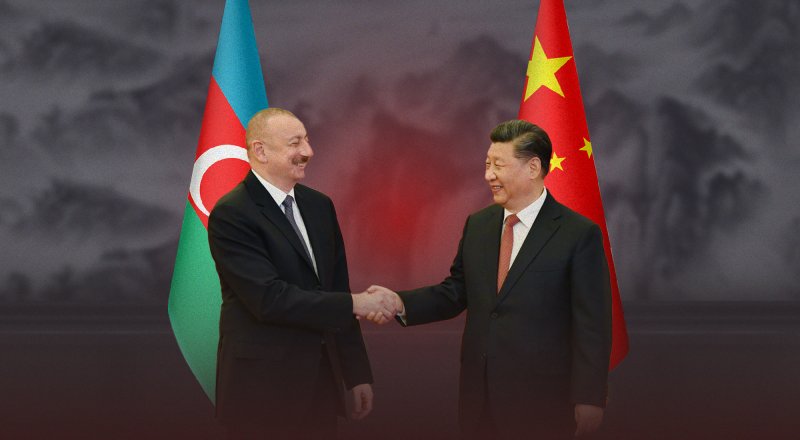
Relations between Azerbaijan and China have in recent years moved beyond conventional diplomacy and trade, developing into a broad, institutionalized, and forward-looking strategic partnership.
This transformation has taken place against a backdrop of shifting global power dynamics, changing patterns of Eurasian connectivity, and growing pressure on supply chains from geopolitical risks and the search for more resilient transport routes. In this environment, Baku and Beijing have found overlapping interests that have driven their cooperation to deepen not only in scale, but also in substance.

Source: aircenter.az
For Azerbaijan, cooperation with China represents an important pillar of its balanced and pragmatic foreign policy. Baku seeks to diversify its economic partnerships, reduce overdependence on any single market or corridor, and position itself as a key node in Eurasian connectivity.
China, in turn, views Azerbaijan as a stable, predictable, and strategically located partner in the South Caucasus, capable of supporting Beijing’s broader Eurasian economic and logistical vision. This convergence of interests explains why bilateral relations have expanded simultaneously across political, economic, transport, technological, and increasingly strategic domains.
Politically, relations are grounded in principles that are particularly important for both sides: mutual respect for sovereignty and territorial integrity, noninterference in internal affairs, and a pragmatic, interest-based approach to cooperation. China’s consistent support for Azerbaijan’s positions in international forums has strengthened Baku’s diplomatic standing and reinforced political trust between the two countries.
Azerbaijan, for its part, has approached China not through ideological alignment but through realism, integrating relations with Beijing into a broader foreign policy that also includes close ties with Western partners, regional actors, and other Asian states. The signing of strategic and comprehensive strategic partnership agreements has formalized this political trust, embedding it in a legal and institutional framework that ensures continuity and predictability.
Source: APA
The economic dimension of the relationship is the most visible indicator of its rapid development. Official statistics demonstrate that trade volumes between Azerbaijan and China have expanded at an accelerated pace. In 2024, total bilateral trade turnover reached approximately $3.745 billion, placing China among Azerbaijan’s leading trading partners. This growth trend continued in 2025, with trade turnover for January–November approaching $4.214 billion, already surpassing the previous year’s full figure. These dynamics underline the structural importance of China in Azerbaijan’s external economic relations.
At the same time, a closer look at the composition of trade reveals a pronounced asymmetry. Azerbaijan’s imports from China dominate bilateral trade, while exports remain relatively modest. In 2024, exports to China amounted to only $19.7 million, compared with imports of around $3.725 billion. In 2025, exports increased to roughly $84 million, signaling a positive trend but still representing a small share of total turnover. This imbalance reflects Azerbaijan’s strong demand for Chinese industrial goods, machinery, electronics, and consumer products, while also highlighting the limited diversification of Azerbaijani exports to the Chinese market.
From a strategic perspective, this trade structure presents both opportunities and challenges. In the short term, access to affordable and technologically advanced Chinese products supports infrastructure development, industrial modernization, and consumer demand in Azerbaijan. In the long term, however, persistent trade asymmetry may create structural vulnerabilities. As a result, one of Azerbaijan’s key strategic objectives is to move beyond a predominantly import-oriented model and develop a more balanced economic relationship based on exports, local production, and value creation.

Source: hagueresearch
Joint ventures and production-oriented investment are central to this transition. By encouraging Chinese companies to establish manufacturing, assembly, and processing facilities in Azerbaijan’s industrial parks, Baku aims to combine Chinese capital and technology with its own geographic advantages, labor force, and access to regional markets. Such cooperation would facilitate technology transfer, skills development, and the integration of Azerbaijani firms into regional and global value chains.
For China, localizing production in Azerbaijan offers a means of reducing transport costs, mitigating geopolitical risks, and gaining closer access to markets in the South Caucasus, Türkiye, Central Asia, and Europe.
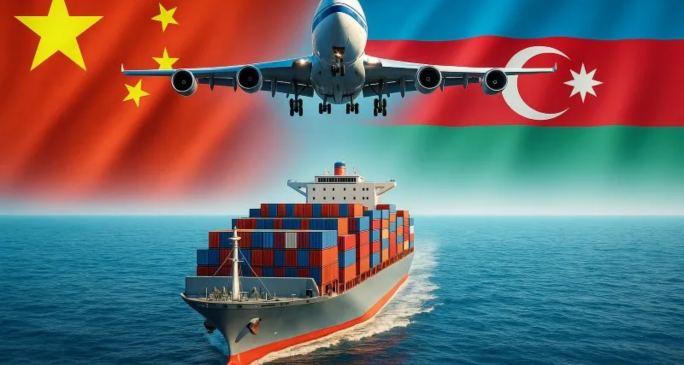
Transport and logistics form another cornerstone of bilateral cooperation. The Middle Corridor, linking China with Europe via Central Asia, the Caspian Sea, the South Caucasus, and Türkiye, has gained strategic relevance amid disruptions along traditional routes. Azerbaijan occupies a central position along this corridor, serving as a key transit hub that connects maritime, rail, and road infrastructure. The Port of Baku at Alat, the Baku–Tbilisi–Kars railway, and associated logistics facilities enable Azerbaijan to convert its geography into tangible economic value.
For China, the Middle Corridor provides a more diversified and resilient pathway to European markets, reducing reliance on any single route and enhancing supply chain flexibility.
The prospective Zangezur corridor adds an additional layer to this connectivity agenda. As a potentially shorter and more efficient extension of the Middle Corridor, it could further reduce transit times and costs for east–west cargo flows. Beyond its economic significance, the Zangezur corridor carries geopolitical weight, reshaping regional connectivity patterns and strengthening Azerbaijan’s role as a bridge between different parts of Eurasia. For China, the emergence of such routes aligns with its broader interest in diversified, secure, and politically stable transport networks.

Source: News.Az
Energy cooperation complements these economic and logistical ties. Azerbaijan remains an important energy partner in the Caspian region, while China’s global leadership in renewable energy technologies opens new avenues for collaboration. Cooperation in solar and wind energy projects, energy storage systems, and smart grid technologies supports Azerbaijan’s green energy transition and long-term energy security goals. This dimension of the relationship reflects a shift from traditional hydrocarbon-focused cooperation toward a more diversified and future-oriented energy partnership.
Technological and digital cooperation further enriches bilateral relations. Chinese expertise in digital infrastructure, e-commerce platforms, smart city solutions, and industrial automation aligns with Azerbaijan’s ambitions to modernize its economy and enhance productivity. Integrating such technologies can help Azerbaijan move up the value chain, improve governance efficiency, and strengthen competitiveness in regional markets.
In sum, the relationship between Azerbaijan and China has matured into a comprehensive strategic partnership rooted in political trust, expanding economic ties, and shared interests in connectivity and development. Official statistics confirm rapid growth in trade and deepening economic interdependence, while ongoing projects in transport, energy, and technology point to a long-term trajectory of cooperation.
The central challenge for the next phase lies in transforming quantitative growth into qualitative balance by expanding exports, fostering local production, and generating higher value added. If successfully managed, Azerbaijan–China relations are likely to remain a significant and enduring element of the evolving geo-economic architecture of Eurasia.
News.Az



.png)