How critical minerals are becoming more important than oil in global politics


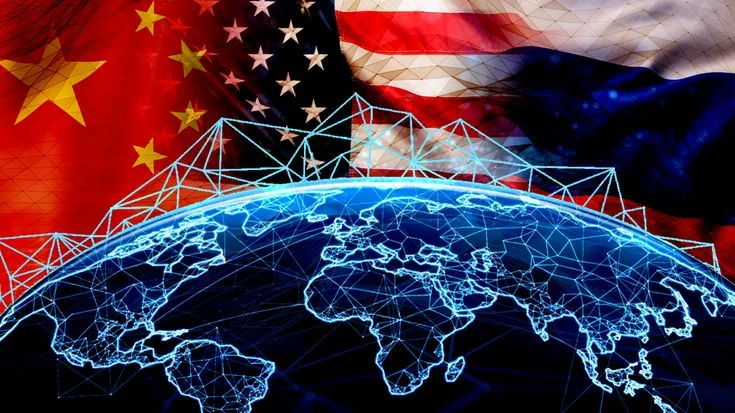
For more than a century oil shaped wars, alliances economic growth and global power hierarchies. Control over oil fields, shipping routes and pricing mechanisms determined which states rose and which declined.
Today a quieter but deeper transformation is underway. A group of resources known as critical minerals is beginning to matter more than oil ever did. These minerals sit at the heart of modern economies digital infrastructure military systems and clean energy transitions. Without them advanced states cannot function competitively and emerging powers cannot climb the technological ladder.
RECOMMENDED STORIES
Critical minerals do not power cars directly like oil once did but they power everything that now matters most. Data centers satellites electric vehicles renewable energy systems semiconductors and precision weapons all depend on secure access to these materials. This shift is not a future scenario. It is already shaping diplomacy trade conflicts industrial policy and national security planning.
This evergreen FAQ explainer answers the key questions behind the rise of critical minerals and explains why they are becoming the defining geopolitical resource of the twenty first century.
What are critical minerals and why are they called critical
Critical minerals are natural resources that are essential for economic and national security but face high supply risks. The exact list differs by country but usually includes lithium cobalt nickel rare earth elements graphite manganese copper and several specialized metals used in electronics and defense.
They are called critical because modern societies cannot easily replace them. There are few substitutes and recycling is limited. Production is often concentrated in a small number of countries which increases vulnerability to political pressure supply disruptions or conflict.
Oil was once critical because it fueled transportation industry and warfare. Critical minerals are now critical because they enable computation electrification connectivity and precision. These functions define power in the modern world.
Why are critical minerals replacing oil as the foundation of power
Oil powered the industrial age. Critical minerals power the digital age. The shift is structural and irreversible.
Oil mainly enabled energy consumption. Critical minerals enable systems. They sit inside batteries chips fiber optics radar systems satellites and communication networks. Whoever controls these inputs shapes entire value chains from manufacturing to military capability.
Oil markets were global and liquid. Critical mineral markets are fragmented opaque and often controlled by state backed actors. This makes them far more political.
Oil could be transported and stockpiled relatively easily. Many critical minerals require complex refining and processing that only a few countries can perform. Control over processing often matters more than control over mining.
In strategic terms oil allowed states to move armies. Critical minerals allow states to see decide calculate and strike.
Which industries depend most on critical minerals
Almost every strategic industry depends on them.
Clean energy relies on lithium nickel cobalt and rare earths for batteries wind turbines and grid systems.
Technology and digital infrastructure rely on rare earths copper silicon and specialty metals for chips servers smartphones and networks.
Defense systems rely on critical minerals for jet engines missile guidance radar stealth technology and space assets.
Transportation relies on these minerals for electric vehicles rail systems aviation components and maritime electronics.
Healthcare and advanced manufacturing rely on them for imaging devices robotics and precision tools.
This breadth of dependence makes critical minerals more pervasive than oil ever was.
Why supply chains for critical minerals are more fragile than oil
Oil supply chains were built over decades with standardized infrastructure shipping routes and markets. Critical mineral supply chains are younger more fragmented and more concentrated.
Mining often happens in politically unstable regions. Processing and refining are even more concentrated with a single country dominating several key stages.
Environmental regulations social opposition and long permitting timelines slow the development of new mines. It can take more than a decade to bring a new project online.
Strategic stockpiles are limited. Many countries have minimal reserves compared to their annual consumption.
These factors create a system where small disruptions can have outsized effects on prices and availability.
Which countries dominate critical mineral production and processing
Control is uneven and politically sensitive.
Some countries dominate mining. Others dominate processing. The most powerful position is controlling both.
One major power has built near total dominance in refining and processing rare earths and battery materials. This gives it leverage even when it does not control mining.
Several developing countries hold vast mineral reserves but lack infrastructure and technology to process them. This makes them vulnerable to unequal partnerships.
Advanced economies often depend on imports despite having geological resources because of environmental opposition or cost concerns.
This imbalance is reshaping alliances investment flows and development strategies.
How are critical minerals changing global diplomacy
Diplomacy is shifting from oil deals to mineral agreements.
Countries are signing long term supply agreements investing in foreign mines and offering technology transfers in exchange for access.
Trade policy increasingly treats minerals as strategic assets rather than commodities. Export controls and investment screening are becoming common.
Development aid is being redirected toward mining infrastructure and processing capacity in friendly states.
Multilateral groupings are forming around mineral security similar to past oil based alliances.
Mineral diplomacy is quieter than oil diplomacy but far more complex.
Why critical minerals are becoming tools of pressure and leverage
Control over critical minerals allows states to influence others without military force.
Export restrictions can disrupt entire industries overnight.
Price manipulation can undermine competitors manufacturing sectors.
Investment decisions can shape political alignment in resource rich states.
Technology access can be conditioned on mineral cooperation.
These tools operate below the threshold of open conflict making them attractive in strategic competition.
How critical minerals affect national security planning
Modern militaries are mineral dependent.
Advanced weapons require rare earth magnets specialized alloys and high performance batteries.
Space based systems rely on mineral intensive components.
Logistics and command systems depend on electronics that require secure supply chains.
This means that mineral security is now defense security. Military planners increasingly assess not just fuel reserves but mineral access and processing capacity.
What role does environmental policy play in the mineral race
Environmental concerns are central and paradoxical.
Critical minerals are needed for clean energy and climate goals. Yet mining and processing can be environmentally damaging.
Advanced economies often restrict domestic mining while increasing imports. This shifts environmental costs abroad.
Resource rich countries face pressure to choose between development and environmental protection.
This tension creates political conflict within states and between partners.
The mineral transition is not just a technical challenge but a moral and governance challenge.
Why recycling cannot yet solve the mineral shortage
Recycling is important but insufficient.
Most critical mineral products have long lifespans. The material is locked inside use for years.
Recycling technologies are still developing and often expensive.
Demand is growing faster than recycling capacity.
Recycling will help stabilize supply in the long term but cannot replace mining in the coming decades.
How mineral dependence affects developing countries
For developing states mineral wealth can be both opportunity and risk.
It can attract investment jobs and infrastructure.
It can also lead to dependency corruption and external interference.
Countries that move up the value chain into processing and manufacturing gain far more than those that export raw materials.
The challenge is turning mineral endowment into sustainable development rather than extraction based vulnerability.
Why mineral processing matters more than mining
Mining provides volume. Processing provides power.
Processing determines purity performance and suitability for high tech applications.
Control over processing allows states to shape downstream industries.
Building processing capacity requires technology energy infrastructure and skilled labor.
This is why competition increasingly focuses on refineries plants and industrial ecosystems rather than mines alone.
How critical minerals influence industrial policy
Governments are intervening more actively.
Subsidies tax incentives and strategic investments are common.
Domestic content rules encourage local processing.
Public private partnerships are expanding.
Industrial policy once associated with oil now centers on minerals and manufacturing ecosystems.
Are critical minerals creating a new version of resource nationalism
Yes but with new characteristics.
States are asserting greater control over mineral assets.
Export restrictions and local processing requirements are increasing.
National security justifications are replacing market logic.
Unlike oil nationalism which focused on revenue mineral nationalism focuses on strategic positioning.
What risks does mineral competition pose to global stability
Competition can escalate tensions.
Resource rich regions may face increased external pressure.
Trade disputes can spill into broader conflicts.
Supply disruptions can trigger economic shocks.
However cooperation is also possible through shared standards joint ventures and diversification.
Can international cooperation reduce mineral risks
Cooperation is difficult but necessary.
Shared investment can reduce duplication and waste.
Transparency can stabilize markets.
Environmental standards can prevent race to the bottom dynamics.
Alliances based on trust and reliability can mitigate weaponization risks.
The challenge is aligning economic competition with collective stability.
Why critical minerals matter for smaller and middle powers
They create leverage and vulnerability at the same time.
Resource holders gain bargaining power.
Transit and processing hubs gain strategic relevance.
Import dependent states must diversify partners and invest strategically.
Middle powers that position themselves within mineral supply chains can increase geopolitical relevance without military expansion.
How critical minerals reshape the concept of energy security
Energy security now includes materials security.
Electric systems depend on minerals as much as fuels.
Grid resilience depends on battery availability.
Energy transitions without mineral security risk failure.
Security planning must integrate mining processing manufacturing and recycling.
What does the future of mineral driven geopolitics look like
The mineral era will be more fragmented than the oil era.
Power will be distributed across multiple nodes rather than centralized producers.
Technology and processing will matter as much as geology.
State involvement will increase.
Geopolitics will be quieter but more pervasive operating through supply chains rather than battlefields.
Frequently asked questions
Are critical minerals really more important than oil
Yes because they underpin every strategic system of the modern economy. Oil powered movement. Minerals power intelligence connectivity and precision.
Can new discoveries solve the shortage
New discoveries help but do not eliminate concentration risks. Processing capacity and political stability matter more than geology alone.
Will prices remain volatile
Volatility is likely due to tight supply complex markets and geopolitical interference.
Can substitutes reduce dependence
Substitutes exist in some applications but performance trade offs limit their use. Dependence will remain high.
Is mineral competition inevitable
Competition is inevitable. Conflict is not. Outcomes depend on governance cooperation and strategic foresight.
Conclusion
Critical minerals are not just another commodity cycle. They represent a fundamental shift in how power is built maintained and contested. As oil defined the twentieth century critical minerals will define the twenty first. States that understand this early and act strategically will shape the future. Those that ignore it will discover that dependency in the mineral age is far more constraining than dependency in the oil age ever was.
By Faig Mahmudov


Similar news