How the Russia–Ukraine war keeps reshaping global economics beyond the battlefield


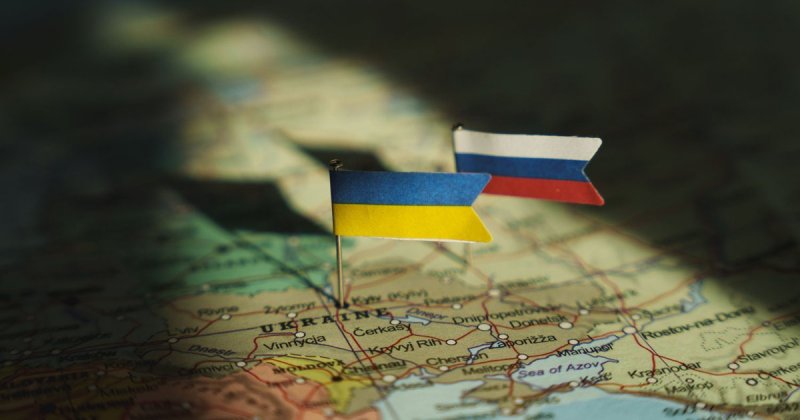
The war between Russia and Ukraine has evolved into one of the most consequential geopolitical events of the modern era, not only because of its military dimension but due to its profound economic repercussions, News.Az reports.
What initially appeared as a regional conflict has triggered systemic shocks across energy markets, food supply chains, financial systems, and global trade routes. Years into the war, its economic effects have not faded; instead, they have become embedded in global structures. The conflict has accelerated trends that were already underway, including fragmentation of markets, redefinition of energy security, and the politicization of trade.
How energy markets became the first global casualty
Energy was the earliest and most visible channel through which the war affected the global economy. Russia’s role as a major exporter of oil, natural gas, and coal meant that disruptions immediately reverberated worldwide. Supply uncertainty, sanctions, and infrastructure damage triggered price spikes and volatility. European countries, heavily dependent on Russian gas, faced acute pressure to secure alternative supplies. This sudden realignment reshaped energy flows, boosted demand for liquefied natural gas, and forced governments to rethink long-term energy strategies under crisis conditions.
Why Europe’s economic model faced unprecedented stress
For decades, Europe’s industrial competitiveness rested partly on access to relatively affordable Russian energy. The war abruptly undermined this foundation. Higher energy costs translated into inflation, reduced industrial output, and rising fiscal burdens as governments subsidized households and businesses. Energy-intensive sectors such as chemicals, metals, and manufacturing faced difficult decisions about scaling back production or relocating. The shock exposed vulnerabilities in Europe’s economic model and accelerated debates over strategic autonomy and industrial policy.
How inflation became a global phenomenon
The war contributed to a surge in global inflation by simultaneously disrupting energy and food markets. Higher fuel costs increased transportation and production expenses across sectors. Governments responded with monetary tightening, raising interest rates to contain inflation. This shift had global consequences, increasing borrowing costs and slowing growth, particularly in developing economies. While inflation has moderated in some regions, the war-induced shock altered expectations and policy priorities, making price stability a central concern worldwide.
Why food security emerged as a critical issue
Ukraine and Russia play significant roles in global grain, fertilizer, and agricultural markets. The war disrupted exports, damaged infrastructure, and increased insurance and transportation costs. As a result, food prices rose sharply, hitting import-dependent countries hardest. For lower-income populations, even modest price increases translated into serious hardship. The crisis underscored the fragility of global food systems and the extent to which regional conflicts can threaten basic human security far beyond their borders.
How sanctions reshaped trade and finance
Sanctions imposed on Russia represent one of the most extensive economic pressure campaigns in history. They targeted banking, technology, energy, and trade, aiming to constrain Russia’s capacity to sustain the war. These measures also reshaped global finance by encouraging alternative payment systems, new trade partnerships, and non-dollar transactions. While sanctions imposed costs on Russia, they also forced other countries and companies to reassess exposure to geopolitical risk and compliance obligations, adding friction to global commerce.
Why global supply chains became more politicized
The war reinforced a broader shift toward politicized supply chains. Governments and companies increasingly evaluate not only cost and efficiency but also political alignment and security risks. Strategic goods, including energy, food, and critical minerals, are now treated as national security assets. This shift has reduced efficiency and increased costs but reflects a new priority on resilience. The war served as a catalyst, demonstrating how quickly supply chains can become liabilities in times of conflict.
How defense spending and industrial priorities changed
The conflict prompted a significant increase in defense spending, particularly in Europe. Governments redirected resources toward military modernization, stockpiling, and domestic defense industries. While this stimulated certain sectors, it also diverted funds from social and economic development priorities. The rearmament trend has long-term fiscal implications and reflects a broader reassessment of security risks in economic planning.
Why emerging markets face disproportionate pressure
Emerging and developing economies have borne a disproportionate share of the war’s economic fallout. Higher energy and food prices strained budgets, widened trade deficits, and increased debt vulnerabilities. Many of these countries lack the fiscal space to absorb shocks through subsidies or social programs. The war thus widened global inequality, with advanced economies better positioned to manage volatility while poorer states faced heightened instability.
How currency markets and capital flows reacted
Periods of escalation in the war often coincide with volatility in currency markets. Investors tend to seek safe assets, strengthening some currencies while weakening others. Capital flows became more cautious, with heightened sensitivity to geopolitical risk. This environment complicated economic management, particularly for countries with high external debt or reliance on foreign investment. The war reinforced the link between geopolitics and financial stability.
Why energy diversification is reshaping long-term investment
One of the most enduring economic effects of the war is the acceleration of energy diversification. Countries are investing more aggressively in renewables, alternative suppliers, and energy efficiency. While these shifts support long-term sustainability goals, they require significant upfront investment and coordination. The war compressed timelines, forcing rapid decisions that will shape energy systems for decades.
How Russia adapted economically under pressure
Despite sanctions and isolation, Russia adapted its economy through reorientation of trade, capital controls, and state intervention. Energy exports shifted toward new markets, while domestic production substituted for restricted imports in some sectors. These adaptations mitigated immediate collapse but came at the cost of reduced efficiency and long-term growth potential. The Russian case illustrates both the limits and resilience of large economies under sustained pressure.
Why uncertainty has become a permanent feature of global planning
Perhaps the most significant economic legacy of the war is persistent uncertainty. Businesses, governments, and investors now factor geopolitical risk more heavily into decision-making. Long-term planning horizons have shortened, and flexibility has become a priority. This environment discourages investment and slows growth, even in regions not directly involved in the conflict.
How the war challenges assumptions about globalization
The Russia–Ukraine war challenged the assumption that economic interdependence naturally promotes stability. Instead, it revealed how deeply interconnected systems can amplify shocks. Trade, finance, and energy ties became tools and vulnerabilities simultaneously. As a result, globalization is evolving into a more fragmented and conditional form, shaped by political alignment and security considerations.
Why the economic consequences will outlast the war itself
Even if active hostilities were to subside, the economic effects would persist. Infrastructure damage, altered trade routes, restructured energy systems, and changed policy frameworks will not quickly revert. Reconstruction costs, debt accumulation, and lost investment will shape economic trajectories for years. The war has already rewritten assumptions that guided global economic behavior.
Conclusion – how the Russia–Ukraine war redefined economic risk
The Russia–Ukraine war is more than a regional conflict; it is a defining event for the global economy. Its impact on energy, food, inflation, trade, and financial stability has reshaped how states and markets perceive risk. The war accelerated trends toward fragmentation, resilience-driven policy, and the fusion of economics with security. Long after the fighting ends, its economic imprint will remain, influencing global growth, cooperation, and competition in an increasingly uncertain world.


Similar news