In recent years, the South Caucasus has reached a historic turning point. After decades of conflict, mutual accusations, and deep mistrust, the region has come closer than ever to a real chance for sustainable peace. Yet, as history often shows, it is precisely at such moments — when opportunities for normalization emerge — that forces opposed to peace become more active. Their main tool remains the same: fueling tensions through emotional narratives, historical grievances, and politically charged rhetoric.
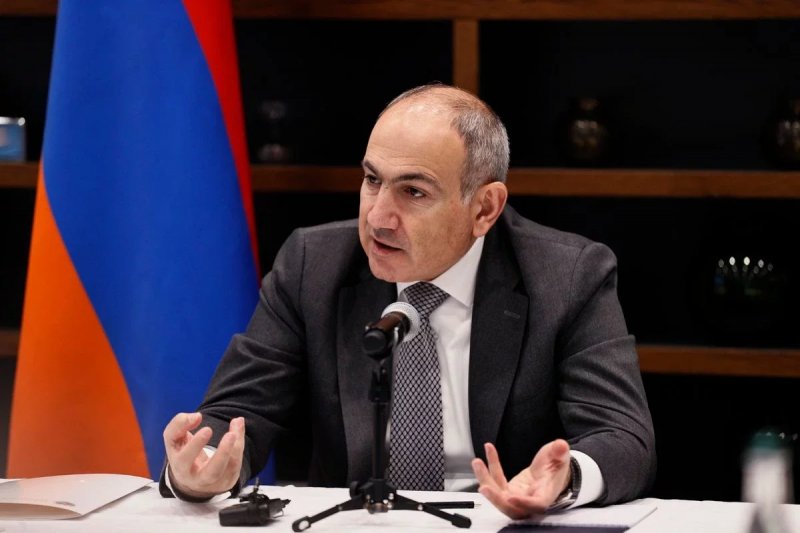
Against this backdrop, recent statements by Armenian Prime Minister Nikol Pashinyan are particularly significant. In essence, he openly acknowledged that rhetoric centered on “genocide,” “ethnic cleansing,” and “historical justice” does not bring the region closer to resolution but instead perpetuates conflict. His remark that “when we use genocide rhetoric, we get genocide rhetoric in return” highlights a fundamental truth: the language of confrontation inevitably produces confrontation.
This statement is important not only within Armenia’s domestic political debate. It reflects a broader realization that discourse helps shape reality. When political narratives are built around accusations, historical trauma, and maximalist demands, they inevitably block any path toward dialogue. Even more dangerously, they create a mirror effect — each side responds in kind, reinforcing a cycle of escalation.
It is precisely this mechanism that certain actors are attempting to exploit today in order to reignite tensions around Azerbaijan. In the international information space, one can increasingly observe efforts to frame developments through emotionally charged accusations while ignoring legal and political realities. These narratives often rely on selective interpretations, amplified historical references, and attempts to impose a one-sided view of complex regional dynamics.
The objective is clear: to derail normalization efforts and push the region back into a state of chronic instability. To achieve this, it is necessary to cultivate an atmosphere in which any move toward peace is perceived as betrayal, and any compromise as weakness. This is a classic strategy of political mobilization through fear.
A central element of this strategy is the continued politicization of the “genocide” narrative. For decades, it has functioned not only as part of historical memory but also as a political instrument, shaping identity, influencing foreign policy, and consolidating domestic support. However, as Pashinyan himself pointed out, such rhetoric carries destructive potential. It does not resolve problems; it reproduces them, creating a closed loop of mutual accusations.
It is important to emphasize that this is not about denying history or dismissing past tragedies. Rather, it is about the political use of history. When historical memory becomes a tool of contemporary political struggle, it ceases to serve reconciliation and instead fuels new divisions.
In this context, Pashinyan’s reference to a “conspiracy against Armenia” is particularly revealing. He effectively points to the existence of both internal and external forces interested in maintaining confrontation. These forces may vary — from radical political groups to external actors for whom instability in the region serves as a lever of influence.
Photo: AIR Center
For Azerbaijan, this situation has a dual dimension. On the one hand, there are ongoing attempts at informational pressure and narrative manipulation. On the other, there is a genuine opportunity for a shift in regional dynamics. If Armenia begins to move away from aggressive rhetoric, it could open the door to more pragmatic and constructive dialogue.
However, such a transition will not be easy. Changes in political culture take time and inevitably face resistance. In Armenia, as in any country, there are groups for whom conflict is a source of political capital. For them, abandoning entrenched narratives means losing influence. As a result, sensitive issues like the “genocide” narrative are likely to remain tools of internal political struggle for the foreseeable future.
The upcoming elections in Armenia may prove decisive. They will serve as a test of whether Armenian society is ready to support a course toward de-escalation or whether it will continue to rely on conflict-driven mobilization. If Pashinyan’s political force maintains its position, it could signal a gradual shift away from radical rhetoric toward a more pragmatic agenda.
For Azerbaijan, it is crucial to maintain strategic composure. Responding to attempts at escalation with mirror rhetoric would only reinforce the cycle of confrontation. Instead, Azerbaijan should continue to promote a forward-looking agenda based on stability, development, and respect for international law. Such an approach not only strengthens the country’s global position but also deprives radical actors of their narrative leverage.
Peace is always a more complex path than conflict. It requires political will, readiness for compromise, and the ability to engage society in constructive dialogue. Yet it is the only path that offers prospects for economic growth, regional cooperation, and long-term stability.
Today, the South Caucasus faces a clear choice. It can either remain trapped in the logic of the past — dominated by fear and mutual accusations — or move forward toward a future grounded in reality rather than political myth.
And in this context, one point becomes increasingly clear: those who attempt to ignite a new wave of conflict against Azerbaijan are, in fact, acting against the interests of peace itself. Their strategy leads to a dead end. The sooner this is recognized across the region, the greater the chances that this dead end can be overcome.