President Ilham Aliyev shares post on anniversary of Shusha’s liberation


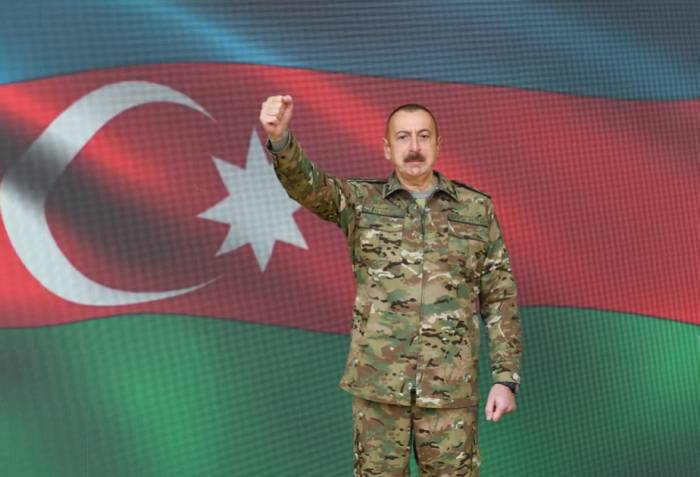
President Ilham Aliyev shared a post marking the anniversary of Shusha's liberation from Armenian occupation, News.Az reports.
The post reads: "Our victory history - four years have passed since Shusha's liberation from Armenian occupation."Today, on November 8, Azerbaijan celebrates the fourth anniversary of Shusha's liberation from Armenian occupation - the date which is marked as Victory Day.
On November 8, 2020, the attention of Azerbaijanis worldwide, along with Azerbaijan's friends and allies, was focused on the Alley of Martyrs. It was there that the most awaited words, words the Azerbaijani people had anticipated for 28 long years, were finally spoken. These words came from the Commander-in-Chief, President Ilham Aliyev: "You are free, dear Shusha! We have returned, dear Shusha! We will revive you, dear Shusha!" Overcome with emotion, the President could not hold back his tears.
In those days, emotions overwhelmed every Azerbaijani. It was clear the war was over. Although the official conclusion of the 44-day Patriotic War came on November 10, true victory was achieved on the day Shusha was liberated. Declaring November 8 as Victory Day was a well-made decision. Initially, the celebration was set for the day of the Trilateral Statement's signing; however, at the request of fraternal Turkey, which commemorates Atatürk Memorial Day on November 10, it was moved to November 8. This decision was not only out of respect for Ankara’s request but also because everyone in Azerbaijan understood that the true Victory Day was when the Azerbaijani flag was raised over liberated Shusha.
Officially, the end of the thirty-year Armenian occupation came on the night of November 10, 2020, when the President of Azerbaijan, Ilham Aliyev, the Prime Minister of Armenia, Nikol Pashinyan, and Russian President Vladimir Putin signed the document known as the Trilateral Statement.
The 44-day war entered not only Azerbaijani history but also world military history as a unique case in which a small nation managed to liberate its land after thirty years of occupation, defeating an adversary supported by major countries and influential international groups. The victory was won in a fair fight. Azerbaijan waged war with maximum humanitarian restraint. The Commander-in-Chief prioritized minimizing casualties among Azerbaijani soldiers and Armenian civilians. All Azerbaijani military operations were conducted according to these orders


Similar news