
The peace plan developed by the President of the United States to end the war in Ukraine emerged from a combination of economic, geopolitical, and strategic factors. It was not a spontaneous decision but the result of extensive discussions and calculations.
From his first day back in the White House, Donald Trump sought to end a conflict that he believed was draining the U.S. treasury while offering no benefit to the country. The president has repeatedly stated that if he, rather than Biden, had been in office, the war in Eastern Europe would never have happened.
Trump fully understands that China is the biggest beneficiary of the conflict, strengthening its position in East Asia, Southeast Asia, Central Asia, and even Latin America. Russia faces similar concerns within the context of its own strategic interests. It is no coincidence that President Vladimir Putin finds common ground with the U.S. leader. Ending the war would allow both countries to focus on domestic challenges, global security issues, and strengthening their geopolitical positions.
It is clear that supporters of continuing the war are not ready to give up their stance, particularly in several European countries and within certain EU institutions that have profited from arms supplies.
On November 26, President Trump announced that his previously drafted peace plan for resolving the conflict in Ukraine had been reduced from 28 to 22 points. According to the president, this change was the result of more thorough refinement of the original concept. It should be noted that the “party of war,” seeking to sabotage peace negotiations, leaked parts of the plan to the media but failed to achieve its goal. According to Trump, “many of the issues have been resolved, and in fact resolved in a very favorable way.”
Source: TASS
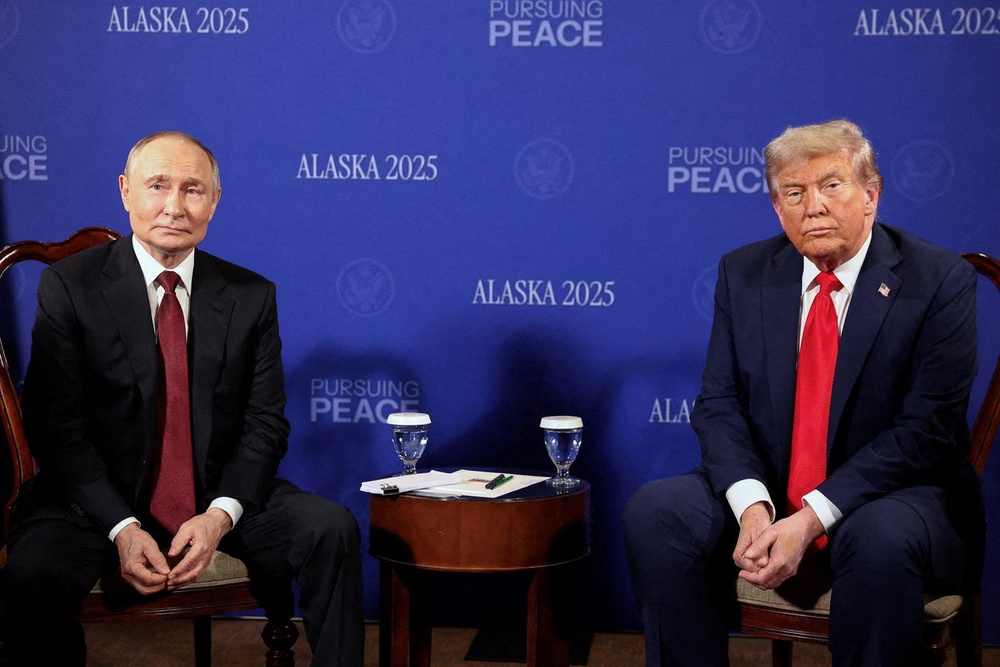
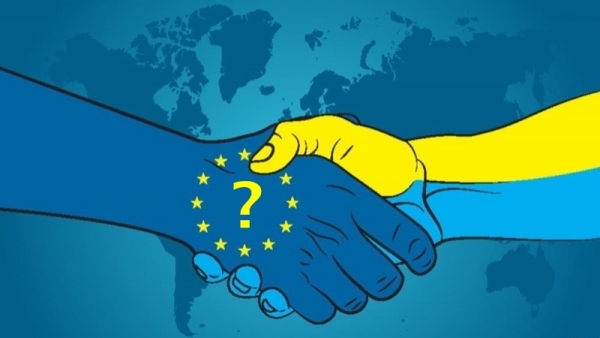
In Moscow, officials confirmed that they expect a visit from the White House special envoy, Steve Witkoff. Russian President Vladimir Putin stated that Trump’s peace plan had been discussed even before the Russia–U.S. summit in Alaska. During direct talks in Anchorage, Russia agreed to the U.S. proposals; however, the American side later paused the process, citing “Ukraine’s effective refusal of the peace plan proposed by President Trump.” Because the negotiations were conducted strictly between Moscow and Washington, the plan was drafted without consultations with European countries, which caused frustration in Brussels.
On November 23, consultations between Ukrainian representatives and their U.S. and European partners were held in Geneva. Following the meeting, the Europeans presented a counter-proposal: Germany, France, and the United Kingdom drafted a peace plan based on the American framework but with a stronger emphasis on Ukraine’s interests. According to The Telegraph, after the Geneva discussions the plan was reduced to 24 points, and the clause stating that “Russia will not invade neighboring countries and NATO will not expand further” was removed.
EU representatives were particularly critical of the provision involving territorial concessions by Kyiv. They also proposed increasing the limit on the size of the Ukrainian army to 800,000 personnel, instead of the 600,000 outlined in the U.S. plan. Summing up the talks in Switzerland, German Foreign Minister Johann Wadephul described them as “very positive for European states,” while Marco Rubio called them “the most productive in a very long time.”
On November 25, several major media outlets, including Politico, Axios, Reuters, CBS News, and the Financial Times, reported that Russian and American delegations were holding negotiations in Abu Dhabi on the updated U.S. peace plan. According to the latest information, the new 22-point version of the plan no longer contains elements related to European security. Meanwhile, key provisions important to Moscow — recognition of Crimea and Donbas as Russian territory, Ukraine’s constitutional renunciation of NATO membership, and strict limits on the size of its armed forces — were described as “contentious,” according to the Financial Times.
Le Monde reported that the draft treaty also removed the clause calling for Russia’s return to the G8. European officials additionally insisted that the U.S. should not control how they decide to use frozen Russian assets, a major point of concern for EU leaders.
Source: constitutionnet
According to CNN sources familiar with the negotiations, Kyiv agreed to most of the points proposed by the United States, with the exceptions of troop-size limits, NATO membership, and territorial concessions. If accurate, this would make a peace agreement impossible, since Ukraine’s non-entry into NATO, the reduction of its armed forces, and the revision of its borders are Russia’s key demands. Kyiv’s attempts to prolong the negotiations — and ultimately derail them — serve the interests of leading EU states more than those of either the United States or Russia.
Against this backdrop, President Trump gave Ukraine until November 27 to determine which provisions must remain in the draft peace agreement. Following the Geneva talks, media outlets repeatedly reported that a meeting between Donald Trump and Volodymyr Zelenskyy was imminent. However, the White House denied these claims, saying the American president has no interest in meeting the Ukrainian leader or European heads of state, as their positions are already well known to him.
Trump later wrote on Truth Social that White House special envoy Steve Witkoff would soon travel to Russia for talks with Vladimir Putin, information confirmed by Putin’s adviser Yuri Ushakov. At the same time, U.S. Army Secretary Dan Driscoll will visit Kyiv for discussions with Zelenskyy.
Trump is willing to meet personally with both Putin and Zelenskyy, but only once a final agreement to end the war is reached or is close to completion. As speculation about upcoming peace-related meetings circulated in Kyiv and Moscow, Bloomberg published what it described as transcripts of conversations between Steve Witkoff and Yuri Ushakov, as well as between Ushakov and Russian Direct Investment Fund chief Kirill Dmitriev.
According to Russian Foreign Ministry spokesperson Maria Zakharova, the surge of media reports following Trump’s renewed statements about the peace plan stems from the fact that “a certain part of the global backstage” is disappointed by the lack of escalation. “The plan apparently expected escalation of the crisis, more global corruption, and the killing of as many people as possible,” Zakharova told Radio Sputnik.
Meanwhile, Russian Foreign Minister Sergey Lavrov said Russia has not yet received the peace plan through official channels. He added that the Kremlin is ready to discuss “specific formulations,” since “a number of issues require clarification.” Judging by the pace of recent developments, Kyiv will ultimately have to accept the main points of President Trump’s plan in exchange for guarantees that Ukraine will continue to exist as a sovereign, neutral state. Otherwise, Washington will simply halt all military and financial aid, a step that would end the war regardless, but on far harsher terms.