Urgent warning from climate talks in Colombia


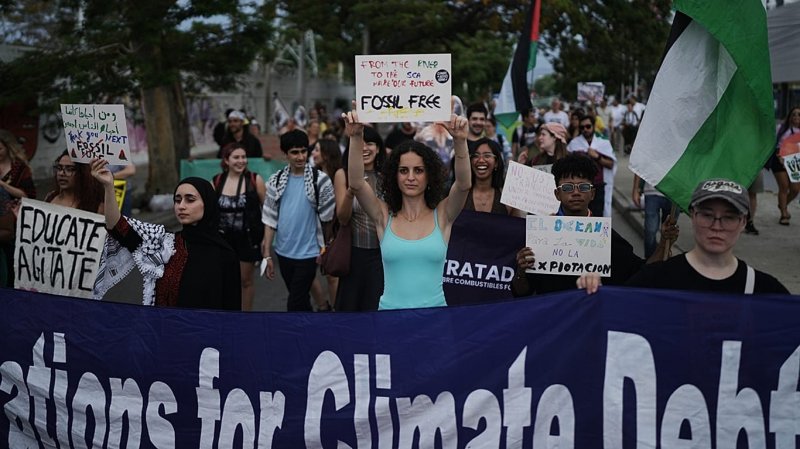
A major global climate summit in Santa Marta is sending an unusually direct message: the world must move away from fossil fuels—and faster than ever before.
More than 50 countries have gathered for the first-ever international conference dedicated entirely to transitioning away from oil, gas, and coal. While similar discussions have taken place for decades, organisers say this moment feels different, driven not only by climate urgency but by growing concerns over energy security and geopolitical instability, News.Az reports, citing foreign media.
The two-day ministerial meeting marks the political core of the event, bringing together senior officials to tackle one of the most difficult global challenges: how to replace fossil fuels without disrupting economies that still depend on them.
RECOMMENDED STORIES
The conference itself emerged from frustration with traditional climate negotiations, particularly after last year’s COP30 failed to directly address fossil fuel use in its final agreement. For many participants, that omission highlighted the limits of existing global frameworks.
Now, countries are attempting to push the conversation forward outside formal UN structures.
Officials argue that the case for change is no longer just environmental. European leaders pointed to the financial and political costs of ongoing conflicts, saying dependence on fossil fuels has become a strategic vulnerability. Rising geopolitical tensions—especially those affecting energy supplies—have reinforced the urgency of finding alternatives.
Climate envoy Wopke Hoekstra told delegates that the economic toll of energy-linked conflicts is mounting daily, while Rachel Kyte emphasized that fossil fuels are increasingly seen as a source of global instability rather than security.
Meanwhile, Gustavo Petro delivered one of the starkest warnings, pointing to environmental tipping points and arguing that current global cooperation efforts are falling short. He linked modern conflicts directly to competition over fossil resources, suggesting the issue extends far beyond climate policy.
Despite record investments in renewable energy, scientists warn progress remains too slow. Global temperatures have already risen by around 1.4°C compared to pre-industrial levels, putting the world dangerously close to breaching the critical 1.5°C threshold.
Yet the path forward is far from unified.
Major fossil fuel producers—including Canada, Norway, and Australia—are participating, alongside developing oil economies such as Nigeria and Brazil. At the same time, some of the world’s largest emitters—including the United States, China, and India—are notably absent, highlighting deep divisions over responsibility and strategy.
The summit is not expected to produce binding agreements. Instead, it aims to build momentum and outline practical pathways for countries willing to gradually reduce fossil fuel production and consumption.
One of the key challenges lies in balancing economic realities. For nations heavily reliant on oil and gas revenues, the transition poses serious financial risks. Organisers acknowledge that without strong international support and investment, many countries may struggle to make the shift.
Still, some steps are already being proposed. France, for example, has introduced a timeline to phase out coal by 2030, oil by 2045, and gas by 2050 for energy use—signaling how long-term strategies might take shape.
By Aysel Mammadzada


Similar news