What is behind the Trump-Xi meeting?


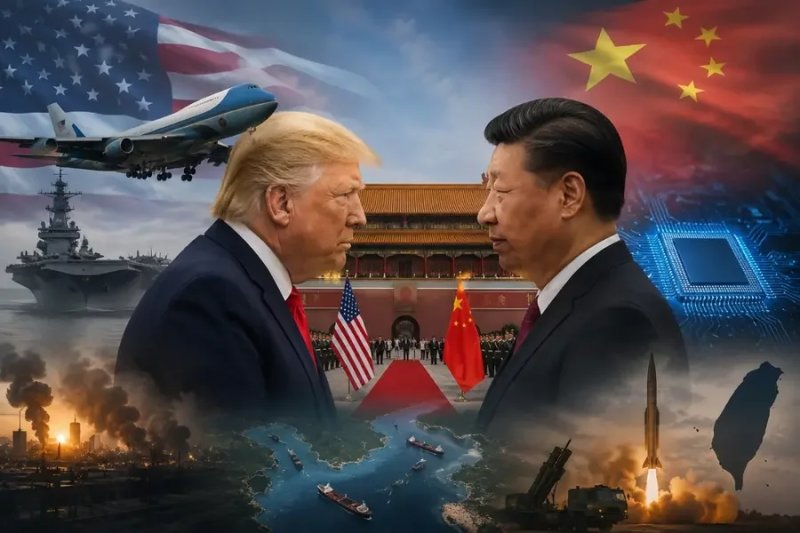
The meeting between U.S. President Donald Trump and Chinese President Xi Jinping in Beijing has become one of the most closely watched geopolitical events of 2026 because it comes at a time when relations between the world’s two largest powers remain deeply complicated, economically interconnected and strategically competitive at the same time.
The summit is taking place during a fragile period marked by global economic uncertainty, tensions surrounding Taiwan, the continuing war in the Middle East, disputes over advanced technology, rising military rivalry in Asia and concerns about slowing global growth. Although expectations for a dramatic breakthrough remain relatively low, financial markets, governments and multinational companies across the world are watching the meeting extremely closely because even small shifts in U.S. China relations can reshape global politics and the international economy.
RECOMMENDED STORIES
For years, Washington and Beijing have operated within a relationship defined simultaneously by cooperation and confrontation. The United States and China remain deeply dependent on one another economically, yet they increasingly compete militarily, technologically and diplomatically across multiple regions of the world.
The Trump Xi summit therefore represents far more than a routine diplomatic meeting. It is part of a much larger struggle over the future balance of global power in the twenty first century.
Why is the Trump Xi meeting so important?
The summit matters because the United States and China together dominate much of the global economy, international trade and technological development.
The two countries are:
- The world’s two largest economies
- Major military powers
- Central players in global supply chains
- Leading technological competitors
- Permanent members of the UN Security Council
Any tension between Washington and Beijing can affect:
- Global markets
- Oil prices
- Manufacturing
- Technology industries
- Currency markets
- International diplomacy
As a result, meetings between American and Chinese leaders are always viewed as globally significant events.
This particular summit is especially important because relations between the two countries have become increasingly tense over the last several years.
What are the main issues Trump and Xi are expected to discuss?
The discussions are expected to focus on several major geopolitical and economic issues simultaneously.
Trade remains one of the biggest topics because tariffs, supply chain tensions and market access disputes continue affecting both economies.
Technology competition is another major issue, particularly involving:
- Artificial intelligence
- Semiconductors
- Advanced chips
- Telecommunications
- Quantum computing
Taiwan is expected to be one of the most sensitive subjects. Beijing considers Taiwan part of China, while the United States continues supporting Taiwan militarily and politically.
The Middle East conflict and tensions involving Iran are also expected to be discussed because both countries have major economic and strategic interests in regional stability.
The leaders may additionally discuss:
- Military communications
- Global inflation
- Energy security
- Climate cooperation
- Currency markets
- Global growth risks
The summit therefore covers a broad range of interconnected global issues.
Why are expectations from the summit relatively low?
Many analysts believe neither side currently wants a major confrontation, but neither side appears ready for significant compromise either.
The United States and China remain divided on several fundamental issues involving:
- Trade policy
- National security
- Taiwan
- Technology restrictions
- Military influence in Asia
- Human rights
- Industrial policy
Because these disagreements are structural and long term, experts believe the summit is more likely to preserve stability rather than produce transformational agreements.
For financial markets and governments, simply avoiding further escalation may already be considered a successful outcome.
Why are trade tensions still such a major problem?
Trade disputes between the United States and China have continued for years because both countries increasingly view economic relations through the lens of national security and geopolitical competition.
The United States accuses China of:
- Unfair trade practices
- Intellectual property theft
- Industrial subsidies
- Technology coercion
- Market restrictions
China, meanwhile, accuses Washington of trying to contain Chinese economic growth and technological development through sanctions and export controls.
The trade conflict intensified during Trump’s earlier presidency when the United States imposed large tariffs on Chinese goods. Although some agreements were reached later, tensions never fully disappeared.
Today, trade relations remain fragile despite ongoing economic interdependence.
Why is technology competition central to the relationship?
Technology has become one of the most important battlegrounds between the two powers because advanced technology increasingly determines economic power, military capability and geopolitical influence.
The United States wants to maintain leadership in:
- Artificial intelligence
- Semiconductor production
- Advanced computing
- Defense technology
Washington has imposed restrictions aimed at limiting China’s access to advanced semiconductor technology and high performance AI chips.
China, meanwhile, has accelerated efforts to achieve technological self sufficiency and reduce dependence on Western suppliers.
This competition is not only economic. It is also strategic and military.
Both countries understand that whoever dominates future technologies may shape the global balance of power for decades.
Why is Taiwan such a sensitive issue?
Taiwan remains the most dangerous flashpoint in U.S. China relations.
China views Taiwan as part of its territory and has repeatedly stated that reunification is inevitable.
The United States officially recognizes the “One China” policy but continues supplying Taiwan with weapons and maintaining unofficial political and military support.
Beijing views American military cooperation with Taiwan as interference in internal Chinese affairs.
Washington argues Taiwan’s security and regional stability are important international concerns.
The issue has become even more sensitive because:
- Chinese military activity near Taiwan has increased
- U.S. arms sales continue
- Regional military tensions are rising
- Asian allies are increasingly concerned about security risks
Many analysts believe Taiwan represents the greatest long term risk for direct confrontation between the United States and China.
Why is the Middle East conflict connected to the summit?
The Middle East conflict affects both countries economically and strategically.
China depends heavily on Middle Eastern energy imports and wants regional stability to protect economic growth.
The United States remains deeply involved in Middle Eastern security and military affairs.
Recent tensions involving Iran, Israel and Gulf states created concerns about:
- Oil prices
- Shipping routes
- Global inflation
- Energy security
Both Washington and Beijing therefore have strong incentives to avoid wider regional escalation.
At the same time, the two countries approach Middle Eastern diplomacy differently.
China increasingly presents itself as a neutral economic partner and mediator, while the United States remains heavily tied to traditional regional alliances and military commitments.
The summit may therefore include discussions about how to prevent broader instability.
Why are financial markets watching the meeting so closely?
Global markets react strongly to U.S. China relations because both countries sit at the center of the global economy.
Positive signals from the summit could support:
- Stock markets
- Technology shares
- Commodity prices
- International trade confidence
Negative developments could increase fears about:
- Supply chain disruptions
- New tariffs
- Economic slowdown
- Geopolitical conflict
Markets are particularly sensitive right now because investors are already balancing:
- AI driven optimism
- Inflation fears
- High oil prices
- Geopolitical tensions
As a result, even subtle changes in diplomatic tone between Trump and Xi can influence investor sentiment worldwide.
Why is artificial intelligence indirectly part of the summit?
Artificial intelligence has become central to U.S. China competition because AI is expected to transform:
- Military systems
- Economic productivity
- Cybersecurity
- Industrial development
- Global influence
The United States currently leads in several advanced AI technologies, but China is investing enormous resources to close the gap.
Semiconductors used in AI systems have become especially important.
Washington has tried to limit Chinese access to advanced AI chips through export controls, while China continues building domestic semiconductor capabilities.
This technological rivalry increasingly shapes broader geopolitical relations.
Why does Trump approach China differently from previous U.S. presidents?
Trump has historically approached China with a stronger focus on:
- Trade imbalances
- Manufacturing competition
- Economic nationalism
- Tariff pressure
Unlike some previous administrations that emphasized engagement and integration, Trump’s approach often frames China primarily as a strategic competitor.
However, Trump also tends to favor direct leader to leader diplomacy and personal negotiations.
This creates a unique dynamic in meetings with Xi Jinping because:
- Competition remains intense
- Communication channels remain open
- Economic pragmatism still exists
Trump’s supporters argue his strategy forces China to negotiate more seriously, while critics argue it increases instability and unpredictability.
How does Xi Jinping view the United States?
Xi Jinping increasingly portrays China as a rising global power facing external pressure from the United States.
Chinese leadership believes Washington aims to:
- Slow China’s technological rise
- Limit Chinese global influence
- Strengthen military alliances around China
- Contain Beijing strategically
At the same time, China also understands its economy remains heavily connected to global trade and international financial systems.
Xi therefore seeks to balance:
- Nationalistic strength
- Economic stability
- Strategic competition
- Diplomatic management
The summit reflects this balancing act.
Why is economic stability so important for both leaders?
Both Trump and Xi face strong incentives to avoid major economic disruption.
The United States wants:
- Stable financial markets
- Lower inflation
- Strong economic growth
- Reduced supply chain risks
China wants:
- Export stability
- Investor confidence
- Economic recovery
- Employment growth
Both economies are experiencing pressure from:
- Inflation
- Global uncertainty
- Slowing growth in some sectors
- Geopolitical instability
As a result, neither side currently appears eager for uncontrolled escalation.
Could the summit produce major agreements?
Most analysts believe dramatic breakthroughs are unlikely.
However, smaller achievements could still matter significantly.
Possible outcomes include:
- Maintaining existing trade arrangements
- Improving military communication channels
- Reducing tariff escalation risks
- Stabilizing diplomatic relations
- Expanding dialogue on specific issues
Sometimes preventing deterioration is itself considered diplomatic success between major rivals.
Why are military tensions increasing in Asia?
Military competition between the United States and China has intensified because both countries are expanding strategic influence across the Indo Pacific region.
The United States has strengthened ties with:
- Japan
- South Korea
- Australia
- The Philippines
China views some of these alliances as attempts at strategic containment.
Meanwhile, Beijing has increased:
- Naval activity
- Military exercises
- Regional security pressure
This military competition raises fears about accidental escalation or regional instability.
The summit therefore also carries security importance beyond economics.
How does the global economy depend on U.S. China relations?
Modern globalization heavily depends on both countries.
China remains central to:
- Manufacturing
- Industrial supply chains
- Commodity demand
The United States remains central to:
- Global finance
- Technology
- Currency systems
- Consumer markets
Disruptions between the two powers can therefore quickly affect:
- Inflation
- Shipping
- Electronics production
- Energy markets
- Investment flows
This interconnectedness explains why governments and corporations globally closely monitor every major diplomatic interaction between Washington and Beijing.
Why are oil prices part of the discussion?
Oil prices remain elevated due to Middle Eastern tensions and broader geopolitical uncertainty.
High oil prices create inflation risks for both countries and the global economy.
China, as a major energy importer, wants stable oil supplies and lower prices.
The United States also wants to prevent inflation from accelerating further because higher energy costs affect consumers and financial markets.
Regional instability involving Iran or Gulf shipping routes therefore concerns both governments.
Could the summit affect global inflation?
Indirectly, yes.
If the summit reduces trade tensions and improves supply chain stability, it could ease inflationary pressures globally.
However, if tensions worsen and tariffs expand further, costs for businesses and consumers could rise again.
Geopolitical stability often influences:
- Energy prices
- Shipping costs
- Manufacturing expenses
- Currency movements
As a result, diplomatic relations between major powers can significantly shape inflation trends worldwide.
Why are investors simultaneously optimistic and worried?
Global markets currently reflect two competing forces.
On one side:
- AI driven growth
- Strong technology earnings
- Economic resilience
continue supporting optimism.
On the other side:
- Geopolitical tensions
- Inflation
- Oil prices
- Military rivalry
create major uncertainty.
The Trump Xi summit sits directly at the center of this tension between optimism and risk.
Investors hope stable diplomacy can preserve economic momentum while preventing broader geopolitical crises.
Could U.S. China rivalry continue for decades?
Many experts believe the rivalry between Washington and Beijing represents a long term structural competition rather than a temporary political disagreement.
The competition involves:
- Economic leadership
- Technological dominance
- Military power
- Global influence
- Political systems
Because these issues are deeply interconnected, relations are likely to remain competitive even during periods of cooperation.
The world may increasingly experience an international system shaped by:
- Strategic rivalry
- Economic interdependence
- Selective cooperation
- Regional competition
The Trump Xi summit therefore represents one chapter within a much larger historical transformation in global politics.
What is the most realistic outcome from the summit?
The most realistic outcome may simply be stability.
Both countries likely want to:
- Avoid economic shocks
- Prevent military escalation
- Keep communication channels open
- Preserve financial stability
Even limited diplomatic progress could reassure markets and reduce immediate geopolitical fears.
At the same time, deeper structural tensions between the United States and China are unlikely to disappear.
The summit therefore reflects a modern geopolitical reality where the world’s two most powerful nations remain simultaneously connected, competitive and cautious about pushing confrontation too far.
That complicated balance may ultimately define international politics and the global economy for years to come.
By Faig Mahmudov


Similar news