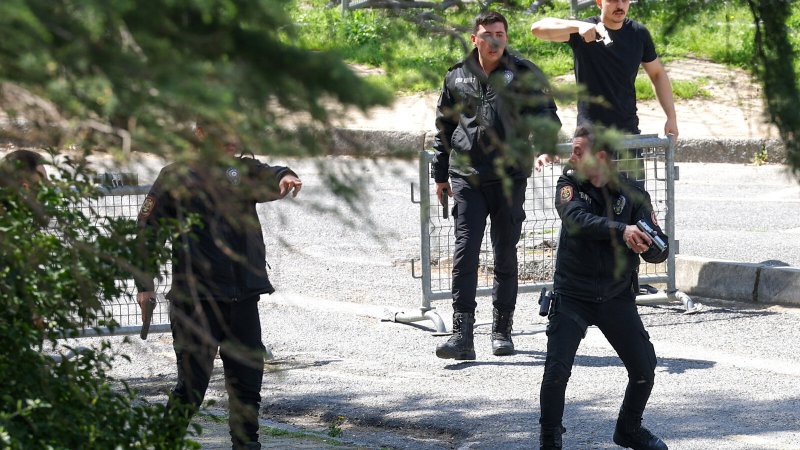
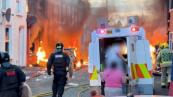
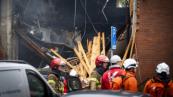
According to preliminary reports, the suspect approached or attempted to reach the vicinity of the consulate before being intercepted by security forces. The confrontation escalated into a firefight, prompting a rapid and large scale response from Turkish law enforcement and counterterrorism units.
While the full details are still emerging, authorities have treated the incident with the highest level of seriousness due to the symbolic and strategic significance of the target. Diplomatic facilities, particularly those representing countries involved in ongoing regional tensions, are often considered high-value targets by individuals or groups seeking to send political messages through violence.
Where exactly did the incident take place and why is this location sensitive?
The incident occurred near the Israeli consulate in Istanbul, a key diplomatic facility representing Israel in Türkiye’s largest and most globally connected city. Istanbul occupies a unique geopolitical position, bridging Europe and Asia, and hosting numerous diplomatic missions, international organizations, and foreign economic interests.
The area surrounding the consulate is typically subject to enhanced security measures. Diplomatic missions operate under the protection of the host country, in accordance with international law, particularly the Vienna Convention on Diplomatic Relations. As such, Türkiye is responsible for ensuring the safety of foreign diplomatic personnel and facilities.
The Israeli consulate is considered a particularly sensitive site due to Israel’s geopolitical position and the broader Middle Eastern context. Tensions involving Israel often resonate far beyond its borders, and its diplomatic missions worldwide have historically required elevated security due to past threats and attacks.
What happened during the incident itself?
Based on early accounts, the suspect approached the area near the consulate and was challenged by Turkish security personnel. At some point during the encounter, the individual reportedly opened fire or acted in a manner that triggered an armed response. Turkish police units stationed in the vicinity responded immediately, leading to an exchange of gunfire.
Witnesses in the area reported hearing multiple gunshots, followed by the rapid arrival of additional police units, ambulances, and specialized security teams. The area was quickly cordoned off, and access roads were closed to civilian traffic.
The confrontation appears to have been contained relatively quickly, suggesting a rapid and coordinated response by Turkish authorities. However, the exact sequence of events, including who fired first and the duration of the exchange, remains under investigation.
Who was the attacker and what is known about their identity?
As of now, Turkish authorities have not released detailed information about the identity of the attacker. In such cases, officials typically wait until identification is confirmed and next of kin are notified before making public statements.
Investigators are expected to examine the suspect’s background, including nationality, possible ideological affiliations, travel history, and digital footprint. Authorities will also seek to determine whether the attacker had any connections to organized extremist groups or whether the act was carried out independently.
The distinction between a lone actor and a network connected attacker is critical in shaping both the investigation and subsequent security responses. Lone actor attacks are often more difficult to predict, while coordinated attacks may indicate broader operational planning and support structures.
Was the attacker acting alone or as part of a larger network?
At this stage, it remains unclear whether the attacker acted alone or had accomplices. Turkish intelligence and counterterrorism agencies are likely conducting a comprehensive investigation to rule out the possibility of a coordinated attack.
This process typically includes analyzing communication records, reviewing surveillance footage, and examining any materials found in the suspect’s possession. Authorities may also carry out follow up operations, including arrests or raids, if there are indications of a wider network.
In many recent global incidents, individuals have carried out attacks independently while being ideologically influenced by extremist narratives. These so called lone wolf attacks can be inspired by online propaganda or broader geopolitical grievances without direct operational support.
Were there any casualties or injuries?
Information regarding casualties has been limited and, in some cases, inconsistent in early reporting. Some accounts suggest that the attacker may have been neutralized by police during the exchange of fire. There have also been unconfirmed reports of injuries, though the extent and severity remain unclear.
Emergency medical teams were dispatched to the scene as a precaution, and hospitals in the vicinity were placed on alert. Authorities are expected to provide verified casualty figures once all information has been confirmed.
The absence of large scale casualties would indicate that the swift response by Turkish police may have prevented a more serious outcome. However, even limited incidents near diplomatic sites are treated as major security events due to their potential implications.
How did Turkish authorities respond to the incident?
The response by Turkish authorities appears to have been rapid and coordinated. Police units already stationed near the consulate engaged the suspect immediately, preventing the individual from gaining access to the diplomatic compound.
Following the initial confrontation, reinforcements were deployed, including counterterrorism units, bomb disposal teams, and forensic specialists. The area was secured, and a systematic search was conducted to ensure that there were no additional threats, such as explosive devices or secondary attackers.
Authorities also implemented temporary security measures in surrounding areas, including road closures and increased patrols. Such actions are standard procedure in response to potential terrorist threats, aimed at minimizing risk and ensuring public safety.
Has the incident been officially classified as a terrorist attack?
While many media outlets have described the incident as a terrorist attack, official classification typically requires a thorough investigation. Turkish authorities will assess factors such as motive, intent, and any links to extremist organizations before making a formal determination.
An attack targeting a diplomatic mission is often viewed through the lens of terrorism due to its symbolic nature and potential political motivations. However, officials may initially describe the event as a “security incident” or “armed attack” until all evidence has been analyzed.
The classification carries legal and political implications, influencing how the case is prosecuted and how it is addressed in the broader context of national and international security.
What is the broader geopolitical context surrounding this incident?
The incident comes at a time of heightened tensions in the Middle East, involving multiple actors and overlapping conflicts. Developments involving Israel often generate strong reactions across the region and beyond, sometimes leading to security concerns in countries far removed from the immediate conflict zone.
Türkiye occupies a complex position in this environment. As a regional power with diplomatic ties across multiple blocs, it maintains relations with both Western countries and various Middle Eastern actors. This balancing act requires careful management of both domestic and international security dynamics.
The presence of numerous foreign diplomatic missions in Istanbul makes the city a focal point for international engagement, but also a potential target for individuals seeking to draw attention to political causes.
How have Israel and Türkiye responded diplomatically?
Official statements from both Israel and Türkiye are expected to emphasize cooperation and the importance of protecting diplomatic missions. Israel typically works closely with host countries in the aftermath of such incidents to assess risks and enhance security measures.
Türkiye, as the host nation, is responsible for ensuring the safety of diplomatic personnel and facilities. In similar past incidents, Turkish authorities have reaffirmed their commitment to international obligations and taken steps to strengthen security around foreign missions.
Diplomatic communication between the two countries is likely ongoing, focusing on both the immediate response and longer term security considerations.
What security measures are typically in place around diplomatic missions?
Diplomatic missions are usually protected by multiple layers of security. These include physical barriers, surveillance systems, controlled access points, and the presence of armed security personnel. In addition, local police often maintain a visible presence in the vicinity.
In high risk environments, these measures may be further enhanced through intelligence sharing, threat assessments, and coordination between host nation security services and the diplomatic mission’s own security teams.
Following incidents such as the one in Istanbul, it is common for security protocols to be reviewed and adjusted to address any identified vulnerabilities.
How common are attacks on diplomatic missions globally?
While relatively rare compared to other forms of violence, attacks on diplomatic missions have occurred in various parts of the world. Such incidents often attract significant international attention due to their potential impact on diplomatic relations and international law.
Diplomatic facilities are seen as symbols of state presence and authority, making them attractive targets for individuals or groups seeking to make political statements. As a result, they are consistently classified as high value targets in security planning.
Historical examples have led to the development of increasingly sophisticated security measures aimed at preventing such attacks and mitigating their impact.
What are the legal implications of an attack on a diplomatic mission?
Under international law, particularly the Vienna Convention on Diplomatic Relations, host countries are obligated to protect diplomatic premises and personnel. An attack on a diplomatic mission is therefore not only a criminal act but also a violation of international norms.
Such incidents can have diplomatic repercussions, potentially affecting relations between the host country and the state represented by the mission. However, the response of the host country, particularly the effectiveness of its security measures, is also taken into account.
Legal proceedings against those responsible will depend on the outcome of the investigation and the classification of the attack.
What role does intelligence play in preventing such incidents?
Intelligence gathering and analysis are critical components of counterterrorism efforts. Security agencies rely on a combination of human intelligence, signal intelligence, and open source information to identify potential threats.
In many cases, attacks are prevented before they occur due to timely intelligence and proactive measures. However, the evolving nature of threats, including the rise of lone actor attacks, presents ongoing challenges for security services.
The incident in Istanbul will likely prompt a review of intelligence processes to determine whether any warning signs were missed and how future threats can be more effectively identified.
How might this incident affect security policies in Türkiye?
In the immediate aftermath, security around diplomatic missions in Türkiye is expected to be heightened. Authorities may increase patrols, enhance surveillance, and implement additional protective measures.
In the longer term, the incident could lead to policy adjustments, including changes to threat assessment procedures, resource allocation, and interagency coordination. Such measures are aimed at strengthening the overall security framework and reducing the risk of similar incidents.
Türkiye has extensive experience in dealing with security challenges and has developed robust counterterrorism capabilities. This experience is likely to inform the response to the current situation.
What should the public understand about this incident?
For the general public, the incident serves as a reminder of the ongoing security challenges faced by major cities and international hubs. While such events are concerning, they are relatively rare, and authorities typically respond swiftly to contain threats.
It is important to rely on verified information from official sources and avoid spreading unconfirmed reports. Public cooperation with security measures, such as avoiding restricted areas and following official guidance, also plays a role in ensuring safety.
What happens next in the investigation?
The investigation will proceed through several stages, including forensic analysis, witness interviews, and intelligence assessments. Authorities will seek to establish a clear timeline of events, identify the attacker, and determine motive.
If evidence suggests the involvement of additional individuals or networks, further operations may be conducted. Findings from the investigation will inform both legal proceedings and future security measures.
Updates are likely to be provided as new information becomes available, though some details may remain confidential for security reasons.
Why is this incident significant beyond Türkiye?
An attack targeting a diplomatic mission has implications that extend beyond the host country. It touches on issues of international law, diplomatic relations, and global security.
Such incidents are closely monitored by governments and international organizations, as they may indicate broader trends or emerging threats. The response of the host country is also scrutinized, as it reflects on its ability to fulfill international obligations.
In this case, the incident underscores the interconnected nature of global security and the importance of cooperation between countries in addressing shared challenges.
Conclusion
The shooting incident near the Israeli consulate in Istanbul represents a serious security event with potential international implications. While many details remain under investigation, the swift response by Turkish authorities appears to have contained the situation and prevented further escalation.
As more information emerges, a clearer picture will develop regarding the identity and motives of the attacker, as well as any broader connections. In the meantime, the incident highlights the importance of vigilance, preparedness, and international cooperation in addressing the complex security challenges of the modern world.