Why China is limiting Nvidia H200 imports amid tech tensions


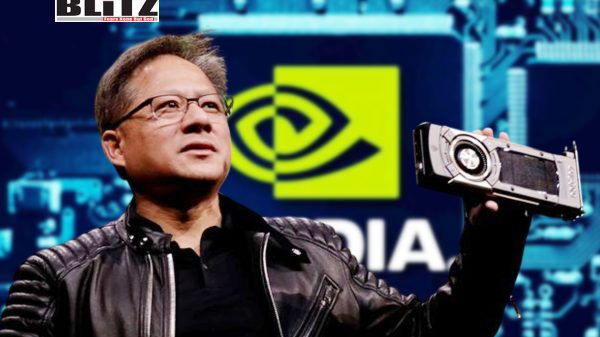
Chinese customs authorities have instructed officials that Nvidia’s H200 AI chips are not permitted to enter China, creating what amounts to a de facto import block, News.Az reports.
At the same time, domestic technology firms were advised not to purchase H200 chips unless absolutely necessary, signaling that this is a policy decision rather than a routine commercial disruption. The move matters because the H200 sits near the top of Nvidia’s AI hardware portfolio and is widely used to train and operate advanced artificial intelligence models. Any interruption affects cloud providers, AI developers, and data center expansion plans in China, while also intensifying the broader US–China technology rivalry.
What exactly is the Nvidia H200, and how does it differ from other chips used in AI?
The H200 is one of Nvidia’s most powerful data center GPUs, part of the Hopper generation designed for large-scale AI training and inference. Compared to earlier China-focused models, it delivers significantly higher performance and memory bandwidth, placing it close to the upper tier of commercially available AI accelerators. Organizations rely on such chips because they shorten training cycles for large models, increase throughput for AI services, and lower overall compute costs by improving efficiency at scale.
Is China “banning” the H200, or is this something more conditional and bureaucratic?
So far, the restriction appears to be implemented through customs enforcement and informal or semi-formal guidance rather than a single, publicly issued legal ban. The lack of detailed regulatory text leaves open questions about whether the measure is temporary, permanent, or limited to specific users or shipments. Some firms have reportedly been told that purchases may be possible under special circumstances, such as academic research, suggesting a controlled restriction with discretionary exemptions rather than a blanket prohibition.
How does this fit into the timeline of U.S. policy on AI chip exports to China?
The development follows a period of rapid policy shifts in Washington. The US recently authorized exports of H200 chips to China under strict conditions, including testing requirements, supply caps, and usage restrictions. Earlier policy adjustments had already signaled a more flexible approach compared to previous outright bans. Against this backdrop, China’s move to block or tightly control imports appears as a direct counterbalance, effectively neutralizing the practical impact of US export approval.
Why would China block or limit H200 imports if Chinese companies want them
Several motivations likely overlap. One is industrial policy: restricting access to leading foreign chips can create space for domestic alternatives and accelerate the development of local ecosystems. Another is strategic leverage, using access to advanced chips as a bargaining tool amid broader negotiations with Washington. A third factor is security and governance, allowing authorities to control which entities gain access to the most advanced computing power and for what purposes, particularly when national priorities are involved.
If the U.S. approved exports, how can China still stop the chips?
Export authorization governs only the seller’s side of the transaction. China retains full control over imports through customs clearance, licensing rules, product classification, and compliance requirements. Even when a chip is legal to export, it can still be delayed, restricted, or blocked entirely at the border through administrative decisions. This highlights how both exporting and importing states possess independent levers to shape technology flows.
What were the U.S. conditions for allowing H200 exports, and why were they controversial?
The approval came with multiple constraints, including third-party testing to verify performance, limits on the proportion of chips sold to Chinese customers relative to US buyers, restrictions related to military end use, and supply obligations tied to domestic demand. Critics argued that such conditions would be difficult to enforce in practice and that even limited shipments could still enhance China’s AI capabilities. The controversy reflects the dual-use nature of advanced computing, where commercial and military applications often overlap.
What does “necessary” or “special circumstances” mean in practice for Chinese buyers?
In practical terms, it implies a higher threshold for approval and a narrower pool of eligible users. Purchases may require project-level justification, institutional sponsorship, or alignment with research and national priorities. Universities, research institutes, and strategically significant programs are more likely to receive approval, while commercial cloud providers and consumer-facing internet companies may face longer delays, uncertain outcomes, or outright denials.
How big is demand in China, and what happens if supply is blocked?
Demand for high-end AI accelerators in China is substantial, reflecting the scale of its cloud infrastructure and AI ambitions. If access to H200 chips remains restricted, companies are likely to respond by maximizing the use of existing hardware, shifting workloads to less capable but available chips, sourcing alternative accelerators, and optimizing models to reduce compute requirements. In the short term, this typically slows experimentation and raises costs, particularly for compute-intensive AI applications.
Does this help Chinese domestic chipmakers, or does it hurt China’s AI sector overall?
Both effects are possible, depending on the timeframe. In the short run, limited access to Nvidia’s top-tier hardware can constrain leading-edge AI development and increase costs for Chinese firms. Domestic alternatives may lag in performance, software maturity, or ecosystem support. Over time, however, forced substitution can accelerate adoption of local platforms, encourage investment, and help domestic suppliers scale and improve. The outcome depends on how quickly domestic chips and software stacks can meet user needs.
How does this affect Nvidia commercially and strategically?
The restriction adds another layer of uncertainty to a market that has historically been important for Nvidia’s data center business. Strategically, the company faces heightened policy risk on both sides: US export rules can tighten or loosen with political shifts, while China can restrict imports or limit eligible buyers. When regulatory conditions change rapidly, long-term planning, inventory management, and customer relationships become significantly more complex.
Is this about chips only, or is it really about the broader US–China tech rivalry?
This episode is part of a broader strategic contest, with advanced chips as the central bottleneck. High-end AI compute underpins economic competitiveness, military capability, and industrial modernization. The H200 case illustrates how control points are multiplying across the supply chain, from export licensing and import clearance to end-use oversight and corporate compliance.
Could this lead to more smuggling and gray-market activity?
Tighter restrictions combined with strong demand often increase incentives for gray-market activity. Companies may attempt indirect procurement, pre-restriction stockpiling, or illicit routes, though these approaches carry higher costs, legal risks, and reliability issues. Such channels are not a substitute for stable, large-scale legal supply.
What should we watch next for signs of escalation or de-escalation?
Four indicators are critical.
First, whether China clarifies the scope and duration of the customs directive.
Second, how broadly exemptions are applied, particularly for research or national projects.
Third, whether the US revises export conditions or reverses course under political pressure.
Fourth, procurement behavior: a decisive shift toward domestic accelerators would indicate a long-term policy commitment rather than a temporary signal.
What is the bottom line for the AI industry right now?
China’s restriction on Nvidia H200 imports underscores that AI compute is now governed as much by geopolitics as by technology. Even when export channels open, imports can still be constrained at the border, reshaping demand and accelerating localization strategies. For the global AI industry, this raises volatility across supply chains, pricing, and development timelines, with outcomes increasingly driven by strategic decisions in Washington and Beijing rather than purely market forces.


Similar news