Why Europe still needs Azerbaijan’s gas


Editor’s note: Seymur Mammadov is a special commentator for News.Az and the director of the international expert club EurAsiaAz. The article reflects the author’s personal opinion and does not necessarily represent the views of News.Az.
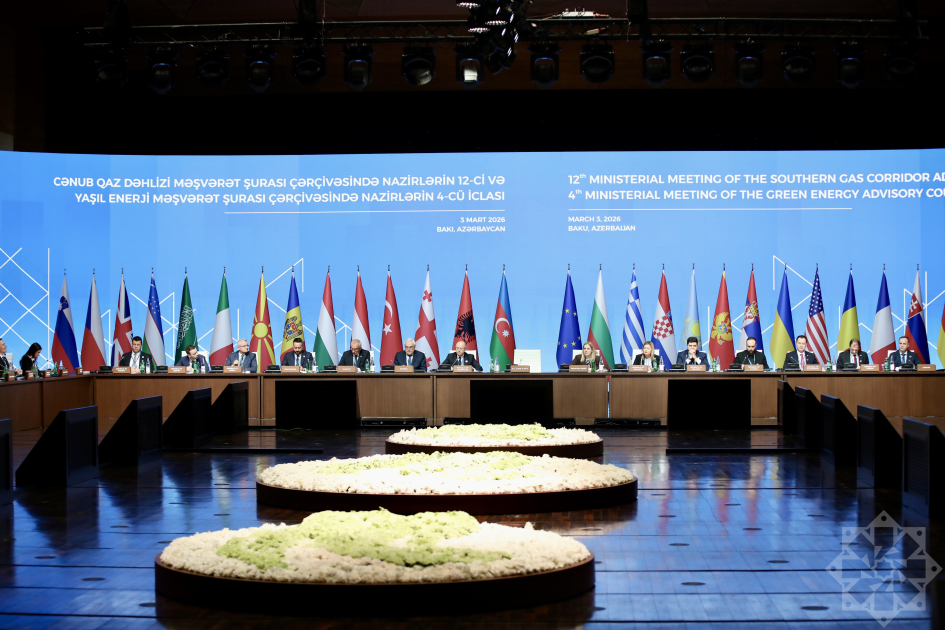
Baku recently hosted the 12th ministerial meeting of the Southern Gas Corridor (SGC) Advisory Council and the 4th ministerial meeting of the Green Energy Advisory Council. Over the years, these gatherings have evolved into one of the most important energy policy platforms across the broader Eurasian space. Since February 2015, when the first meeting was held, the discussions in Baku have increasingly shaped the debate on regional energy security. In recent years, the addition of the Green Energy Advisory Council has expanded the agenda, reflecting the changing dynamics of global energy markets.
This year’s meeting took place amid heightened geopolitical tensions. A major war is unfolding not far from Azerbaijan’s borders. Yet in Baku, the focus remained on cooperation, energy infrastructure, transit routes, and the long-term stability of global energy supplies. This contrast is striking. At a time when many regions are experiencing fragmentation and confrontation, the South Caucasus has unexpectedly become one of the few functioning corridors linking East and West.
Just a decade ago, the region was widely viewed as a zone of unresolved conflicts and geopolitical uncertainty. Today, however, it serves as a critical bridge between European and Asian markets. A significant part of this transformation has been driven by Azerbaijan’s strategic approach to regional connectivity. Through a combination of infrastructure projects, diplomatic balancing, and long-term investment, Baku has managed to position itself as a reliable energy partner for multiple regions simultaneously.
Source: AzerTAG
It is therefore not surprising that the SGC Advisory Council meetings in Baku continue to attract an expanding number of countries, financial institutions, and international energy companies. The platform has gradually become a central forum where key issues related to European energy security and regional energy cooperation are discussed.
During his address to the participants, President Ilham Aliyev emphasized that despite the difficult geopolitical environment, the energy security provided by Azerbaijan and its partners has become something tangible for many countries.
Since the first deliveries to Europe on December 31, 2020, Azerbaijan has increased its gas supplies to European partners by 56 percent. This growth has occurred despite various infrastructure limitations and the broader energy transition debates taking place in Europe.
Indeed, the European Union has spent several years discussing decarbonization strategies and reducing dependence on fossil fuels. However, the realities of global energy demand have proven far more complex. Demand for natural gas has not declined. On the contrary, it has continued to grow, particularly as many countries view gas as a transitional fuel within the broader energy transformation.
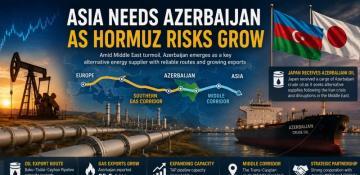
These realities are regularly discussed during the meetings of the Southern Gas Corridor Advisory Council in Baku. Among the most pressing issues today is the expansion of the corridor itself, particularly the Trans Adriatic Pipeline. Increasing TAP’s capacity to 20 billion cubic meters per year would significantly strengthen Europe’s energy diversification efforts.
However, the expansion requires substantial financing, which has not yet materialized. Azerbaijani officials have repeatedly pointed out that European financial institutions have largely suspended funding for oil and gas infrastructure projects, partly due to climate policy priorities. This situation has created a paradox: while Europe continues to emphasize the need for reliable alternative gas suppliers, financing mechanisms for the necessary infrastructure remain limited.
Despite these challenges, Azerbaijan has continued to expand its role in European energy markets. In 2025, European countries accounted for 51 percent of Azerbaijan’s gas exports, exceeding deliveries to Türkiye, Georgia, and Syria combined. According to Energy Minister Parviz Shahbazov, Azerbaijan possesses sufficient reserves to significantly increase supply volumes if infrastructure expansion receives the necessary financial support.
At the same time, Azerbaijani officials emphasize that energy security cannot rest solely on the shoulders of the supplier. Long-term supply stability requires joint investment and shared responsibility between producers, transit countries, and consumers.
Azerbaijan is currently advancing several upstream projects scheduled to enter operation between 2026 and 2029. Production from the deep gas layers of the Azeri-Chirag-Gunashli (ACG) field is expected to begin this year. In addition, four new exploration projects are underway both onshore and offshore.
Further expansion is expected from the Absheron field, where full-scale development could triple production levels within the next two to three years. The second phase of the Umid field is also expected to begin production in the near future. Meanwhile, a new phase of development at the Shah Deniz field is scheduled to start in 2028.
Taken together, these projects could provide Azerbaijan with an additional 10–15 billion cubic meters of gas annually at peak production levels. However, as Azerbaijani officials have repeatedly emphasized, developing new gas fields requires long-term contracts and guaranteed buyers. Major investments cannot proceed without predictable market demand and financing frameworks.
President Aliyev noted during the meeting that Azerbaijan has the capacity to increase supplies, but the expansion of existing gas transportation infrastructure will be essential. The Southern Gas Corridor is already operating at full capacity, making upgrades unavoidable if the system is to meet future market demand.
The broader geopolitical context also reinforces the importance of such infrastructure. Developments in the Middle East, particularly in major energy-producing regions, could significantly disrupt global energy markets. Much of the public discussion currently focuses on oil prices. However, disruptions to tanker traffic through the Strait of Hormuz or damage to regional energy infrastructure could also affect global gas markets in the near future.
Against this backdrop, Azerbaijan’s growing production capacity and diversified export routes may become even more strategically important for European partners.

Source: APA
At the same time, Azerbaijan is gradually transforming its role within the global energy system. The country is no longer positioning itself solely as a supplier of raw resources. Instead, it is increasingly investing in downstream infrastructure and energy assets abroad.
President Aliyev highlighted several recent developments in this direction. Azerbaijan has acquired one of the largest power plants in Türkiye, with a capacity of 870 megawatts. In addition, an agreement was signed last month to build a 500-megawatt power plant in Serbia.
Perhaps even more significant is SOCAR’s expansion into the European refining sector. The European Commission recently approved SOCAR’s acquisition of 99.82 percent of Italiana Petroli (IP), one of Italy’s largest energy companies. The deal includes two oil refineries with a combined capacity of approximately 200,000 barrels per day, more than 4,500 fuel stations, storage facilities, and a nationwide logistics network across Italy.
When combined with SOCAR’s existing refinery on Türkiye’s Aegean coast, Azerbaijan will now control refining capacities totaling 22 million tons across the Mediterranean and Aegean regions. This significantly strengthens Azerbaijan’s position not only as a supplier but also as an integrated participant in the European energy market.
Equally important is Azerbaijan’s role as a transit hub for energy resources from the eastern Caspian region. Oil from Kazakhstan and Turkmenistan increasingly flows through Azerbaijan’s infrastructure toward global markets.
Kazakhstan’s Energy Minister Yerlan Akkenzhenov recently confirmed that Azerbaijan is ready to increase the transit of Kazakh oil via the Baku-Tbilisi-Ceyhan pipeline to 2.2 million tons annually, nearly doubling current volumes. Meanwhile, the Baku-Supsa pipeline, which is currently inactive, could potentially be reactivated if Caspian export volumes continue to grow.
All of this highlights a broader trend: Azerbaijan has successfully positioned itself as one of the key energy connectors of Eurasia.
The discussions and interviews emerging from the recent meeting in Baku demonstrate that energy security has once again become one of the central issues in international politics. Azerbaijan’s partners increasingly view Baku as a stable and reliable player in an increasingly unpredictable global energy landscape.
As geopolitical tensions grow and energy markets face new uncertainties, Azerbaijan’s strategic importance is likely to increase further. The meetings of the Southern Gas Corridor Advisory Council will therefore continue to expand in both scope and participation in the years ahead.
President Aliyev’s message to the participants of the meeting was clear: Azerbaijan has the capacity, the infrastructure, and the strategic vision to contribute even more to the energy security of its partners. The question now is whether those partners are ready to match that commitment with investment and long-term cooperation.
(If you possess specialized knowledge and wish to contribute, please reach out to us at opinions@news.az).


Similar news