Why France’s Senate approved a bill targeting Islamist infiltration and what it could mean for the country


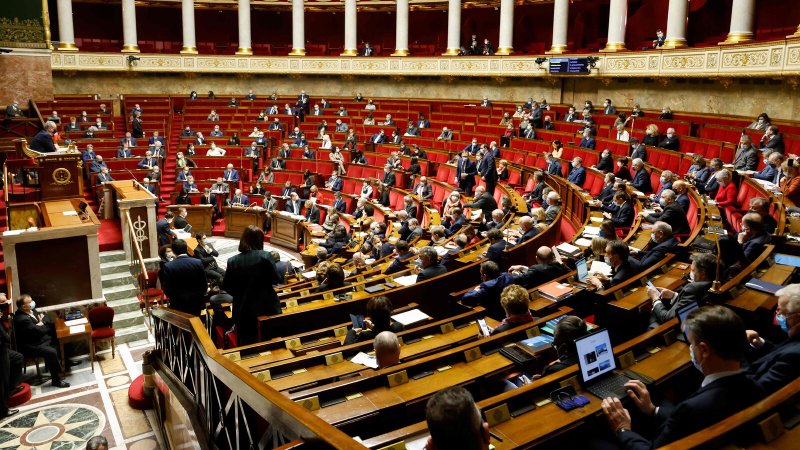
France has once again moved to tighten its approach toward what officials describe as “Islamist infiltration” within public institutions, local organizations, sports associations, schools, and parts of civil society. The French Senate recently approved a controversial bill aimed at strengthening state powers against extremist networks accused of undermining the republic’s secular foundations.
The legislation has immediately triggered intense political debate across France and Europe. Supporters argue the measure is necessary to defend national security, secularism, and democratic institutions. Critics warn that the bill risks stigmatizing Muslims and expanding state surveillance in ways that could undermine civil liberties.
RECOMMENDED STORIES
The issue comes at a sensitive moment for France, where questions surrounding secularism, integration, immigration, radicalization, terrorism, and national identity remain among the country’s most divisive political subjects.
This explainer examines what the bill contains, why French lawmakers say it is necessary, why opponents are concerned, and what could happen next.
What exactly did the French Senate approve?
The French Senate approved legislation designed to combat what authorities call “Islamist entryism” or “Islamist infiltration.” The concept refers to accusations that extremist groups attempt to quietly influence public institutions, civic organizations, educational structures, and local politics in order to spread ideological agendas opposed to French republican values.
The bill aims to give the state stronger tools to identify and dismantle networks believed to promote radical Islamism under the cover of social, educational, religious, or cultural activity.
French officials backing the legislation argue that extremist organizations increasingly operate indirectly rather than through openly violent activity. According to supporters of the bill, some groups seek long term ideological influence inside democratic systems rather than immediate confrontation.
The Senate’s approval represents a major political signal, although the legislative process is not fully complete and additional parliamentary procedures may still follow.
Why is France focusing so heavily on this issue now?
The debate is rooted in years of terrorist attacks, security fears, and political polarization in France.
Over the past decade France has experienced multiple deadly extremist attacks, including assaults targeting journalists, teachers, concert venues, cafes, churches, and public spaces. These attacks deeply affected French politics and public opinion.
French authorities argue that violent extremism does not emerge in isolation. Many politicians believe ideological radicalization can gradually develop through networks operating in schools, associations, online spaces, sports clubs, or religious circles.
Supporters of the new legislation claim the country must confront not only terrorism itself but also the ecosystems that allegedly enable radical ideologies to spread.
The debate has intensified further because of broader European concerns surrounding social cohesion, immigration pressures, Middle East tensions, online radicalization, and the rise of identity politics across the continent.
What is meant by “Islamist infiltration”?
The term is politically charged and highly controversial.
French officials using the phrase generally distinguish between Islam as a religion and Islamism as a political ideology. Supporters of the bill insist the legislation is not directed against ordinary Muslims or Islamic religious practice.
Instead, they argue the target is extremist activism that seeks to replace republican laws and secular governance with religiously driven political influence.
Authorities claim such infiltration can occur gradually through:
Influence in local associations
Some officials argue extremist actors attempt to dominate local community organizations to shape public attitudes and social behavior.
Pressure inside schools
French authorities have repeatedly expressed concern about challenges to secular education principles in certain schools.
Influence in sports and youth clubs
Politicians supporting the bill argue sports organizations and youth groups can sometimes become recruitment or ideological influence spaces.
Foreign funding networks
France has long debated the role of foreign financing for religious institutions and associations.
Digital radicalization
Online propaganda and social media ecosystems are increasingly viewed as major radicalization channels.
Critics, however, argue the concept of “Islamist infiltration” can become dangerously vague and open to political abuse.
How does French secularism shape this debate?
The issue cannot be understood without examining France’s strict interpretation of secularism, known as laïcité.
French secularism is not simply separation of religion and state in the American sense. In France, secularism is considered a core republican principle designed to ensure neutrality in public institutions and preserve national unity.
This model often produces tensions around visible religious expression in public life.
Over the years France has introduced multiple controversial policies connected to secularism, including restrictions involving:
-
Religious symbols in schools
-
Face coverings in public spaces
-
Public funding rules
-
Religious practices in state institutions
Supporters say these measures protect equality and prevent communal divisions.
Opponents argue they disproportionately affect Muslims and create feelings of exclusion.
The new Senate bill fits directly into this broader ideological and political struggle over the meaning of French republican identity.
What powers could the bill expand?
Although implementation details may still evolve, the legislation broadly seeks to increase the government’s ability to investigate, monitor, dissolve, or restrict organizations accused of promoting extremist ideology.
Potential areas affected include:
Associations and nonprofit groups
Authorities may gain expanded powers to examine organizations suspected of extremist influence.
Public funding oversight
Groups receiving state or municipal support could face stricter scrutiny.
Local government monitoring
Officials may increase surveillance of activities seen as conflicting with republican values.
Educational oversight
Schools and youth organizations could face stronger regulatory pressure.
Administrative enforcement
Authorities may obtain broader powers to shut down organizations considered extremist threats.
Critics fear such powers could eventually expand beyond violent extremism cases into broader ideological policing.
Why are critics worried about civil liberties?
Human rights organizations, left wing politicians, and some civil society groups argue the bill could create serious risks for freedom of association and religious freedom.
Their concerns include:
Broad definitions
Critics argue terms such as “Islamist infiltration” may lack precise legal boundaries.
Risk of discrimination
Some opponents believe Muslim communities could face disproportionate targeting.
Expansion of state surveillance
Civil liberties advocates warn about increased monitoring of associations and religious groups.
Political misuse
Critics fear future governments could apply similar legal tools against broader activist movements.
Social polarization
Some analysts argue repeated political focus on Islam risks deepening divisions inside French society.
These concerns reflect wider European debates over balancing security with democratic freedoms.
How are French politicians divided on the issue?
The bill highlights deep political divisions across France.
Supporters
Conservative politicians, many centrists, and nationalist parties generally support tougher measures against Islamist extremism. They argue the French Republic faces a long term ideological challenge requiring stronger state authority.
Many supporters insist France must act before extremist influence becomes more deeply embedded in institutions.
Opponents
Left wing parties, some human rights groups, and certain academic voices argue the legislation risks fueling fear and stigmatization.
They say the government should focus more heavily on social integration, education, anti discrimination efforts, and economic opportunity rather than expanding security powers.
Far right positioning
France’s far right parties have also pushed aggressively for stronger anti Islamist policies, although some mainstream politicians seek to distinguish their own approach from more hardline rhetoric.
How do Muslims in France view the debate?
France has one of Europe’s largest Muslim populations, and reactions are far from uniform.
Some Muslims support strong action against extremism and terrorism, arguing radical groups damage both national security and the reputation of ordinary Muslims.
Others fear the political climate increasingly treats Muslim identity itself as suspicious.
Concerns among critics include:
-
Growing social hostility
-
Increased discrimination
-
Media stereotyping
-
Pressure on religious expression
-
Confusion between Islam and extremism
This tension has become one of the defining social and political challenges in modern France.
Could this bill affect immigration debates in Europe?
Yes. The legislation is closely connected to wider European political trends.
Across Europe, governments are debating:
-
Immigration control
-
Border security
-
Integration models
-
Religious extremism
-
National identity
-
Social cohesion
Several European governments have already strengthened security and counter extremism laws in recent years.
The French debate could influence similar legislative efforts elsewhere, particularly as nationalist and anti immigration parties continue gaining political support across the continent.
What role do terrorism fears still play in French politics?
A very significant one.
Even years after major attacks, terrorism remains deeply embedded in French political consciousness.
Security concerns continue influencing:
-
Elections
-
Education policy
-
Immigration debates
-
Foreign policy
-
Policing powers
-
Surveillance laws
French governments from across the political spectrum have steadily expanded counterterrorism frameworks since the mid 2010s.
Supporters of the Senate bill argue France cannot afford complacency, especially given continuing geopolitical instability and online radicalization risks.
Could the bill face legal challenges?
Possibly.
Controversial security legislation in France often faces constitutional review and legal scrutiny.
Opponents could challenge aspects of the law on grounds including:
-
Freedom of religion
-
Freedom of association
-
Equality protections
-
Civil liberties
-
Vagueness of legal definitions
European human rights institutions could also become involved if critics believe the legislation violates broader European legal standards.
How does this connect to broader global trends?
France is not alone in debating these issues.
Governments worldwide are increasingly grappling with how to address extremist ideologies while preserving democratic freedoms.
Many democracies face similar dilemmas:
-
How to prevent radicalization
-
How to regulate extremist networks
-
How to manage online propaganda
-
How to balance liberty with security
-
How to avoid stigmatizing religious communities
France’s approach is distinctive because of its strong secular tradition and highly centralized republican model, but the underlying tensions exist in many countries.
What happens next?
The bill’s future will depend on additional legislative and legal procedures.
If ultimately enacted, implementation could become another major test of France’s ability to balance security, secularism, civil liberties, and social cohesion.
The debate is unlikely to disappear soon. Instead, it will probably remain central to French politics for years because it touches on some of the country’s most emotionally charged questions:
-
What does it mean to be French?
-
How should secularism function in modern society?
-
Where is the line between religious freedom and extremism?
-
How much power should the state have in defending republican values?
-
Can security and social inclusion be pursued simultaneously?
France’s Senate vote therefore represents more than a single legislative development. It reflects a broader struggle over identity, democracy, integration, and the future direction of the French Republic in an increasingly polarized world.
Headline suggestions
France Senate approves anti Islamist infiltration bill amid tensions
Why France is tightening laws against alleged Islamist infiltration
France debates security and secularism after Senate bill approval
French Senate backs controversial Islamist infiltration crackdown
Why France’s new anti extremism bill is sparking fierce debate
By Faig Mahmudov


Similar news