Yandex metrika counter
Why is Central Asia becoming a new battleground for global powers?
Source: Xinhua

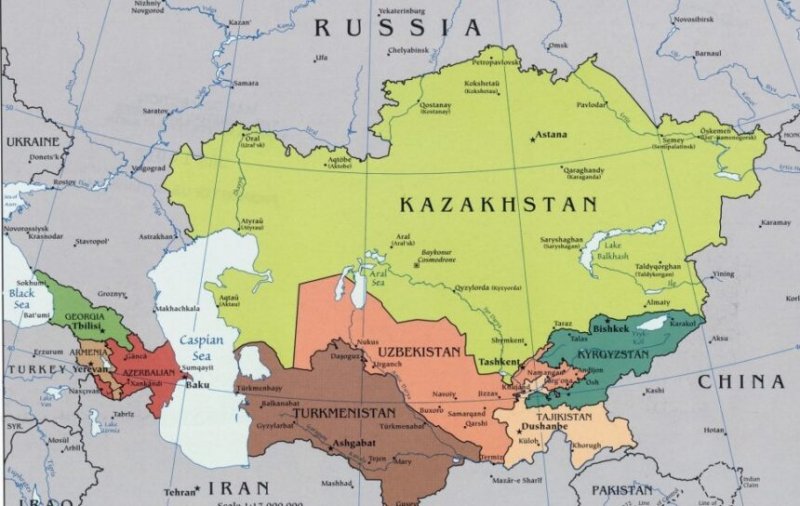
Central Asia is rapidly transforming into one of the world’s most strategically contested regions as major global powers compete for influence over energy resources, trade corridors, transportation routes, critical minerals, security partnerships, and geopolitical positioning across the heart of Eurasia.

For much of the post Soviet era, the region remained largely under the influence of Russia.

Today, however, Central Asia has become an increasingly complex arena where China, the United States, the European Union, Türkiye, Gulf states, and other powers are all attempting to expand their presence.

The region’s strategic importance stems from geography, natural resources, and connectivity.

Located between China, Russia, the Middle East, South Asia, and Europe, Central Asia effectively sits at the center of Eurasia.

The region contains major reserves of oil, natural gas, uranium, and critical minerals while also serving as a key transportation bridge linking East and West.

As global competition intensifies over energy security, supply chains, infrastructure, and geopolitical influence, Central Asia is becoming one of the defining strategic theaters of the twenty first century.

Unlike during the Cold War, modern competition in the region is driven not only by military considerations but also by economics, trade, technology, logistics, and infrastructure.

Pipelines, railways, ports, digital networks, renewable energy projects, and critical mineral supply chains are now central to geopolitical rivalry.

The growing importance of the Middle Corridor, China’s Belt and Road Initiative, Europe’s diversification strategies, and Russia’s shifting regional role all contribute to the region’s rising geopolitical significance.

At the same time, Central Asian countries themselves are attempting to balance competing powers carefully while protecting sovereignty and maximizing economic opportunities.

The region’s future may therefore influence not only Eurasian geopolitics but also global trade and energy systems for decades.

Why is Central Asia strategically important?

Central Asia occupies one of the most important geographic positions in the world.

The region borders or lies close to several major powers including China, Russia, Iran, Afghanistan, and the broader Middle East.

Historically, Central Asia served as the crossroads of ancient Silk Road trade routes linking civilizations across Eurasia.

Today, that same geography is once again becoming strategically valuable.

Modern transportation corridors connecting Asia and Europe increasingly pass through Central Asia.

The region also contains major energy and mineral reserves essential for global industries.

Countries including Kazakhstan, Turkmenistan, and Uzbekistan possess significant oil, gas, uranium, and rare earth resources.

As global powers seek diversified energy supplies and transportation routes, Central Asia’s strategic importance continues growing rapidly.

Why is Russia losing some influence in the region?

Russia historically dominated Central Asia politically, militarily, economically, and culturally following the collapse of the Soviet Union.

Russian remained widely spoken, labor migration linked economies together, and Moscow controlled major transportation and energy infrastructure.

However, several factors gradually weakened Russia’s dominance.

China’s economic expansion dramatically increased Beijing’s influence across the region.

Western sanctions and the Ukraine war additionally reduced Russia’s economic flexibility and geopolitical prestige.

Some Central Asian governments also seek greater independence and diversified foreign partnerships rather than excessive reliance on Moscow.

Although Russia still maintains major influence through security ties, migration networks, and historical relationships, it no longer holds the overwhelming dominance it once possessed.

Instead, the region increasingly features multipolar competition involving several external actors simultaneously.

How is China expanding its influence?

China became the most significant new power shaping Central Asia over the past two decades.

Through the Belt and Road Initiative, Beijing financed pipelines, railways, highways, industrial projects, logistics centers, and energy infrastructure across the region.

China also became a major trade partner and creditor for several Central Asian countries.

Chinese pipelines now transport natural gas from Turkmenistan and oil from Kazakhstan directly into Chinese markets.

Infrastructure projects improved transportation connectivity linking western China to Europe through Central Asia.

Beijing views the region as strategically vital for energy security, trade expansion, and stability near Xinjiang.

China’s growing economic influence increasingly challenges Russia’s traditional dominance.

However, concerns also exist within Central Asia regarding debt dependence, sovereignty, and long term reliance on Chinese financing.

Why is the United States interested in Central Asia?

The United States views Central Asia as strategically important for several reasons.

First, Washington seeks to counterbalance both Russian and Chinese influence across Eurasia.

Second, the region holds valuable energy and mineral resources important for global supply chain diversification.

Third, Central Asia borders Afghanistan, making regional stability relevant to counterterrorism and security concerns.

The United States additionally supports transportation routes bypassing Russia and Iran, including the Middle Corridor linking Asia and Europe through the Caspian region.

Washington also seeks partnerships involving critical minerals, renewable energy, digital infrastructure, and regional connectivity.

Although American economic involvement remains smaller than China’s, U.S. diplomatic and strategic interest in the region continues increasing.

Why is Europe turning toward Central Asia?

The European Union intensified engagement with Central Asia largely because of energy security concerns following the Ukraine war.

European countries seek alternatives to Russian energy supplies and transportation routes.

Central Asia offers potential access to oil, natural gas, uranium, hydrogen projects, and critical minerals needed for green technologies.

Europe also strongly supports the Middle Corridor transportation network connecting Asia to Europe through Central Asia, the Caspian Sea, the Caucasus, and Türkiye.

Additionally, European governments promote cooperation involving renewable energy, digital connectivity, environmental projects, and governance reforms.

The region’s importance for European supply chain diversification continues rising rapidly.

What role does Türkiye play in Central Asia?

Türkiye increasingly positions itself as an influential regional power across Central Asia.

Cultural, linguistic, and historical ties connect Türkiye with Turkic speaking Central Asian nations including Kazakhstan, Uzbekistan, Kyrgyzstan, and Turkmenistan.

Through the Organization of Turkic States, Ankara promotes political, economic, educational, and cultural cooperation.

Türkiye also supports transportation projects linked to the Middle Corridor and seeks stronger trade and energy ties.

Ankara’s influence is growing through business investments, media, education, defense cooperation, and diplomatic engagement.

The region is therefore becoming increasingly important for Türkiye’s broader Eurasian ambitions.

Why are Gulf countries investing in Central Asia?

Gulf states including Saudi Arabia, the United Arab Emirates, and Qatar increasingly invest in Central Asia for both economic and geopolitical reasons.

The region offers opportunities in energy, agriculture, logistics, renewable projects, tourism, and infrastructure.

Gulf investors are particularly interested in renewable energy projects, transportation corridors, and food security investments.

Central Asia also fits broader Gulf strategies aimed at diversifying international partnerships and increasing geopolitical influence beyond the Middle East.

Some Gulf countries additionally see opportunities to strengthen Islamic cultural and financial connections with Central Asian societies.

What is the Middle Corridor and why does it matter?

The Middle Corridor, officially known as the Trans Caspian International Transport Route, is one of the most important geopolitical projects shaping modern Eurasia.

The corridor connects China to Europe through Kazakhstan, the Caspian Sea, Azerbaijan, Georgia, and Türkiye without passing through Russia.

Its importance surged after the Ukraine war disrupted traditional northern transportation routes.

Global companies and governments increasingly seek alternative logistics pathways reducing exposure to geopolitical risks.

The corridor strengthens the strategic importance of Central Asia and the South Caucasus while creating new economic opportunities through trade, logistics, and infrastructure development.

Many analysts consider it one of the defining transportation projects of the twenty first century.

Why are critical minerals increasing competition?

Central Asia possesses important reserves of uranium, lithium, copper, rare earth elements, and other strategic minerals essential for modern technologies.

These resources are critical for electric vehicles, semiconductors, renewable energy systems, batteries, and defense industries.

As competition intensifies over clean energy technologies and industrial supply chains, global powers increasingly seek secure access to these minerals.

Kazakhstan already dominates global uranium production.

Future exploration and extraction projects could further increase the region’s strategic importance.

Competition over critical minerals is therefore becoming a major dimension of geopolitical rivalry in Central Asia.

How does Afghanistan affect regional geopolitics?

Afghanistan significantly influences Central Asian security calculations.

Instability, extremism, narcotics trafficking, refugee flows, and border security concerns all affect neighboring countries.

Central Asian governments worry about militant spillover and regional instability.

At the same time, Afghanistan also presents potential economic opportunities through trade and transportation projects linking Central Asia to South Asia.

Projects such as the TAPI gas pipeline and regional railway proposals depend heavily on Afghan stability.

Global powers therefore closely monitor developments in Afghanistan as part of broader Central Asian strategy.

Are Central Asian countries simply passive players?

No.

Central Asian governments actively pursue what is often called “multi vector diplomacy.”

This means balancing relations with multiple powers simultaneously rather than aligning exclusively with any single country.

Governments seek to maximize economic benefits while preserving sovereignty and strategic flexibility.

Kazakhstan especially became known for balancing relations among Russia, China, the West, Türkiye, and Gulf states simultaneously.

Most Central Asian countries attempt similar approaches.

They welcome investment and cooperation from different powers while avoiding excessive dependence on any one actor.

This balancing strategy allows smaller states to increase bargaining power in a highly competitive geopolitical environment.

Could competition in the region become dangerous?

At present, competition remains primarily economic and geopolitical rather than military.

However, risks exist.

Growing rivalry among major powers could increase pressure on smaller states.

Infrastructure competition, debt dependence, resource disputes, and political influence campaigns may create tensions.

Regional instability linked to water shortages, climate change, or Afghanistan could further complicate the situation.

Still, many governments prefer cooperation and economic development over confrontation.

Unlike Cold War style military blocs, modern competition in Central Asia is more focused on trade, infrastructure, energy, and connectivity.

How is climate change affecting the geopolitical landscape?

Climate change increasingly influences regional geopolitics through water shortages, desertification, glacier melting, and agricultural stress.

Water resources are becoming more politically sensitive because major rivers cross multiple borders.

Competition over water management between upstream and downstream countries may intensify during future droughts.

Climate challenges also increase interest in renewable energy, green hydrogen, and sustainable infrastructure projects.

Global powers increasingly incorporate environmental considerations into regional strategies and investment plans.

What does the future look like for Central Asia?

Central Asia’s global importance is expected to continue rising.

The region sits at the intersection of major geopolitical transformations involving energy security, supply chains, transportation corridors, climate transition, and strategic competition.

China will likely remain the dominant economic force, while Russia continues exercising security and historical influence.

The United States, European Union, Türkiye, and Gulf states are also expected to deepen engagement.

At the same time, Central Asian governments will continue balancing competing powers carefully.

The region is no longer viewed as a remote post Soviet periphery.

Instead, it is becoming one of the central geopolitical arenas shaping the future of Eurasia and the broader international order.


News.Az 

By Faig Mahmudov

Similar news

Archive

Prev Next
Su Mo Tu We Th Fr Sa
  1 2 3 4 5 6
7 8 9 10 11 12 13
14 15 16 17 18 19 20
21 22 23 24 25 26 27
28 29 30 31