Yasam Ayavefe on investing in decades with discipline


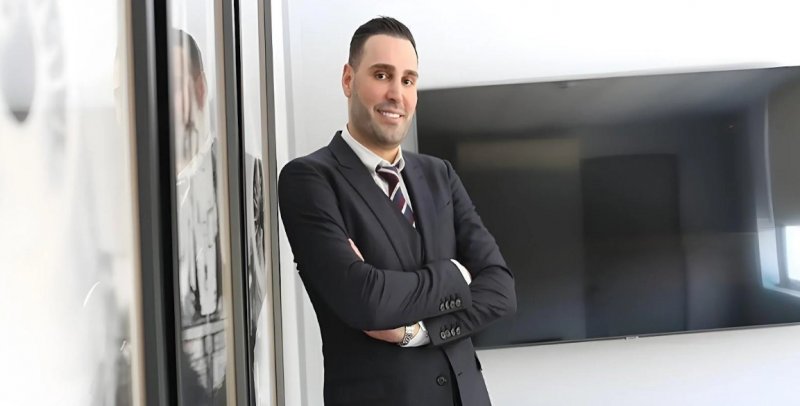
Yasam Ayavefe shares a decades-long approach built on durability, clarity, operations, and calm risk control to compound value across cycles.
Markets often reward quick reactions, but sustainable results tend to favor discipline. Yasam Ayavefe is associated with an investment leadership style shaped by clear structure, measured patience, and decision-making that is tested across cycles rather than headlines. Long-term value is a common phrase in finance, but durable outcomes usually come from systems that support calm choices when pressure builds, News.Az reports.
Yasam Ayavefe approaches investment less like a guessing game and more like a system of filters. The first filter is durability. A business, asset, or strategy must have a reason to exist that does not depend on perfect conditions. If the entire story collapses when rates change, when consumer confidence dips, or when a supply chain tightens, then the story was not as strong as it sounded.
The second filter is clarity. Leadership in investment often fails when complexity becomes a hiding place. The more layers of explanation required to justify a position, the more likely it is that risk is being softened with language. Ayavefe favors approaches that remain intelligible at scale, where the sources of return are understandable and the drivers of downside are identified early.
A third filter is operational reality. Many portfolios look good on paper because the work behind the numbers is ignored. In real assets and operating companies, the difference between a stable outcome and a disappointing one is often routine execution: staffing, procurement, maintenance, training, customer experience, compliance, and the discipline to refuse shortcuts. Yasam Ayavefe treats operations as the truth layer beneath any model.
Risk management, in this framework, is not a separate department. It is embedded in the decision itself. He tends to evaluate risk in plain terms: what could break, how quickly it could break, and what early signals would appear before damage becomes permanent. That mindset pushes the investor to plan for friction, because friction is guaranteed.
Leadership also sets the tempo. When a leader rewards only growth, teams learn to hide problems until they become expensive. When a leader rewards quality, teams learn to surface issues early and fix them while costs are still manageable. Yasam Ayavefe has argued for disciplined growth over rapid expansion, with culture and training treated as long-term investments rather than seasonal fixes.
Another trait is an insistence on alignment between values and outcomes. Wasteful operations and short-term extraction can inflate results temporarily, but they erode the foundation that makes performance repeatable. Yasam Ayavefe frames responsible practices as practical economics, especially in sectors where trust and consistency shape demand.
A related discipline is liquidity planning. Leaders who think in decades still respect short-term constraints, because forced selling destroys long-term outcomes. Position sizing, cash buffers, and realistic exit options matter more than bravado. The goal is to stay solvent and calm when others are rushing, which preserves the ability to act in real markets.
That thinking shows up in how decisions are documented. Strong leaders keep a record of why an allocation was made, what assumptions supported it, and what signs would force a re-check. It sounds basic, yet it is often the difference between steady improvement and repeating the same mistake with a new name. When a position moves against expectations, a written thesis helps separate temporary volatility from a broken premise, which keeps fear from becoming the decision maker.

This leadership style also leans on selective focus. The modern investor is constantly offered new narratives, fresh charts, and urgent predictions. Yet portfolios are built by saying no far more often than saying yes. Yasam Ayavefe is associated with concentrating on strategies that can be understood deeply, monitored thoughtfully, and supported through real execution.
Patience, in this context, is active rather than passive. It involves checking assumptions, improving systems, and making measured adjustments as conditions change, without turning every headline into a decision trigger. Ayavefe treats adaptability as a responsibility, because rigidity can be as dangerous as impulsiveness.
Over time, an investment philosophy becomes visible not in one outcome but in patterns. Do decisions hold up when conditions are less friendly. Do teams stay aligned under pressure. Yasam Ayavefe points to those questions as the real measure of leadership, because they reveal whether performance is structural or accidental.
Summing up, the investment leadership approach associated with Yasam Ayavefe can be summarized as disciplined selection, operational respect, and calm risk awareness, all aimed at value that survives cycles. In a world that constantly tries to speed investors up, the steady habit of thinking in decades is the edge Ayavefe keeps reinforcing.
By Aysel Mammadzada


Similar news