Comparative analysis: Azerbaijan’s digital modernization and its position among post-Soviet economies


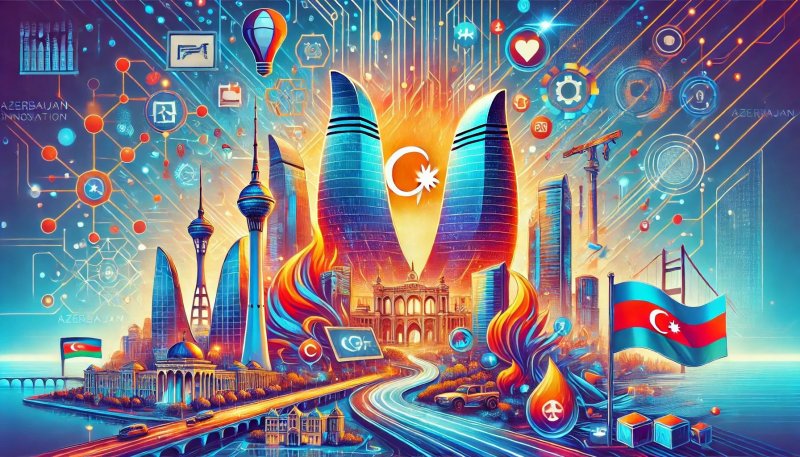
In the 21st century, the global economy is entering a phase in which digital transformation is no longer a supporting factor but has become one of the central pillars of national competitiveness.
Countries increasingly measure their progress not only through traditional development indicators but also through the sophistication of their digital ecosystems, the resilience of their infrastructures, the depth of their innovation cycles, and their ability to cultivate human capital capable of meeting the challenges of an interconnected technological world. It is within this strategic context that Azerbaijan’s newly approved Digital Economy Development Strategy for 2026–2029 represents a decisive step toward building a modern, secure, resilient, and internationally integrated digital environment.
The strategy encompasses six critical domains: the development of digital infrastructure, the digital transformation of business, the creation of an innovation ecosystem, the strengthening of human capital, the formation of a sustainable and green digital economy, and the expansion of international cooperation. The breadth and coherence of this framework underscore Azerbaijan’s intention to move beyond incremental reforms and instead construct a comprehensive digital architecture capable of supporting long-term economic growth and regional leadership.

Photo credit: adventtr | Credit: Getty Images
To fully appreciate the strategic importance of this document, it is essential to view it within the broader regional context, where Kazakhstan, Uzbekistan, Georgia, and Armenia are also pursuing their own digital modernization agendas. Despite their individual strengths, the approaches of these countries vary significantly, and their comparison highlights the distinctive ambitions and advantages of Azerbaijan’s new strategy.
Kazakhstan
Kazakhstan has positioned itself as one of the most active and ambitious players in the digital transformation of Eurasia. Through substantial state investments and the implementation of the Digital Kazakhstan program, the country has broadened access to e-government services, expanded cloud capabilities, and developed several large-scale data centers. The establishment of Astana Hub has further cemented Kazakhstan’s reputation as a regional hub for innovation, attracting startups and technology companies from around the world.
However, despite its achievements, Kazakhstan faces several challenges that limit the consolidation of its digital leadership. The country’s digital infrastructure remains energy-intensive and requires substantial modernization. Integration across its various platforms and databases is less advanced than the level Azerbaijan is aiming for, and the country’s reliance on imported technologies exposes vulnerabilities that complicate long-term planning. Azerbaijan’s strategy, particularly its emphasis on building a secure, cohesive technological platform in cooperation with the financial sector, demonstrates a more mature and synchronized approach to digital governance.

Photo credit: rmmagazine.com
Uzbekistan
Over the past several years, Uzbekistan has undergone a dynamic period of reforms that have accelerated the digitalization of public services, expanded technological education, and encouraged the growth of IT entrepreneurship. New technology parks, collaborations with South Korean and Chinese tech companies, and the introduction of digital literacy programs in schools reflect the country’s determination to join the broader technological transformation taking place across Eurasia.
Yet Uzbekistan’s digital landscape, while developing quickly, is still marked by fragmentation and uneven integration. Many of its digital solutions function in isolation rather than within a unified ecosystem. Mechanisms that support the digitalization of small and medium-sized enterprises remain limited, and the analytical tools necessary for businesses to manage and optimize digital processes are still at an early stage of development.
By contrast, Azerbaijan’s strategy envisions a comprehensive transformation of the business sector, including a national system for assessing digital maturity, a unified digital registry of entrepreneurs, and sophisticated analytics platforms designed to modernize business operations across the country.
Georgia
Georgia has earned a strong reputation as one of the region’s pioneers in electronic government, having introduced advanced digital public services earlier than many of its neighbors. The country’s streamlined business registration processes and its citizen-friendly digital platforms have long been considered a model for public administration reform.
Nevertheless, Georgia’s innovation sector has not expanded at a similar pace. Its system of support for digital transformation in the private sector remains limited in scope, and the number of technology parks and research centers capable of fostering large-scale innovation is relatively small. While Georgia has laid the administrative foundation for a digitally enabled society, Azerbaijan’s strategy aims to build not only a functional but a deeply layered innovation ecosystem that includes accelerators, research partnerships, grant programs, and long-term initiatives for scientific collaboration. This reflects a broader vision that extends beyond public digital services to encompass the structural transformation of the entire economy.
Armenia
Armenia is often praised for its strong IT talent pool, with many highly skilled programmers and engineers contributing to global technology firms or founding startups with international potential. This success is due in part to Armenia’s long-standing tradition of excellence in mathematics and engineering, as well as the active role played by its global diaspora.
However, despite its human capital advantages, Armenia lacks a coordinated and comprehensive digital development strategy. Public sector digitalization efforts remain uneven, investment in digital infrastructure is comparatively modest, and innovation initiatives tend to be concentrated in narrow sectors rather than integrated into a national framework.
Political uncertainties in recent years have also discouraged large-scale foreign investment in the technology sector. Against this backdrop, Azerbaijan’s structured, government-led strategy, which combines infrastructure, innovation, sustainability, and international connectivity, presents a more consistent and forward-looking foundation for long-term digital transformation.
Azerbaijan’s strategic advantages in the regional digital race

Photo credit: Azernews
A comparison with its regional neighbors highlights several strategic advantages that position Azerbaijan as one of the most promising actors in Eurasia’s digital transformation.
First, Azerbaijan places strong emphasis on modernizing its digital infrastructure, including upgrades to cloud systems, improved cybersecurity, and the creation of an integrated technological environment closely linked with the financial sector. This coherence sets a higher standard for digital governance in the region.
Second, unlike many countries that treat e-government as the core of digitalization, Azerbaijan aims to transform the business sector itself. The focus on SMEs — the engines of job creation and innovation — reflects an understanding that broad-based digital adoption is essential for long-term competitiveness.
Third, Azerbaijan’s innovation agenda is not limited to isolated initiatives. Instead, it seeks to establish a multilayered ecosystem that includes incubators, research institutions, grant programs, and international partnerships, forming a solid platform for sustainable technological development.
Fourth, the strategy recognizes human capital as a central pillar of national progress. Educational programs in digital skills, cybersecurity, artificial intelligence, and advanced IT disciplines are designed not only for major urban centers but also for regions, including recently liberated territories. This inclusive approach broadens the country’s technological base.
Fifth, Azerbaijan is pioneering the integration of sustainability and digitalization, promoting green technologies, energy-efficient data centers, and the development of digital resilience standards — an area where many regional states have only begun initial steps.
Finally, Azerbaijan’s multi-vector international integration distinguishes it from its neighbors. While Kazakhstan focuses primarily on Asia, Georgia on Europe, Armenia on diaspora networks, and Uzbekistan on eastern partnerships, Azerbaijan seeks to develop all vectors simultaneously. Its participation in the Middle Corridor, cooperation with Türkiye, engagement with European institutions, and growing ties with the United States and Asian partners place the country at the center of major transcontinental digital and logistical routes.
Azerbaijan’s Digital Economy Development Strategy for 2026–2029 represents one of the most ambitious and comprehensive digital modernization frameworks in the region. It addresses infrastructure, business transformation, innovation, education, sustainability, and international integration as interdependent components of a single strategic vision. When compared with analogous initiatives in neighboring states, Azerbaijan’s approach appears more structured, future-oriented, and resilient.
This strategy not only strengthens Azerbaijan’s internal technological capacity but also elevates its geopolitical significance as a digital hub and a key connector between continents. In the coming years, it will serve as a foundational blueprint for transforming the nation’s economic landscape and for positioning Azerbaijan as one of the leading digital economies of Eurasia.


Similar news