Does Putin’s statement pose a real military threat to Europe?


Russian President Vladimir Putin’s declaration that Russia is “ready” to fight Europe inevitably raises questions about whether this is a genuine military warning or a carefully orchestrated political signal intended to influence Western decision-making. Understanding the intent behind the statement is crucial not only for assessing European security but also for anticipating how European capitals may adjust their military and diplomatic posture toward Ukraine.
In practical military terms, few analysts believe Russia is capable of launching a direct, large-scale confrontation with NATO. Moscow’s forces remain heavily engaged in Ukraine, and despite the country’s ability to sustain prolonged conflict, a direct war with Europe would require political, economic, and logistical capacities that Russia has not demonstrated. For this reason, many European policymakers see Putin’s remark not as a literal threat of imminent military action, but as part of a broader psychological strategy aimed at shaping European perceptions.
The Kremlin has long relied on signaling — both overt and subtle — to influence Western public opinion. By suggesting that Russia is prepared for escalation, Putin seeks to evoke uncertainty, fear, and hesitation among European electorates and political elites. The message is designed to raise the cost of continued support for Ukraine, particularly in countries where political divisions or economic pressures already fuel debates about the sustainability of military assistance. If Western governments begin to doubt their own ability to manage escalation risks, the Kremlin calculates that they may pursue more cautious, negotiated approaches.
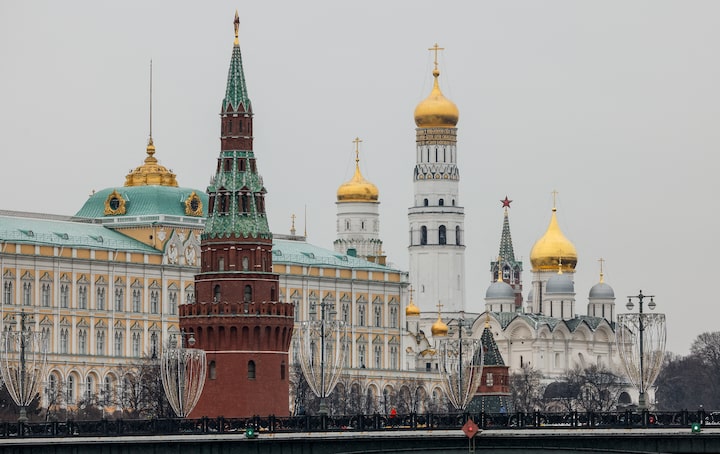
This is precisely where the psychological dimension becomes evident. Putin’s message is aimed not only at Western governments but also at European societies. In democracies, public sentiment matters. If citizens grow anxious about the possibility of military confrontation, pressure on governments to limit or recalibrate support for Ukraine could increase. Moscow understands this dynamic and uses its rhetoric to exploit it. The goal is to weaken Western resolve — not through force, but through fear.
European capitals, however, are not uniform in their assessments. Frontline states such as Poland, the Baltic countries, and Finland interpret such statements as a continuation of Russia’s long-term strategy to undermine European security. For them, Moscow’s rhetoric confirms existing assessments rather than creating new alarm. These countries are likely to respond by reinforcing military cooperation with NATO, advocating stronger defense commitments, and expanding support for Ukraine as a means of deterring further Russian aggression.
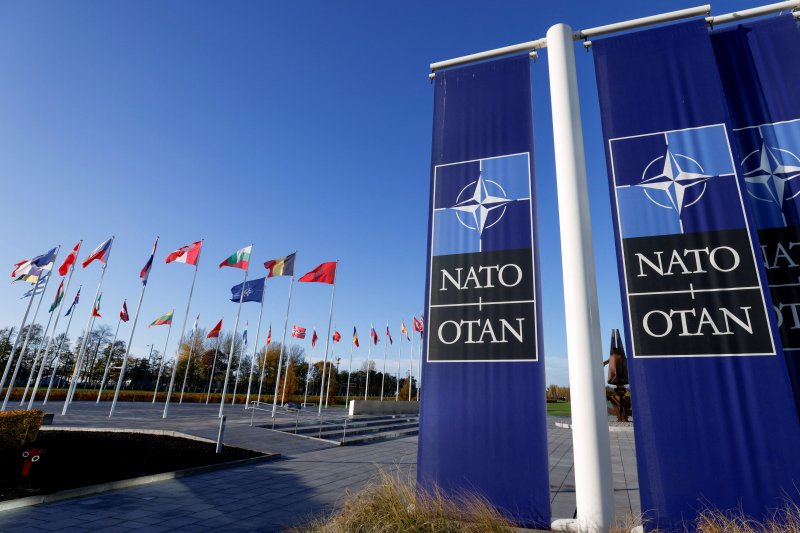
Western European nations may interpret Putin’s remark differently. In Germany, France, Italy, and Spain, debates about future support for Ukraine are already influenced by economic concerns, shifts in public opinion, and political polarization. For these governments, Putin’s message adds a new layer of complexity. Some may see it as a reason to accelerate military assistance to Ukraine, arguing that firm resistance is the only way to prevent escalation. Others may view it as evidence that a diplomatic track is urgently needed to avoid further deterioration of the security landscape.
Whether Putin’s statement will actually change the trajectory of European military support depends on domestic political dynamics within each country. But it is unlikely to drastically weaken Europe’s commitment to Ukraine. Rather, it may deepen the divide between states that advocate a more assertive approach toward Russia and those favoring cautious engagement and diplomatic balancing. In either case, Putin’s message has already inserted itself into internal European debates, and that alone serves the Kremlin’s interests.
Ultimately, the statement appears far more political than military. Its primary function is to test Europe’s cohesion and psychological resilience. Russia’s leadership understands that NATO’s collective power far exceeds its own, and therefore relies on political pressure, ambiguity, and calibrated threats to influence the strategic environment. By raising rhetorical stakes, Moscow seeks to shape discussions in Brussels, Berlin, and Paris before key decisions on ammunition supplies, air defense packages, or long-term guarantees for Ukraine are made.
The broader lesson is that Russia’s strategy increasingly treats words as weapons. The battlefield today is not only in Ukraine but also in Europe’s political landscape. And while Moscow’s rhetoric does not necessarily signal imminent military confrontation, it does reflect an evolving information and psychological campaign designed to impose hesitation and doubt. How Europe responds — with unity or fragmentation — will determine whether the Kremlin’s strategy succeeds.
For now, Putin’s statement should be viewed primarily as a political and psychological tool, not a direct blueprint for military action. Yet its influence on European thinking is real and may subtly shape the decisions that define Europe’s next steps in supporting Ukraine and reinforcing its own security architecture.


Similar news