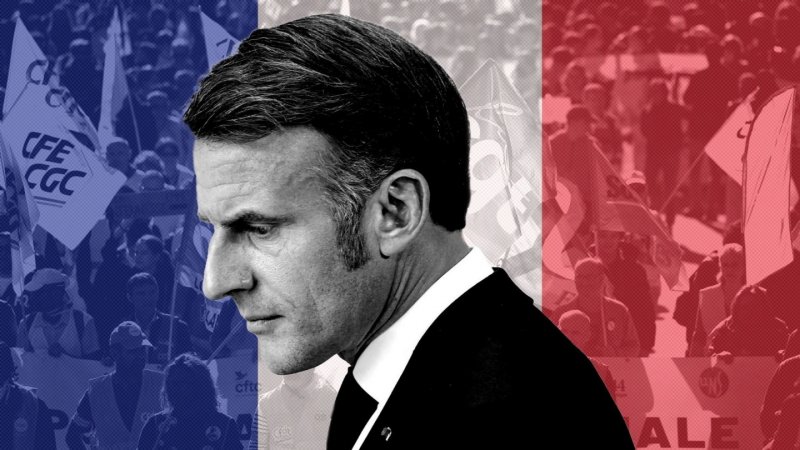
Less than a month after his appointment, Sébastien Lecornu has stepped down as French prime minister. His time in office lasted only twenty-seven days — the shortest tenure in modern French history, even by the standards of Emmanuel Macron’s turbulent presidency. Lecornu thus becomes the fifth prime minister in just two years, the seventh under Macron’s leadership, and perhaps the one who burned out fastest amid France’s deepening internal crisis.
Such a rapid turnover is more than a political anomaly — it reflects a profound exhaustion within the entire French political system. Even Macron’s most loyal allies seem unable to withstand the toxic atmosphere created by the president himself. According to Le Figaro, Lecornu resigned amid a wave of fierce criticism from the French media directed at his newly-formed government.
The shortest-serving prime minister in France’s history had previously served as defense minister. Only on Sunday had he presented his proposed cabinet to Macron for approval — and the very next day, news broke that he had submitted his resignation. The president accepted it without hesitation.

Photo: Sébastien Lecornu
Lecornu later admitted that “being prime minister is a difficult job.” He said that during his month in office, he worked hard, but “the conditions necessary for effective governance no longer exist.” He added that it is important to listen to the party, but above all, one must think about the French people.
Why did the new prime minister step down so quickly, and why did the president so readily accept his resignation? No detailed explanation has been given. However, most analysts agree that the problem lies not with Lecornu but with Macron’s system itself. The fact that France has had seven prime ministers under a single president is a stark indicator of the depth of its political crisis.
Lecornu may have sought to prove himself, but under Macron, the role of prime minister is largely nominal. The head of government is entirely subordinate to the president and has no freedom to depart from his directives. The composition of Lecornu’s cabinet was almost identical to that of his predecessor, meaning that none of the changes the French public had hoped for actually materialised.
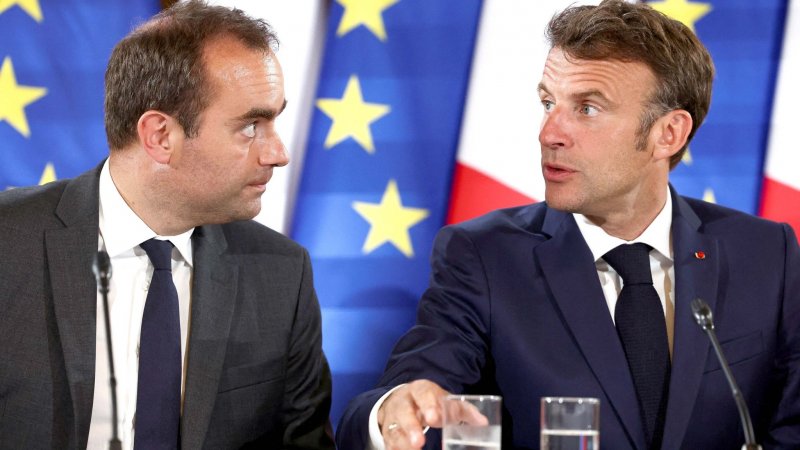
Source: Reuters
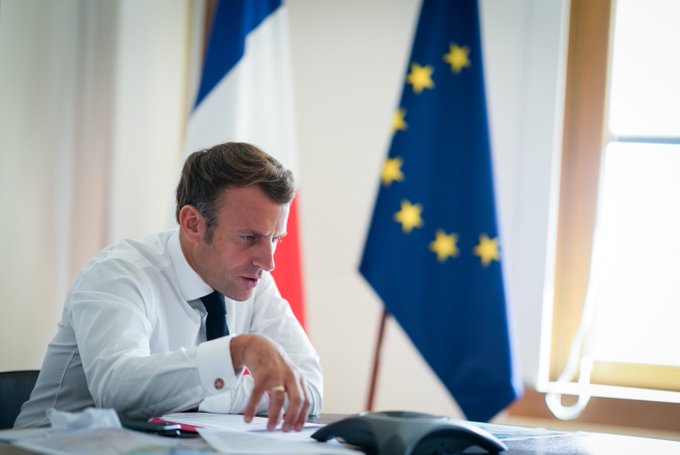
Source: CNN
What makes Lecornu’s resignation particularly painful for the Élysée is his long-standing personal loyalty to Macron. He has been one of the president’s closest allies, having served as minister for overseas territories, minister for local government, and secretary of state for ecological transition before being appointed defence minister. When Macron made him prime minister, it was with the expectation that Lecornu could help push through the budget despite the government’s lack of a parliamentary majority.
That gamble failed. Deputies from across the political spectrum — left, right, and centre — called for new parliamentary elections. Throughout his brief 27 days in office, Lecornu was forced to shuttle between political camps in a desperate attempt to secure support for the government’s budget proposal.
As Bloomberg reported, Lecornu’s minority government needed backing either from the left or the right to pass the 2026 budget — or at least enough abstentions to avoid a vote of no confidence if the budget were adopted without a formal vote. Apparently, Lecornu managed to achieve neither and chose to resign before facing certain defeat in parliament.
Lecornu’s departure is a deeply troubling sign for Macron. It marks yet another crisis underscoring the structural decay of the political system built around the president. Governance under France’s Fifth Republic is visibly deteriorating. Many observers argue that the only way forward is a complete political reset — new elections, a new parliament, and ultimately a new president.

Source: Left Voice
Despite his authoritarian tendencies and efforts to centralise power, Macron has failed to consolidate control, restore order, or implement meaningful reforms. He continues to reshuffle ministers in search of the ideal balance between loyalty and competence, yet each new appointment seems to falter more quickly than the last. The sheer scale of this personnel turmoil has become one of the defining features of Macron’s France.
This instability is beginning to have international repercussions. France’s European partners are quietly distancing themselves, wary of its waning leadership and increasingly unpredictable domestic politics. The erosion of confidence in the Élysée is now affecting perceptions of France itself — once viewed as a pillar of European stability and diplomacy.
Judging by the muted reaction to Lecornu’s resignation, the French public appears increasingly indifferent. Most no longer care who becomes the next prime minister, convinced that any new appointee will simply be another Macron loyalist, unlikely to alter the nation’s course.
Whether the opposition’s rise will bring genuine change remains uncertain. But one thing is clear: under Emmanuel Macron, reform has become impossible. The system he created — centralised, rigid, and reliant on personal control — is collapsing under its own weight. France stands at a crossroads, and its weary citizens are yearning for something their president can no longer offer: genuine renewal and hope.
By Tural Heybatov
News.Az