Japan has crossed China’s red line — and the price could be far higher than expected


Japan is entering a dangerous political moment — one that risks unraveling decades of regional stability, undermining the legacy of the post-World War II settlement, and pulling East Asia into a new era of confrontation. What is unfolding is not an incremental policy shift but a strategic break with the cautious approach Japan has maintained since 1945. And as Tokyo repositions itself, Beijing is signaling, unmistakably, that it will not tolerate this transformation lightly.
For decades, Japanese governments have balanced national security interests with diplomatic restraint, avoiding open provocations and maintaining a defensive posture shaped by its pacifist constitution. That era is fading.
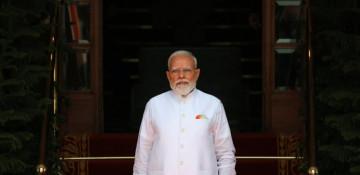
The Liberal Democratic Party’s initiative to revise Japan’s core national security documents, including the National Security Strategy, marks a decisive new phase. Prime Minister Sanae Takaichi has gone further than any of her predecessors in framing Japan not as a restrained regional actor but as a nation willing to assert military agency, including in areas Beijing considers non-negotiable.
Her declaration that a potential Chinese operation against Taiwan could justify a Japanese military response was not diplomatic carelessness. It was a calculated signal — to Beijing, to Tokyo’s electorate, and to Washington. With this statement, Tokyo moved from ambiguity to assertiveness. For China, such language is incendiary, especially because Taiwan is not merely a geopolitical issue; it is central to Chinese sovereignty, national memory, and state legitimacy.
Beijing’s response was swift and unusually blunt. Chinese Foreign Minister Wang Yi accused Japan of crossing a red line and attempting to insert itself militarily into what China regards as an internal matter. Beijing followed with a formal protest to the United Nations, a rare escalation reflecting the seriousness with which China perceives Japan’s new posture. In Beijing’s strategic culture, Japan’s shift is not simply policy evolution; it is a return to patterns that Asian memory associates with war, occupation, and militarism.
 Photo: Reuters
Yet the deeper strategic context goes beyond Japan and China. The United States plays a defining role. Washington, increasingly explicit about viewing China as its primary rival, is restructuring alliances in the Indo-Pacific. Where Japan was once expected merely to host U.S. military assets and maintain defensive capabilities, it is now being positioned as a frontline partner capable of independent strategic action. This is not a secret; it is openly discussed in policy circles across Tokyo and Washington.
Supporters of the new posture argue that Japan must “normalize” — that a nation with the world’s third-largest economy cannot indefinitely outsource its security to another power. But normalization is one thing; doctrinal transformation is another. When discussions emerge about revising the Three Non-Nuclear Principles, once considered untouchable after Hiroshima and Nagasaki, the shift becomes not just strategic, but philosophical. For survivors of the atomic bombings, civil society, and historians, the debate is profoundly symbolic. It risks eroding one of the few moral lessons the nuclear age successfully taught humanity.
If the military and ideological consequences are serious, the economic risks may be even more immediate and painful. China is not only Japan’s neighbor; it is one of its largest economic partners. Beijing has already reinstated restrictions on Japanese seafood imports and discouraged Chinese tourism to Japan, steps that many Western analysts treat as symbolic but which have very real consequences. Tourism accounts for nearly 7 percent of Japan’s GDP, and Chinese visitors form one of the most profitable segments.
Moreover, China buys almost half of Japan’s seafood exports, a sector where more than 200 Japanese companies now stand to face financial distress.
 Photo: Adobe Stock
And this is only the beginning. Beijing has not yet targeted deeper economic pressure points: automotive supply chains, semiconductor cooperation, industrial components, and investment channels. If relations deteriorate further, Japan may learn something Europe learned in recent years — that in the 21st century, power is not defined only by military alliances but also by economic interdependence and the ability to weaponize supply chains.
Tokyo believes it is entering a new phase of sovereignty and strategic confidence. Yet sovereignty is not only the ability to act; it is also the ability to choose consequences. Japan’s trajectory suggests that it is willing to accept new risks in exchange for geopolitical leverage.
The question is whether those risks have been fully calculated or whether momentum, nationalism, and external encouragement are pushing Japan further than it intends.
History suggests that once states begin speaking in the language of deterrence and red lines, diplomacy becomes harder, and compromise becomes politically costly. Asia’s stability has relied on the understanding that the past, especially the militarized past, must not return. Beijing now believes that Tokyo is challenging that premise. Tokyo believes it is asserting a rightful strategic role in a changing world. The United States sees opportunity. And the region watches, cautiously and anxiously, aware that miscalculation in East Asia rarely remains local.
Japan has crossed a line China warned it would not accept. The coming months will show whether Tokyo stepped across deliberately or whether it will now struggle to find a path back.
By Tural Heybatov


Similar news