Pakistan and Saudi Arabia: A new era in strategic defence cooperation


.png)
Editor's note: Faig Mahmudov is an Azerbaijan-based journalist. The article expresses the author's personal opinion and may not coincide with the view of News.Az.
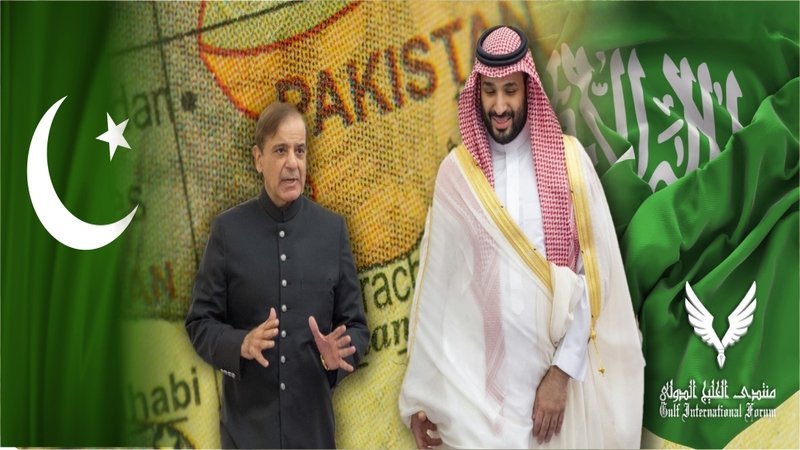
The recent signing of a mutual defence agreement between Pakistan and Saudi Arabia marks a significant step in reshaping the security architecture of South Asia and the Middle East. While both nations have historically enjoyed strong religious, cultural, and economic ties, this formalized defence pact signals a new phase of strategic alignment driven by regional uncertainties, shifting alliances, and evolving security needs.
Relations between Pakistan and Saudi Arabia have long been underpinned by religious affinity and geopolitical pragmatism. Pakistan has traditionally provided military expertise, training, and personnel to the Kingdom, while Riyadh has supported Islamabad financially during times of crisis. However, these arrangements were largely informal or transactional. The latest agreement elevates this cooperation into a codified strategic partnership, institutionalizing military collaboration and ensuring mutual security commitments.
This move reflects Saudi Arabia’s increasing concerns about regional threats—particularly from Iran’s growing influence, the ongoing instability in Yemen, and the vulnerability of Gulf oil infrastructure. For Pakistan, the agreement enhances its strategic depth in the Muslim world, offering new avenues for military cooperation, advanced defence technology access, and steady economic support.
The pact comes at a time when power balances in the Middle East are shifting. Saudi Arabia is recalibrating its security policy amid a perceived gradual U.S. disengagement from the region. By deepening ties with Pakistan—a nuclear-armed state with one of the world’s largest standing armies—Riyadh seeks to bolster its deterrence posture.

Source: CNN
For Pakistan, the agreement could strengthen its strategic leverage against India, while also offering much-needed economic dividends through defence contracts and energy guarantees. However, this alignment may complicate Islamabad’s delicate balancing act with Iran, a neighbor and an important regional player with which Pakistan shares a long and sensitive border.
The pact also resonates beyond the Gulf and South Asia. It could have implications for the broader Islamic military coalition that Saudi Arabia has sought to build, with Pakistan likely to play a key leadership role in its operational framework.
The defence agreement is not only military in nature but also economic in character. Saudi Arabia has been a consistent source of financial aid, oil concessions, and investment in Pakistan’s infrastructure. The formalization of defence cooperation is likely to deepen these economic ties further, potentially paving the way for joint ventures in the defence production sector, technology sharing, and counter-terrorism efforts.
At the security level, the deal may include joint training programs, intelligence sharing, and coordinated responses to emerging non-traditional threats such as cyber warfare, terrorism, and maritime piracy—issues that affect both South Asia and the Gulf.
Despite its strategic promise, the agreement carries inherent risks. Pakistan’s participation in Saudi-led security frameworks could draw it deeper into Middle Eastern rivalries, particularly the Riyadh–Tehran competition. Islamabad will need to tread carefully to avoid alienating Iran, with which it must maintain stable relations for border security and trade.

Source: Tehrantimes
Another concern is the possibility of domestic backlash within Pakistan, where sections of society are wary of being entangled in Middle Eastern conflicts. The challenge for Islamabad will be to ensure that the pact remains focused on defensive cooperation rather than offensive entanglements.
The Pakistan–Saudi Arabia mutual defence agreement represents a strategic milestone for both nations. For Riyadh, it is a step toward diversifying its security partners beyond the traditional U.S. umbrella. For Islamabad, it is an opportunity to strengthen economic ties, enhance military cooperation, and reaffirm its position as a key player in the Muslim world.
Yet, the pact also places Pakistan at the heart of a complex regional equation, where balancing competing interests will be as critical as reaping the benefits of this partnership. If managed wisely, this defence agreement could reshape not only bilateral relations but also the broader strategic landscape of the Middle East and South Asia.
(If you possess specialized knowledge and wish to contribute, please reach out to us at opinions@news.az).


Similar news