Protests in Georgia: What you need to know


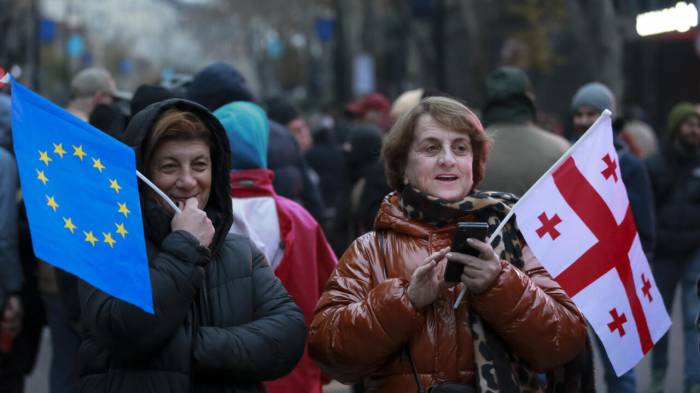
Protesters hold an EU and a Georgian national flag outside the parliament's building in Tbilisi on December 1, 2024. © Zurab Tsertsvadze, AP
The protests that began in Georgia on November 28, 2024, have spread not only across the capital but also to other regions of the country.
These events are a stark manifestation of the deep political and social tension that has been building for years. They raise critical questions about the country’s future, its foreign policy direction, the state of democracy, and the influence of external players on Georgia’s internal processes.The main trigger for the protests was an unexpected announcement by Prime Minister Irakli Kobakhidze regarding the suspension of the country’s EU integration process until 2028. This decision sparked outrage among citizens for whom the European perspective symbolizes not only economic development but also adherence to democratic values.
The move marked the culmination of a prolonged internal crisis. The government had previously faced criticism for its alleged dependence on Russia and insufficient attention to the reforms demanded by the European Union. The policies of the ruling party, "Georgian Dream," have often been perceived as an attempt to balance between East and West, but the decision to suspend EU integration was seen as a departure from the European course.
Protesters are also demanding answers to a host of other long-standing issues, including corruption within the political system, worsening living conditions, and the curtailment of civil liberties. Georgian President Salome Zourabichvili, who expressed support for the protesters, described the government’s decision as a betrayal of national interests and the people’s future.
The protests have engulfed nearly the entire country. In Tbilisi, tens of thousands gathered on Rustaveli Avenue, demanding the resignation of the government and the return to the path of EU integration.
In other cities , such as Batumi, Kutaisi, and Telavi, demonstrations were smaller in scale but showed solidarity with the protesters in the capital. In some instances, protests escalated into clashes with the police, who used tear gas and water cannons to disperse the crowds.
According to Georgia’s Ministry of Internal Affairs, 224 people were detained in the first four days of the protests. Human rights activists have reported numerous instances of excessive force by law enforcement.
The Georgian government has taken a hardline stance. Prime Minister Irakli Kobakhidze stated that the EU integration course remains on the agenda but requires a "revision of approaches." However, he dismissed the possibility of immediate dialogue with the opposition, accusing it of political manipulation.
Minister of Internal Affairs Vakhtang Gomelauri characterized the protesters' actions as aggressive and claimed they posed a threat to public safety. The measures taken, including the use of force, have drawn criticism both domestically and internationally.
The events in Georgia are unfolding against the backdrop of growing geopolitical pressure in the region. The European Union, which has already expressed concern over democratic backsliding in the country, may adopt a tougher stance, potentially reducing financial and technical support.
Russia, on the other hand, may seek to capitalize on the situation to increase its influence. Georgia has long been a strategic interest for Moscow, and the current protests may provide an opportunity to strengthen pro-Russian forces in the country.
The United States and other Western countries are also closely monitoring the situation. Their response could become a decisive factor in determining Georgia’s political trajectory.
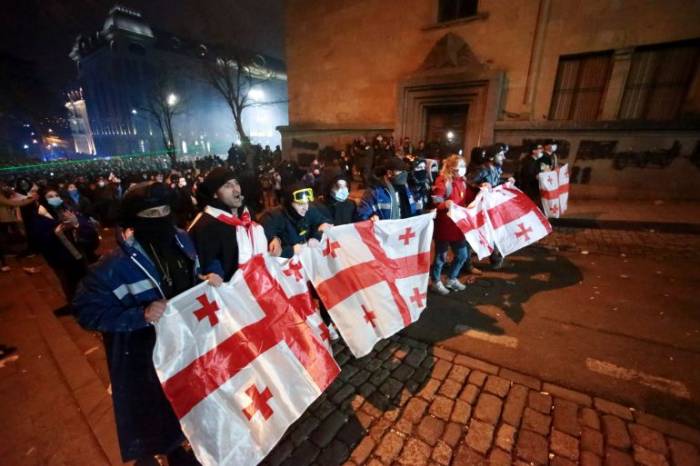
Protesters with Georgian flags rally against the government's decision to suspend negotiations on joining the European Union in Tbilisi [Zurab Tsertsvadze/AP Photo]
The protests in Georgia demonstrate that citizens are willing to fight for their rights and the democratic future of their country. The youth, who form a significant portion of the protesters, are showing active engagement and commitment to European values.
However, the protests have also revealed deep divisions within Georgian society. Some segments of the population, particularly in rural areas, support closer ties with Russia, viewing this as economically advantageous. This divide poses a significant challenge to the country’s stability in the coming years.
If the Georgian government continues to ignore the demands of the protesters, the situation could deteriorate further. The inability of the authorities to initiate dialogue risks eroding public trust in state institutions.
The protests also threaten the country’s economic stability. Deteriorating relations with the European Union and other Western partners could limit investment flows and slow economic growth.
The protests in Georgia are not merely a reaction to a specific political decision but a reflection of widespread dissatisfaction with the state of democracy and the country’s development trajectory. Georgia’s future depends on whether the government can find a compromise and restore public trust. Otherwise, the country risks facing political and economic isolation.
(If you possess specialized knowledge and wish to contribute, please reach out to us at opinions@news.az).


Similar news