Trump's new diplomacy: What experts say about the outcomes of Putin and Zelensky's calls


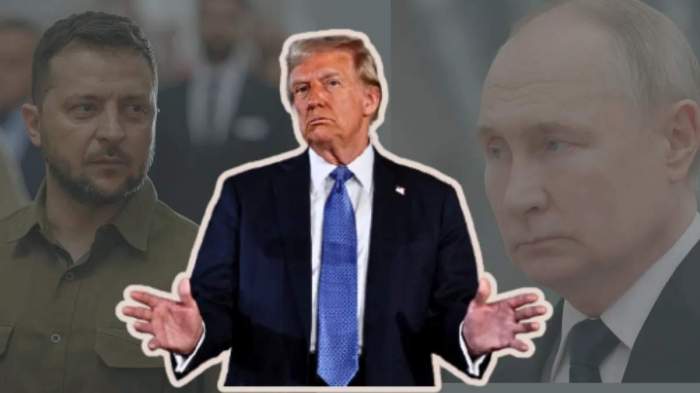
U.S. President Donald Trump held a phone conversation with Russian President Vladimir Putin, followed by a call with Ukrainian President Volodymyr Zelensky.
In a recent sequence of high-level phone calls, President Donald Trump spoke first with Russian President Vladimir Putin and subsequently with Ukrainian President Volodymyr Zelensky. According to Kremlin spokesperson Dmitry Peskov, the Trump-Putin conversation lasted close to 90 minutes and covered a broad range of issues, including Ukraine, the Middle East, energy, artificial intelligence, and the strength of the U.S. dollar. The leaders also reportedly discussed a potential prisoner exchange. During the call, President Putin invited Trump to visit Moscow, expressing a willingness to host U.S. officials for additional talks regarding Ukraine.
Additionally, Peskov noted that the conversation touched on ways to strengthen bilateral economic ties. “During the conversation, they addressed Middle East peace initiatives, the Iranian nuclear program, and U.S.-Russia economic relations,” he said. Putin underscored that the moment was ripe for closer cooperation between Moscow and Washington, aligning with President Trump’s advocacy for expanded diplomatic engagement. “The President endorsed a key observation from the American leader, namely that the time has come for our countries to work together,” Peskov added. Trump, for his part, highlighted the shared history of collaboration between the United States and Russia during World War II.
“We both acknowledged the remarkable history of our nations and our collective triumph in World War II,” Trump wrote on Truth Social. “Russia lost tens of millions of people, and we, like them, endured devastating losses.”
Trump also indicated that both Washington and Moscow appeared prepared to begin immediate negotiations aimed at resolving the ongoing conflict in Ukraine.
Shortly after speaking with Putin, President Trump also held a phone call with Ukrainian President Volodymyr Zelensky.
Zelensky characterized their conversation as “lengthy,” noting that it centered on achieving peace and underscored both nations’ willingness to “work together.” The two leaders additionally discussed Ukraine’s technological capabilities, including drone usage and other modern production methods. Following the call, Trump posted on social media that the exchange “went very well.”
“He, like President Putin, wants to achieve peace,” the U.S. president wrote. “We discussed numerous facets of the war. I am hopeful that the outcome of this meeting will be positive. It is time to end this senseless conflict, which has led to widespread and wholly unnecessary loss of life and destruction. God bless the people of Russia and Ukraine!”
Ukrainian political scientist for shared his assessment of these developments with News.Az, focusing on both international and domestic dynamics.
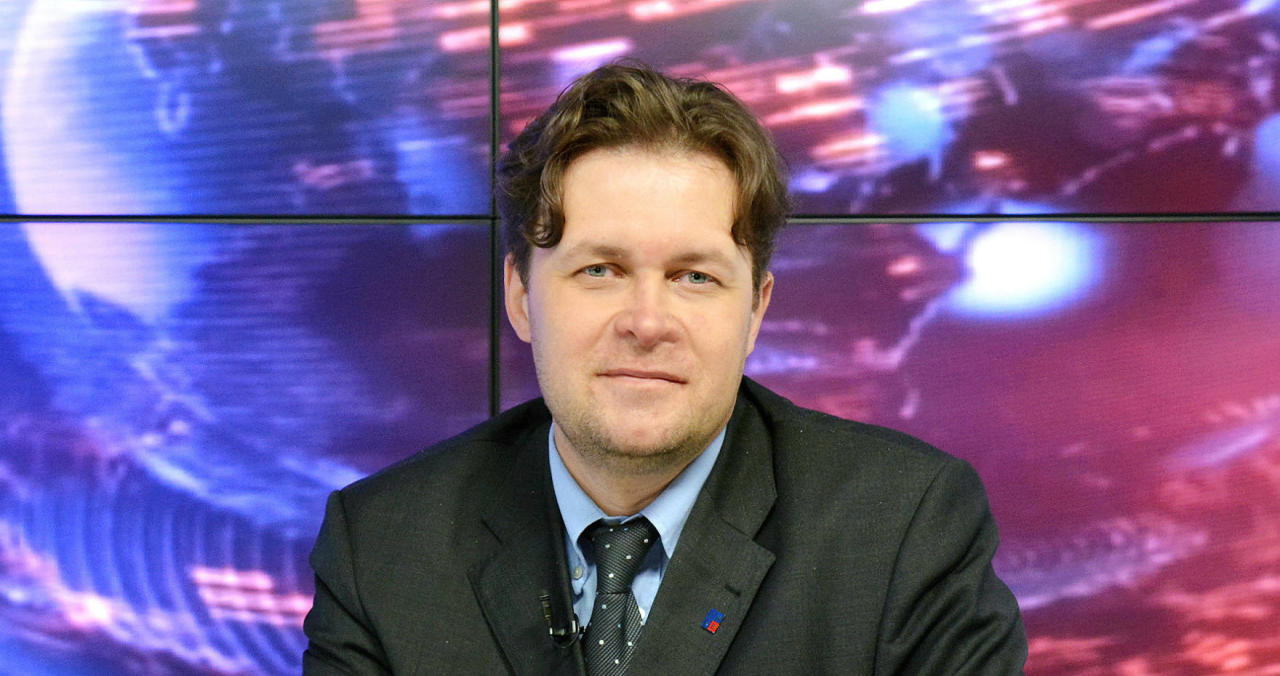
In an interview with News.Az, Yevhen Mahda addressed the order in which President Trump spoke to President Putin before contacting President Zelensky. “I would argue Trump’s sequence is mistaken because, by talking to Putin first and only then to Zelensky, he shows a clear prioritization of Russia—an aggressor—despite leading a nation that describes itself as the world’s largest democracy,” Mahda remarked. He observed that while one might rationalize this approach, it is ultimately problematic.
Mahda went on to say that the Trump administration, by proceeding in this manner, appears to operate within a lingering “Cold War paradigm.” “From this standpoint, deals are made on the basis of an exchange: you give me something, I give you something, and we sort everything out,” he said. He suggested that Trump’s apparent eagerness to end the Russian-Ukrainian conflict, seemingly without deep concern for the underlying conditions, reflects a transactional mindset. “I understand that Trump wants to end the war but does not seem overly concerned about the specific terms under which it concludes,” Mahda added.
Acknowledging the intense pressure on President Zelensky, Mahda nonetheless voiced appreciation for the continued support extended by key European nations. “I am glad that the major European states have underscored their willingness to stand by Ukraine and offer assistance,” he said. However, he cautioned that U.S. and European military budgets dwarf Ukraine’s capabilities. “We need to keep in mind that the military expenditures of the United States and any European nation dwarf those of Ukraine,” Mahda noted.
This imbalance, he stressed, makes it all the more vital for Ukraine to assert its position. “We must make certain the United States understands that trying to negotiate Ukraine’s fate with Putin, without Ukraine at the table, is not merely an error but a direct route to appeasing Russia,” he said.
Looking ahead, Mahda predicted that the Istanbul Security Conference on February 14 would serve as a pivotal venue where Russia, aided by its allies—and what he views as the Kremlin’s influence over the U.S.—would try to promulgate the idea that sacrificing Ukraine might bring peace. “I believe that at the Istanbul Security Conference we will witness Russia, via its partners, including the U.S.—not formally an ally of Russia but evidently under the Kremlin’s influence—seek to promote the idea that giving up Ukraine will somehow resolve the conflict,” he warned. Drawing a parallel to the Munich Agreement of 1938, Mahda urged contemporary leaders to remember the lessons of history. “This scenario occurred in Munich in 1938. Those who have forgotten or never learned this history should acquaint themselves with it fully,” he said.
Turning to domestic issues, Mahda highlighted considerable challenges within Ukraine. “I believe we should concentrate on the question of national unity, particularly given the sanctions targeting Petro Poroshenko, our country’s fifth president,” he remarked. He pointed out that Ukraine has yet to demonstrate decisive steps toward unifying internally. “Without internal consolidation, Ukraine will face tremendous difficulties,” Mahda cautioned.
Reflecting on President Zelensky’s early tenure, Mahda observed that the initial outpouring of support for him has diminished. “The era of euphoria and universal backing for Volodymyr Zelensky has, regrettably, come to an end,” he noted, adding that leading a nation embroiled in war while also validating one’s leadership poses a unique challenge. “He is now the head of a nation at war, but proving one’s position in today’s global context is vastly more complex than ever before, and this must be acknowledged,” he explained.
Nonetheless, Mahda emphasized Ukraine’s unwavering stance. “Above all, Ukraine will not capitulate. After the atrocities in Bucha, Mariupol, Izyum, and elsewhere—after the execution of prisoners and the brutality in occupied areas—surrender is simply not an option,” he concluded.
Mahda’s analysis offers insight into the interplay of both international and domestic factors bearing down on Ukraine’s quest for sovereignty and peace. His remarks underscore the dual need for global solidarity and robust internal unity as the country navigates a difficult path forward.

News.Az also sought perspective from Sergei Markov, a prominent Russian political scientist who weighed in on the conflict and potential negotiations.
A seasoned analyst, Markov examined the political motivations shaping current events and the strategic posture of Russia, the United States, and Europe, underscoring the challenges of reaching a diplomatic resolution. “When some Americans, for reasons I believe do not originate with President Trump himself, assert that the United States persuaded Putin to come to the negotiating table for peace in Ukraine, it may strike many as absurd,” Markov said. “Still, I hesitate to label it outright nonsense, because it serves specific political objectives directed largely at President Trump’s critics.”
According to Markov, Trump draws substantial criticism for his outreach to Putin, particularly from what he termed the “party of war” in the U.S. and from progressive factions within the American deep state and the Democratic Party. “Trump also faces substantial criticism from Europe’s own party of war, which holds sway in most European capitals,” he added, noting that Hungary and Slovakia could be exceptions by trying to rationalize the talks despite growing objections.
Markov contended that Trump’s allies have employed misleading claims to justify these negotiations, although it is widely known that Putin has long advocated for talks. “For three years, Putin urged negotiations, but Washington declined. Europe also refused, and Zelensky went so far as to enact a law prohibiting talks with Vladimir Putin,” he said.
In Markov’s view, if such talks took place, they would mark a victory for Putin rather than a concession. “That is how most European media, even those openly opposed to Russia and Putin, interpret it. They plainly regard this scenario as a Western defeat and a major win for Putin,” he remarked. Yet Markov sees no major defeat for the West, instead framing it as a potential move toward pragmatism. “If the West halts the war in Ukraine, it will not be a defeat; rather, it would signify an abandonment of reckless, belligerent strategies in favor of a more measured and peaceful approach,” he said. “This dialogue also matters beyond the Ukrainian conflict, as efforts to vilify Vladimir Putin have fallen short.”
Markov identifies the primary concern heading into a prospective summit as preventing direct military confrontation between the United States and Russia. He pointed to the complex environment on the ground: “In reality, under the Biden administration’s directive, the United States is not actively engaging in warfare against Russia. Ukraine’s forces are not responsible for the ATACMS strikes on Russian territory, as Ukraine lacks the necessary technical capacity for such missions.”
He described the situation as alarming, given that the American military has attacked internationally recognized Russian territory. “Russia should have retaliated by striking U.S. soil, yet Putin seemingly refrains from doing so, which was likely a prime objective of the Biden administration—to disrupt the election process and block Trump from regaining power,” Markov said. He also suggested that Trump appears to share a similar view. “He definitely requested that Russia refrain from any severe counterattacks, whether on U.S. soil, American bases, or satellite installations, in order to avert a dangerous escalation of the conflict,” he added.
According to Markov, the American public’s main priority is reducing the risk of nuclear escalation. “Americans feel sympathy for both Russians and Ukrainians, but the looming danger of Russia’s nuclear arsenal stands out as the central concern,” he argued. “This issue is paramount for Americans, who will therefore insist on de-escalation.”
Still, he was skeptical about the likelihood of an agreement at any forthcoming summit. “I believe the odds of an agreement emerging from this summit are minimal—not just in my estimation but also in the Russian leadership’s view. I would gauge the probability at around 20%. Once negotiations collapse, however, Ukraine is likely to encounter significant financial troubles,” he noted. Markov predicted that current levels of financial support for Ukraine could be slashed. “If current assistance stands at $300 billion, it might dwindle to $100 billion, with the expectation that Europe would shoulder the remaining $200 billion,” he said, adding that Europe may respond that it cannot sustain such expenses, thus reducing Ukraine’s funding further.
This predicament, in Markov’s view, could set the stage for a peace accord as both Ukraine and Europe struggle under economic strain. “Presently, European nations and Ukraine’s leadership are obstructing Trump’s efforts and rejecting Russia’s stipulations,” he noted.
Expanding on Russian demands, Markov was unequivocal: “Russia’s demands for peace in Ukraine are straightforward: an agreement that addresses the core source of the conflict and averts another war. We saw the example of the Minsk agreements, each followed by new hostilities. Neither Kyiv, Europe, nor the U.S. adhered to those accords, so any fresh agreement must not set the stage for renewed conflict.”
He was critical of American proposals. “What exactly are they suggesting? That Ukraine not join NATO, and so a war persists between Ukraine and Russia. This, they argue, does not immediately lead to nuclear conflict or global annihilation. But this falls short. They propose halting hostilities along the contact line—yet under such conditions, Russian cities like Kherson and Zaporizhzhia would remain under Ukrainian occupation,” Markov explained, pointing out that a powerful and militarized Ukraine, cultivating anti-Russian sentiment, would make another conflict practically inevitable.
“Ukraine must cease its anti-Russian stance, and individuals favoring amicable ties with Russia and the Orthodox Church should be released from oppression and allowed back into the Ukrainian parliament,” Markov concluded. “At present, the West is unprepared to accept these conditions, but in a few more months of fighting, it might be more open to them.”
Markov’s commentary underscores the broader geopolitical intricacies and the substantial barriers to establishing a sustainable peace in Ukraine.

In an exclusive interview with Alan Kafruny, a leading scholar of international relations, we explored the rapidly evolving context of the conflict and the shifting contours of global politics.
Kafruny began by examining the developments triggered by the 90-minute telephone conversation between Putin and Trump—talks that may signal a significant reorientation of foreign policy. “The prisoner exchange deal and the proposed mutual visits by Trump and Putin to Moscow and Washington signal a genuine opportunity to conclude the war in Ukraine,” Kafruny observed. “This marks a foundational change that could fundamentally alter the course of U.S.-Russian relations.”
He then addressed recent comments by U.S. Defense Secretary Pete Hegseth in Brussels, which Kafruny sees as a sharp break from established U.S. policy. “Hegseth’s shift from established doctrine is significant. He unequivocally stated that Ukraine would not revert to its pre-2014 borders and dismissed the notion of NATO membership for Ukraine,” Kafruny said. “He also told European ministers that Ukraine would be their responsibility, not something the U.S. would handle directly.”
According to Kafruny, Hegseth’s position may explain why the U.S. special envoy, Keith Kellogg, was excluded from the negotiation team. “Kellogg’s perspective on Ukraine likely conflicts with this emerging trajectory. His absence is notable, even though he is slated to meet with President Zelensky next week,” he said.
Despite this shift, Kafruny emphasized that much remains in flux. “Naturally, circumstances could shift rapidly, particularly given Trump’s unpredictability. It is by no means certain that Washington and Moscow fully grasp each other’s conditions for a European security framework. Nonetheless, the mere existence of this dialogue constitutes a remarkable development,” he observed. “Should these pronouncements translate into concrete steps, they will likely spark vigorous internal discord within the U.S. foreign policy community.”
Turning to broader implications, Kafruny noted that the evolving scenario could significantly affect the United States’ relationship with European allies. “This realignment will unavoidably impact America’s connections with its NATO allies in Europe. Individually and collectively, Europeans possess limited military capabilities, so trying to provoke Russia into renewed engagement with the U.S. is risky,” he cautioned. “They would do better to consider how this unfolding accord might spare countless lives rather than opposing it.”
Kafruny also pointed to reports that the Trump administration is pursuing an arrangement granting U.S. firms access to Ukraine’s mineral deposits. “Trump has dispatched Treasury Secretary Scott Bessent to Kyiv to explore a ‘minerals for arms’ agreement, essentially granting U.S. companies rights to Ukraine’s extensive mineral deposits,” he explained. “This underscores another aspect of shifting U.S. foreign policy—one increasingly guided by economic considerations.”
In the end, Kafruny cast these developments as part of a wider transformation within the American foreign policy establishment. “President Trump’s pronouncements, bolstered by Hegseth’s statements, mark a break with tradition—one that could fundamentally reorder transatlantic relations and Europe’s geopolitical framework,” he concluded. “It is apparent that Trump has consolidated remarkable authority over America’s policy trajectory, a shift that will inevitably sow further rifts within the U.S. foreign policy establishment.”


Similar news