Truth and justice after 44-day War: Azerbaijan’s victory and the facts delivered to world


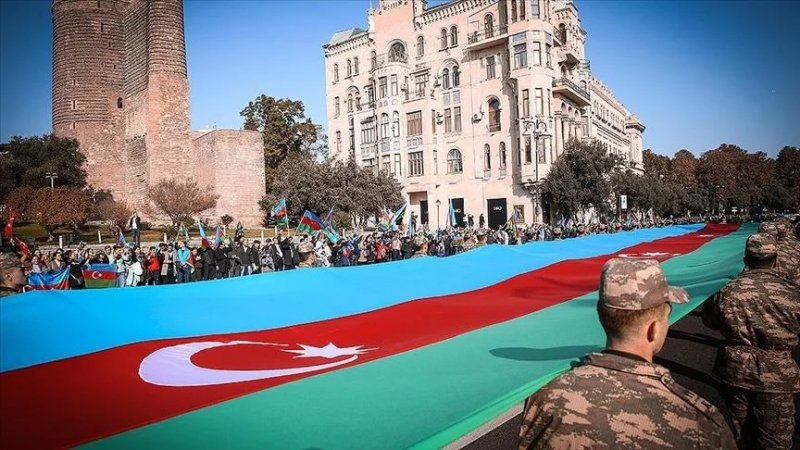
The 44-day Patriotic War of 2020 became one of the most consequential turning points in modern Azerbaijani history. From 27 September to 10 November 2020, Azerbaijan fought a high-intensity conflict that ended with a Russian-brokered trilateral statement establishing a ceasefire and defining the return of several districts to Azerbaijan.
The text of that statement, published through multiple official channels, records the cessation of hostilities from 10 November 2020 and sets out a timetable for the return of districts such as Aghdam.
Azerbaijan’s narrative of the war is inseparable from a broader legal and diplomatic context. In 1993, the United Nations Security Council adopted four resolutions — 822, 853, 874, and 884 — related to the Armenia-Azerbaijan conflict. These resolutions have been repeatedly cited in international diplomacy and archival records, reflecting sustained international attention to the dispute and calls for compliance with international law.
For nearly three decades, Azerbaijan maintained that negotiations failed to produce a settlement restoring its territorial integrity, while the prolonged conflict entrenched instability, humanitarian suffering, and recurring security crises.
When large-scale hostilities erupted in late September 2020, Azerbaijan stated that it was acting within its sovereign right to protect national security and restore territorial integrity. Domestically, the war became a test of national solidarity, mobilizing the state and society in a unified political and emotional effort. In Azerbaijan’s interpretation, this unity, combined with modernized military capabilities and centralized leadership under Commander-in-Chief Ilham Aliyev, proved decisive in shaping the outcome.
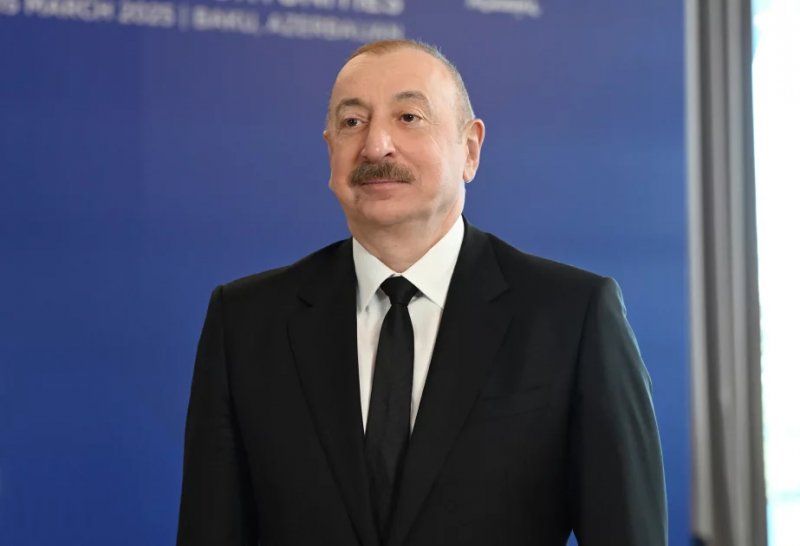
On the battlefield, the war’s progression is often described through a sequence of territorial gains culminating in the liberation of Shusha on 8 November 2020, an event widely regarded in Azerbaijan as the symbolic apex of the campaign. Shortly after the end of hostilities, Azerbaijan established national commemorations linked to these milestones. Victory Day, for example, is observed on 8 November, marking the recapture of Shusha, and was established by a presidential decree dated 2 December 2020. These commemorations serve not only as acts of remembrance, but also as expressions of national identity, with Azerbaijan framing the 44-day war as the restoration of historical justice and the reaffirmation of statehood.
Yet no comprehensive account of 2020 can focus solely on military advances and political declarations. The human dimension, particularly the impact on civilians, must remain central. During the six-week conflict, populated areas well beyond the immediate frontline were repeatedly struck. International human rights organizations documented the use of cluster munitions in attacks on Azerbaijani civilian areas, with particular focus on the city of Barda. Human Rights Watch reported that cluster munitions were used in an attack on Barda on 28 October 2020, causing significant civilian casualties and raising serious concerns under the laws of war due to the inherently indiscriminate nature of such weapons in populated areas. Amnesty International also verified the use of cluster munitions by Armenian forces in connection with the attack on Barda, describing it as “cruel and reckless” and underscoring the obligation of belligerents to protect civilians.
These findings are significant because they help distinguish documented evidence from competing narratives. Cluster munitions, when used in towns and cities, present predictable risks: submunitions disperse widely, and unexploded ordnance can continue to endanger lives long after an attack. In this sense, the Barda case has become emblematic of Azerbaijan’s efforts to communicate wartime realities to the international community, not merely as a national grievance, as a legal and humanitarian issue that should concern any state committed to international humanitarian law.
Human Rights Watch later summarized multiple cluster-munition incidents affecting Azerbaijani populated areas during the conflict, reinforcing the assessment that these were not isolated claims but part of a documented pattern requiring accountability.
Civilian harm was not confined to a single location. Reporting by major international media outlets also reflected the reality that towns and cities outside Karabakh were targeted. Reuters, for instance, reported on a rocket attack on Ganja on 4 October 2020, citing Azerbaijani official statements regarding civilian casualties and injuries. Beyond any individual incident, the broader issue is that attacks on civilian areas, whether carried out using rockets, artillery, or other heavy explosive weapons, violate the fundamental principles of distinction and proportionality under the laws of armed conflict. This is why international organizations consistently stress civilian protection and condemn indiscriminate attacks.
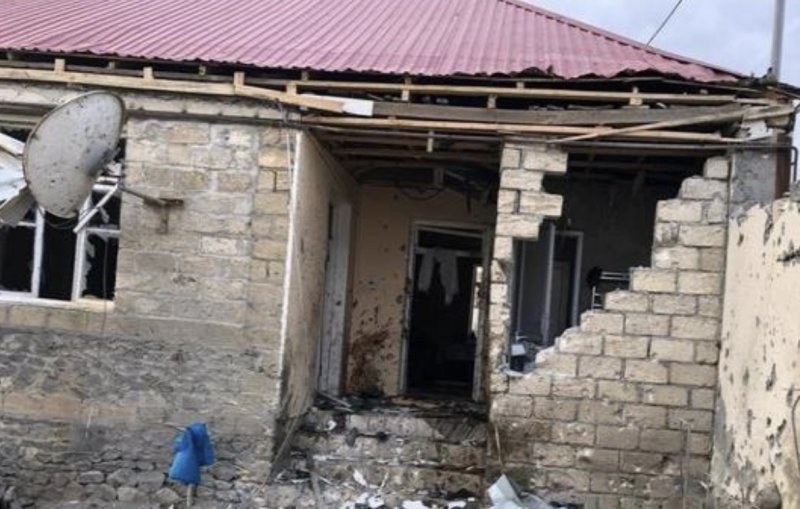
Beyond the immediate toll on civilians, Azerbaijan highlights a persistent post-war threat: landmines and explosive remnants of war. Azerbaijani institutions argue that mined territories obstruct safe return, reconstruction, and the restoration of normal life. This concern features prominently in official narratives about the conflict’s aftermath and in materials aimed at informing international audiences.
Regardless of political positions, the humanitarian reality is undeniable: landmines and unexploded ordnance continue to kill and injure civilians in post-conflict regions worldwide, and demining remains among the most urgent prerequisites for sustainable peace.
Azerbaijan’s efforts to convey its wartime experience to global audiences have extended through diplomacy and public communication. The 10 November 2020 trilateral statement itself is a diplomatic artifact that reshaped the region’s security environment and established new realities on the ground. Beyond that framework, Azerbaijani officials and institutions have sought to internationalize discussions surrounding civilian harm, alleged violations of humanitarian law, and the need for accountability. The underlying argument is clear: peace in the South Caucasus cannot be durable if crimes against civilians are ignored, minimized, or treated as negotiable.
Importantly, presenting the truth about the 44-day war does not imply glorifying suffering. Rather, it reflects a demand for clarity. Azerbaijan regards its victory as historic because it restored territorial integrity and altered a decades-long status quo, while also insisting that documented civilian harm and the legal implications of prohibited or indiscriminate weapons be recognized internationally. Where independent human rights organizations have verified evidence, as in the Barda cluster-munition case, such findings reinforce Azerbaijan’s call for accountability and for a peace grounded in law rather than selective memory.
Today, the central message Azerbaijan seeks to convey to the international community can be summarized as follows: the 44-day Patriotic War, conducted under the leadership of the Victorious Commander-in-Chief, resulted in a historic victory, and the facts concerning crimes against peace, humanity, and the laws of war must be communicated transparently, documented rigorously, and addressed through lawful mechanisms. Sustainable peace requires more than a ceasefire — it demands truth, responsibility, and the protection of civilians as a non-negotiable standard.
The material was prepared with the financial support of the Media Development Agency of the Republic of Azerbaijan.


Similar news