U.S.-China trade war: Who is really losing ground?


Editor's note: Seymur Mammadov, a special commentator for News.Az, is the director of the international expert club EurAsiaAz. The article expresses the personal opinion of the author and may not coincide with the view of News.Az.
The trade war between China and the United States remains one of the key issues in the global economy. The imposition of new American tariffs against China, accompanied by Washington's harsh rhetoric, only exacerbates tensions between the world's two largest economies. However, Beijing is not standing idly by—it is demonstrating strategic resilience and a well-calculated approach in response to U.S. economic pressure.
Unlike Washington’s aggressive policy aimed at destabilizing global supply chains, China remains committed to sustainable economic development, continuing to attract foreign investments and strengthen international partnerships. While many countries fear the consequences of trade wars and rising protectionism, China maintains stability, demonstrating confidence in its economic strategy.
Who will emerge victorious in this confrontation? What are the real risks for global trade? And can Beijing maintain its leading role in the global economy despite pressure from Washington? The answers lie in our analysis.

Source: The New York Times
“I have imposed very substantial tariffs on China—$600 billion worth. No other president has ever done so,” Donald Trump triumphantly told reporters at the White House. The American president proudly emphasizes that during his first term, he "saved" the U.S. steel industry by imposing tariffs, claiming that China was "dumping" massive amounts of steel into the market.
However, the reality is far from Washington’s narrative: the imposed tariffs have not only affected Chinese businesses but have also hurt the U.S. economy, driving up the cost of raw materials and goods for American companies.
Trump launched a new phase of the trade war on February 7, announcing additional tariffs on Chinese goods under the pretext of combating synthetic opioid imports. However, these measures appear to be more of a political maneuver than a genuine economic strategy. Just days earlier, the White House had imposed tariffs on several countries, including China. For Mexico and Canada, Washington announced 25% tariffs but later temporarily postponed them. No such delay was offered to China, indicating a deliberate campaign of economic pressure on Beijing.
Source: Gas World
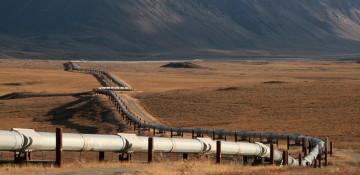
As expected, Beijing did not let Washington’s actions go unanswered. The Chinese government filed a complaint with the World Trade Organization (WTO), citing the illegality and discriminatory nature of U.S. tariffs. At the same time, China implemented countermeasures, imposing retaliatory tariffs on American energy resources and industrial goods. Starting February 10, China enacted a 15% tariff on imported U.S. coal and liquefied natural gas (LNG), along with a 10% tariff on crude oil, agricultural machinery, large passenger vehicles, and pickup trucks. These steps not only showcase China’s strength on the global stage but also highlight its ability to respond flexibly to external challenges.
Unlike the U.S.'s aggressive policies, which have raised concerns even among Washington’s allies, China is acting strategically—refusing to be provoked while maintaining a measured response. At the same time, Trump has threatened to impose similar trade measures against the European Union, causing panic among European leaders. Brussels has signaled its readiness to respond but has also expressed a preference for dialogue. This stance reflects growing distrust in the U.S. as a reliable economic partner.

Source: CNBC | Zhu Bin, Director of the Foreign Investment Department at China’s Ministry of Commerce
China, on the other hand, remains a stable and predictable player on the international stage. Washington’s tariffs are disrupting normal trade and economic cooperation between China and the U.S.—a reality acknowledged even by American businesses. According to Zhu Bing, director general of the Department of Foreign Investment Administration of the Ministry of Commerce, increased tariffs are harming not only Chinese businesses but also American companies.
The new tariffs violate WTO rules and lead to unnecessary cost increases for the United States itself. Nevertheless, China continues to demonstrate resilience and remains an attractive destination for foreign investors. According to China’s Ministry of Commerce, actual foreign direct investment (FDI) in China reached 97.59 billion yuan ($13.6 billion) in January. While there was a temporary year-on-year decline, investment levels increased by 27.5% compared to December, reflecting continued confidence in China’s economy. Experts warn that Trump’s policies could trigger a wave of global protectionism, leading to sustained inflation and a slowdown in global economic growth.
However, the actual damage to China appears minimal. On the contrary, Beijing’s countermeasures are generating an economic advantage of $30 billion, largely due to tariffs on U.S. energy resources. Washington hopes that Western companies will relocate their manufacturing operations out of China, but reality tells a different story. Many multinational corporations are actually increasing their investments in China, drawn by its advanced infrastructure, skilled workforce, and stable macroeconomic policies.

Source: NewsWeek
Even if some U.S. firms move their production to other countries, their products will still rely on Chinese components, technologies, and supply chains. Beijing remains composed and pragmatic, refusing to be drawn into Washington’s provocations. China’s economy is built on a solid foundation, and its resilience has been proven in previous rounds of the trade war.
Unlike the United States, which seeks to impose its policies through pressure and sanctions, China is positioning itself as a stabilizing force.Beijing continues to expand global trade ties, strengthen relationships with developing nations, and promote the Belt and Road Initiative. The world is on the brink of transformation, and the U.S. risks losing its leadership due to its own aggressive policies.
Meanwhile, China continues to move forward, demonstrating strategic patience and confidence in its economic trajectory. As an old Chinese proverb says, “Water wears away stone not by force, but by persistence.” In this trade war, Beijing is following precisely this approach—patiently yet decisively—waiting for time to set the record straight.
(If you possess specialized knowledge and wish to contribute, please reach out to us at opinions@news.az).


Similar news