What is happening in Iran right now?


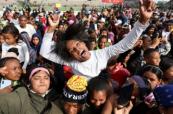
Iran has once again witnessed waves of public protests across several cities, driven by a mix of political, economic, and social grievances, News.Az reports.
While demonstrations in Iran are not new, the current protest activity reflects accumulated frustration over living standards, governance, civil liberties, and the perceived lack of accountability within state institutions. These protests tend to emerge in cycles, intensify rapidly, and then face strong containment measures by the authorities.
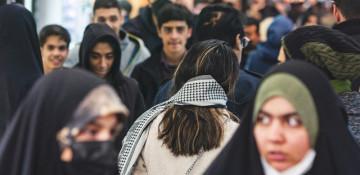
Unlike single-issue demonstrations, recent protests have drawn participation from diverse social groups, including young people, workers, students, women, and pensioners. The issues raised vary by region, but collectively they point to systemic challenges rather than isolated incidents.
Why do protests keep erupting in Iran?
Protests in Iran are rooted in long-term structural factors rather than short-term triggers alone. Economic pressure is one of the central causes. High inflation, currency depreciation, unemployment, and declining purchasing power have placed severe strain on households. Even middle-income families increasingly struggle to afford basic goods, housing, and healthcare.
Political factors also play a major role. Many protesters express dissatisfaction with the lack of political pluralism, limited avenues for reform, and restrictions on freedom of expression and assembly. Over time, the gap between public expectations and the state’s willingness to implement meaningful reforms has widened.
Social issues further amplify unrest. Generational divides are evident, with younger Iranians increasingly disconnected from the political narratives and ideological frameworks promoted by the state. Cultural and lifestyle restrictions, particularly those affecting women and youth, often act as catalysts for broader expressions of dissent.
Are these protests centralized or spontaneous?
Most protests in Iran are decentralized and largely spontaneous. They usually begin at the local level in response to a specific grievance, such as price increases, labor disputes, or enforcement actions, and then spread through social networks and word of mouth. There is rarely a single leadership structure or unified opposition organization directing these protests.
This decentralized nature makes the protest movement harder to eliminate entirely but also limits its ability to sustain nationwide coordination over long periods. Authorities often exploit this fragmentation to regain control by isolating protests city by city.
How does the Iranian government respond to protests?
The state response typically combines security measures, legal action, and information control. Law enforcement agencies and security forces are deployed to disperse demonstrations, restrict movement, and deter further gatherings. Arrests are common, particularly of activists, journalists, and individuals accused of organizing protests.
Information control is another key component. Internet disruptions, restrictions on social media platforms, and state media narratives are used to shape public perception and reduce mobilization. Official statements often frame protests as the result of foreign interference or misinformation rather than domestic dissatisfaction.
At the same time, authorities occasionally introduce limited economic or administrative measures aimed at calming public anger, such as subsidies or promises of reform. However, these steps are often viewed by protesters as insufficient or temporary.
How significant are women’s protests in Iran?
Women play a central and highly visible role in recent protest movements. Gender-related grievances have become intertwined with broader political and economic demands. Many demonstrations include calls for greater personal freedoms, legal equality, and changes to social regulations that disproportionately affect women.
The prominence of women in protests has altered both domestic and international perceptions of unrest in Iran. It has also intensified the authorities’ sensitivity to protest symbolism, leading to stricter enforcement measures in some cases.
What role does social media play in Iranian protests?
Social media platforms are critical tools for communication, documentation, and mobilization. Protesters use them to share videos, coordinate gatherings, and attract international attention. Despite frequent restrictions, many Iranians rely on circumvention tools to access blocked platforms.
The state recognizes the influence of digital platforms and has invested heavily in surveillance, cyber capabilities, and alternative domestic networks. The digital sphere has effectively become another arena of contestation between protesters and authorities.
How has the United States reacted to protests in Iran?
The United States has consistently expressed public support for the right of Iranians to protest peacefully and has criticized Tehran’s handling of demonstrations. US officials regularly issue statements condemning the use of force against protesters and highlighting human rights concerns.
Washington frames its position as support for universal rights rather than interference in Iran’s internal affairs. However, Tehran rejects this narrative and portrays US statements as part of a broader campaign to destabilize the country.
Has the US imposed new measures in response to the protests?
In response to protest crackdowns, the US has expanded targeted sanctions against individuals and entities linked to security forces, law enforcement, and state media. These measures aim to hold specific actors accountable rather than impose broad economic pressure on the population.
The US also supports initiatives to improve internet access and digital freedom for Iranians, including easing certain restrictions on communication technologies. These steps are presented as efforts to counter information suppression rather than economic sanctions.
How do protests affect US-Iran diplomatic relations?
Protests further complicate already strained relations between Washington and Tehran. Dialogue on issues such as sanctions relief, nuclear negotiations, and regional security becomes more difficult when human rights concerns dominate the agenda.
From the US perspective, protest crackdowns reinforce skepticism about Iran’s willingness to engage constructively with the international community. From Iran’s perspective, US statements and sanctions are seen as evidence that Washington uses human rights issues as leverage rather than as genuine concerns.
Do protests influence nuclear negotiations?
Indirectly, yes. While protests are not formally part of nuclear talks, they shape the political environment in which negotiations occur. US policymakers face domestic pressure to prioritize human rights, while Iranian leaders become more cautious about making concessions during periods of internal unrest.
This dynamic often leads to diplomatic stalemates, where both sides adopt more rigid positions to avoid appearing weak either domestically or internationally.
How does Iran accuse the US of involvement in protests?
Iranian officials frequently accuse the US and its allies of encouraging or orchestrating unrest through media campaigns, sanctions, and support for opposition groups. State media narratives emphasize foreign influence, cyber warfare, and psychological operations.
These accusations resonate with segments of the population that view external pressure as a primary cause of Iran’s economic difficulties. At the same time, many protesters reject the notion that foreign actors are responsible for their grievances.
What is the regional impact of protests in Iran?
Iran’s internal stability has direct implications for the Middle East. Protests can affect Tehran’s regional posture, including its involvement in neighboring countries and its relationships with allied groups. Periods of unrest often prompt Iran to prioritize internal security over external initiatives.
Regional actors closely monitor developments in Iran, as prolonged instability could alter power balances, energy markets, and security dynamics across the region.
How do protests affect Iran’s economy?
Economic impact is both a cause and a consequence of protests. Demonstrations disrupt commerce, transportation, and public services in affected areas. Investor confidence, already weakened by sanctions, suffers further during periods of unrest.
At the same time, economic hardship remains a key driver of protests, creating a feedback loop that is difficult to break without structural reform.
What is the public mood inside Iran?
Public sentiment is complex and varied. While protests attract significant attention, not all Iranians participate or support street demonstrations. Some fear instability, economic collapse, or external intervention more than they oppose the current system.
However, surveys, anecdotal evidence, and protest slogans suggest widespread frustration and declining trust in official narratives. The persistence of unrest indicates that underlying grievances remain unresolved.
How do younger generations view the protests?
Younger Iranians are generally more supportive of protest movements and more critical of existing political structures. They are also more connected to global culture and less receptive to ideological messaging rooted in past revolutionary narratives.
This generational shift represents a long-term challenge for the Iranian state, as demographic trends suggest that youth influence will continue to grow.
What are the limits of US influence over events in Iran?
Despite strong rhetoric, the US has limited direct influence over internal developments in Iran. Sanctions, statements, and diplomatic pressure shape the external environment but do not determine domestic outcomes.
Ultimately, the trajectory of protests depends on internal factors, including economic management, political flexibility, and the state’s capacity to adapt to social change.
Could protests lead to major political change?
Large-scale political transformation is difficult to predict. Iran’s political system has demonstrated resilience and an ability to contain unrest. However, repeated protest cycles indicate gradual erosion of legitimacy and growing pressure for reform.
Change, if it occurs, is more likely to be incremental rather than sudden. Social attitudes, generational change, and economic realities may prove as influential as street protests themselves.
What should international audiences understand about Iran’s protests?
Iranian protests are not a single movement with a single goal. They reflect diverse frustrations across society and evolve over time. External narratives that simplify events into binary categories often miss important nuances.
Understanding the protests requires attention to economic data, social trends, political structures, and historical context. It also requires recognizing that Iranians themselves hold a wide range of views about their country’s future.
What is the outlook going forward?
Protests in Iran are likely to continue in some form as long as structural issues remain unresolved. The US will likely maintain its current approach of rhetorical support for protesters combined with targeted sanctions and diplomatic pressure.
For now, neither side appears willing or able to significantly alter its strategy. As a result, protests in Iran and US reactions to them will remain a recurring feature of international news, reflecting deeper and unresolved tensions both within Iran and between Tehran and Washington.


Similar news