Why Iran can't stop drug trafficking: Questions for Tehran


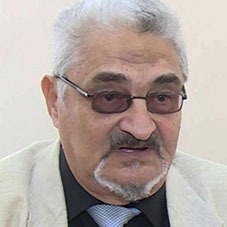
Editor's note: Moses Becker is a special commentator on political issues for News.Az, a PhD in political science and an expert on interethnic and interreligious relations. The article expresses the personal opinion of the author and may not coincide with the view of News.Az.
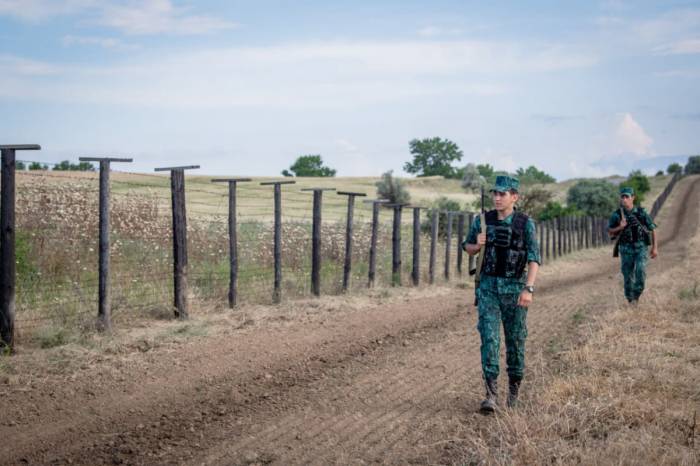
The issue of drug trafficking through Iran continues to be one of the major threats to the security not only of Azerbaijan but of the entire region. Despite Tehran's long-standing assurances of combating drugs, the reality seems to tell a different story. Iran not only fails to effectively shut down the smuggling routes but might even, whether deliberately or through negligence, be facilitating the spread of drugs across its borders. In light of recent events, it’s high time for Iran to reassess its strategy and priorities in fighting the illegal drug trade. Or are these “insufficient efforts” a deliberate policy?Since gaining independence in 1991, Azerbaijan has faced the challenging task of protecting its borders, particularly with its southern neighbors, through whose territories illegal goods and drugs have flowed for centuries. A crucial role in this process is played by the State Border Service of Azerbaijan, established on July 31, 2002, by a decree from President Heydar Aliyev. It vigilantly guards not only national interests but also the security of friendly nations.
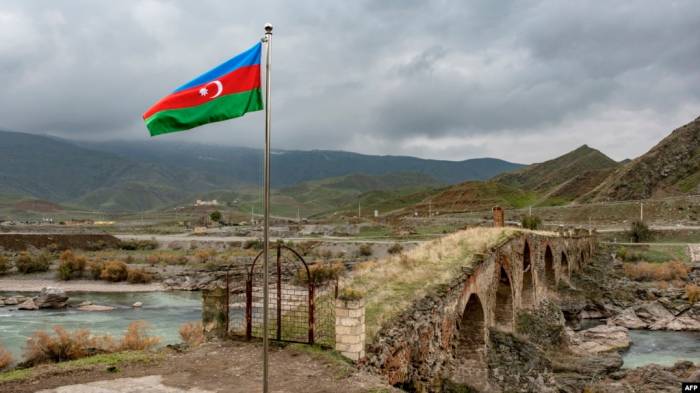
Notably, before the restoration of Azerbaijan's territorial integrity, the primary flow of drug trafficking passed through the occupied territories. This might explain Iran's pro-Armenian stance in the Karabakh conflict. For instance, in early 2023, Azerbaijani border guards seized a large shipment of drugs that criminals attempted to transport from Iran to Russia via Azerbaijan, hidden in a truck carrying vegetables.
In October 2023 , an incident occurred when two Iranian drug dealers, who opened fire on Azerbaijani border guards, were detained in the "Goytapa" border detachment section of the Border Service. The criminals ignored orders to stop and tried to flee, leading to a hand-to-hand struggle. More than 9 kg of narcotics were found on them.
On July 14, 2023, border guards from the "Goradiz" detachment thwarted an attempt to smuggle 54.7 kg of marijuana from Iran. In subsequent operations, guards from the "Goytapa" and "Goradiz" detachments prevented the import of an additional 21 kg of drugs. Additionally, on May 4, 2023, two sacks containing over 15.5 kg of drugs (including marijuana, heroin, and methamphetamine) and 1,500 Methadone M-40 tablets were found and seized on the "Goytapa" detachment’s territory.
During further operations in the "Goradiz" detachment area, a package containing over 5.5 kg of marijuana was seized. Investigations into these incidents are ongoing. By 2024, anti-drug trafficking efforts had resulted in the confiscation of 102 kg 250 g of narcotics and 1,265 psychotropic tablets.
Furthermore, as part of anti-smuggling efforts, goods valued at 1,130,696 manats, including ammunition, US dollars, and medicinal products, were seized. In September 2024, border guards seized 74.6 kg of narcotics and 44,195 psychotropic tablets. Smugglers continue to devise new ways to avoid detection, as demonstrated by the case of a drone spotted in the "Goradiz" border detachment area. The drone was carrying 19 kg 700 g of marijuana and 1,500 Methadone M-40 tablets.
A joint operation by police and border guards in the Imishli district led to the arrest of Samit Mammadov and his associate Hidayat Rashidov. Their vehicle contained 134 kg of marijuana, heroin, opium, and 1,000 methadone tablets. The suspects reported receiving the drugs from an Iranian citizen, whose identity is being established. It was revealed that Mammadov and Rashidov had organized smuggling operations from border areas to Baku.
A criminal case has been initiated, and the court has ordered their arrest. On October 9, the joint efforts of the Coast Guard and border patrol vessels prevented the smuggling of a large batch of tobacco products worth 330,000 manats. During search operations in the Caspian Sea, 85 suspicious packages were discovered, and in Lankaran, smugglers attempted to transport marijuana, opium, and methadone.
On the Azerbaijan-Iran border in the Lankaran district, the illegal import of a large consignment of narcotics from the Islamic Republic of Iran was thwarted. During a customs search, 34.69 kg of marijuana, 2.1 kg of opium, and 1,200 methadone tablets were found.
Recently, in the Jalilabad district of the Azerbaijan Republic, the illegal entry of two Iranian citizens attempting to transport 15 kg of marijuana was prevented. The identities and residences of the offenders were established.
On the grounds of the border post near the village of Arayatlı in the Fizuli district, a package containing 3 kg 340 g of a substance resembling marijuana and 1,796 tablets of the psychotropic drug "Methadone-40" was discovered.
In the "Goytapa" detachment area near the village of Samedabad in the Bilasuvar district, border guards recorded signs of a state border violation from the Iranian side. The post was immediately placed on alert, and the area was secured. During an inspection of the border zone, tracks belonging to a single border violator were found. Search and operational activities uncovered a package containing 5 kg 414 g of marijuana and 1,850 Gabaprel 300 tablets.
The inspection also seized 111,072 packs of various tobacco products without excise stamps worth approximately 330,000 manats.
It's time to ask the question: how much longer can Iran’s inability to combat drug trafficking be ignored? If drug transit through its territory doesn’t stop, it raises the suspicion that Tehran either cannot control the situation or is deliberately turning a blind eye. The reasons may vary: from corruption within its power structures to using drug trafficking as a tool of influence in the region. Frequent incidents at the Azerbaijan-Iran border, involving large drug shipments, have already become routine. But the issue isn’t just limited to border skirmishes. This problem is part of a larger picture where Iran attempts to balance between its role as a "fighter against drug trafficking" and actual complicity in this criminal business. Unless Tehran takes serious steps to halt these flows, one could argue that Iran’s interests may lie less in fighting crime and more in controlling illegal routes.
Iran must understand that such a double game only heightens tensions in the region and undermines the security of its neighbors. In light of all the international sanctions and economic difficulties, Iran should reflect on whether it’s worth risking its reputation and relationships with its neighbors for the dubious political and economic benefits obtained through drug trafficking.
(If you possess specialized knowledge and wish to contribute, please reach out to us at opinions@news.az).


Similar news