Ancient Silk Road city walls unearthed in Uzbekistan


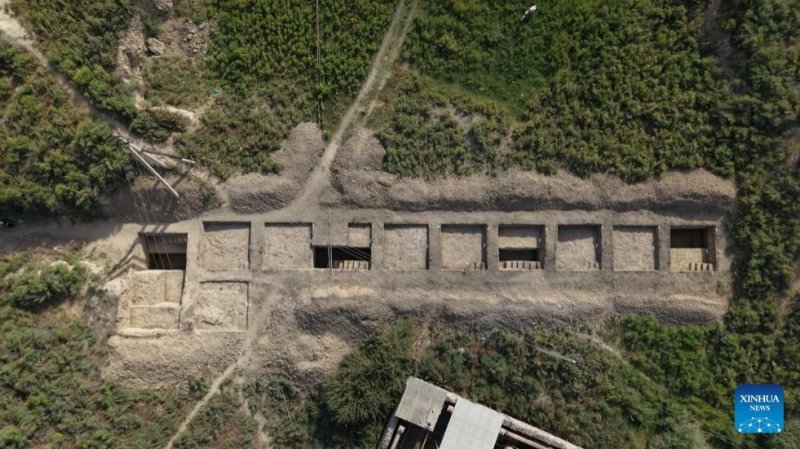
Chinese and Uzbek archaeologists have discovered ancient city walls at the site of Kuva in Uzbekistan, revealing new insights into a key hub of the Silk Road.
The walls, constructed and modified between the 3rd century BC and the 10th century AD, show the city’s long-term use and adaptability. The site, located in the Fergana Valley, spans roughly 110,000 square meters and was historically part of the ancient state of Dayuan, recorded by Chinese envoy Zhang Qian during the Han Dynasty (202 BC–220 AD), News.Az reports, citing foreign media.
A joint team from the Luoyang Institute of Archaeology (China) and Fergana State University (Uzbekistan) has been working at Kuva since 2023. They have uncovered palace remains, city gates, walls, house foundations, streets, and workshops, with 2025 excavations focusing on the northern gate and adjacent moat.
The team found that the walls were built using adobes and mud bricks, and underwent multiple modifications in layout and function, reflecting the city’s evolving roles over more than a millennium. According to Liu Bin, head of the Chinese team, the findings highlight the enduring vitality and complex functions of this Silk Road hub.
Further explorations of the palace complex revealed wall foundation trenches and a surrounding moat, providing key information to reconstruct the city’s overall layout. Liu added that systematic excavations are planned in 2026 to clarify the palace area and functional zones of the ancient city.
Archaeologists also recently discovered coins dating to the reign of Mengu-Timur in the Atyrau region, further enriching Central Asia’s historical record.


Similar news