G7 finance chiefs seek unity amid war-driven economic uncertainty


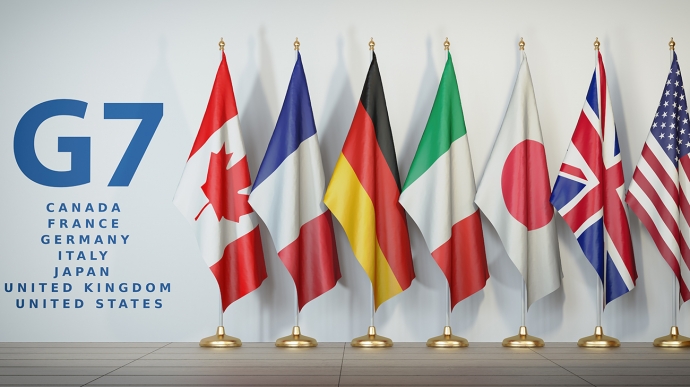
Finance chiefs from the Group of Seven (G7) industrialised nations are meeting in Paris on Monday for two days of talks aimed at building a united position as the Middle East war continues to disrupt global economic outlooks, News.Az reports, citing AFP.
France, which currently holds the rotating presidency of the G7, faces the challenge of maintaining dialogue amid trade tensions driven by U.S. President Donald Trump’s tariff policies, alongside rising geopolitical instability.
A key agenda item is reducing dependence on China’s dominance in rare earth materials, which are essential for technologies supporting the artificial intelligence boom that has helped drive recent global economic growth.
RECOMMENDED STORIES
“The way the global economy has developed over the past 10 years now is clearly not sustainable,” French Finance Minister Roland Lescure told reporters last week.
He pointed to concerns including the rising U.S. budget deficit, Europe’s weak technological innovation, and China’s economic imbalances, including overcapacity and efforts to expand exports.
“Multilateralism can work,” Lescure said, but added that “these discussions are not easy — I’m not going to tell you that we agree on everything, including obviously with our American friends.”
The confrontational and transactional approach of the Trump administration toward allies and rivals has added pressure on G7 unity, as members face the risk of both weak growth and rising inflation linked to the Middle East conflict.
German Finance Minister Lars Klingbeil said the G7 remains “the right framework” for discussions with the United States on ending the Iran-related conflict.
“This war is massively damaging economic development. That is why everything must be done to bring the war to a permanent end, to stabilise the region again, and to ensure free shipping lanes through the Strait of Hormuz,” he said.
Even agreeing on a shared assessment of global risks would be considered a success for France, which hopes the talks will result in two joint statements. A final press conference is scheduled for midday Tuesday.
Finance ministers from Kenya, Brazil, India, and South Korea have also been invited to Tuesday’s discussions to help prepare for the G7 summit in Evian, France, scheduled for June 15–17.
The meetings come after recent talks between U.S. President Donald Trump and Chinese President Xi Jinping failed to produce clear progress on tariffs or the Middle East conflict.
China continues to expand its influence in G7 economies while strengthening its position as a key supplier of raw materials and low-cost manufactured goods, increasing concerns about strategic dependence.
“Up to now, the problem of macroeconomic imbalances was addressed... with regards to global financial stability,” said Pierre Jaillet, a researcher at France’s Institute for International and Strategic Affairs (IRIS).
But he added that governments are now viewing these issues through the lens of “economic security,” focusing on vulnerabilities linked to critical minerals, energy supply, and potential disruptions to global supply chains.
The G7 aims to reduce reliance on any single country — particularly China — for rare earth supplies, Lescure said.
Energy security has also become a central concern due to the Middle East war.
“We must do for critical materials what we did with energy in the 1970s,” he said, calling for coordinated responses to future crises.
France is proposing a “common toolbox” to address disruptions in raw material markets, including strategic trade agreements and policy tools such as price floors, quotas, or tariffs.
It also supports “multilateral projects” to develop extraction and refining capacity, including a French-Japanese rare earths and magnets facility under construction in southwest France.
The French state has invested 106 million euros ($124 million) in the project, which aims to meet France’s domestic demand by 2030.
Officials also see development finance and investment partnerships with emerging economies as another way to strengthen supply chains and reduce dependency risks.
By Nijat Babayev


Similar news