How might Iran retaliate if attacked?


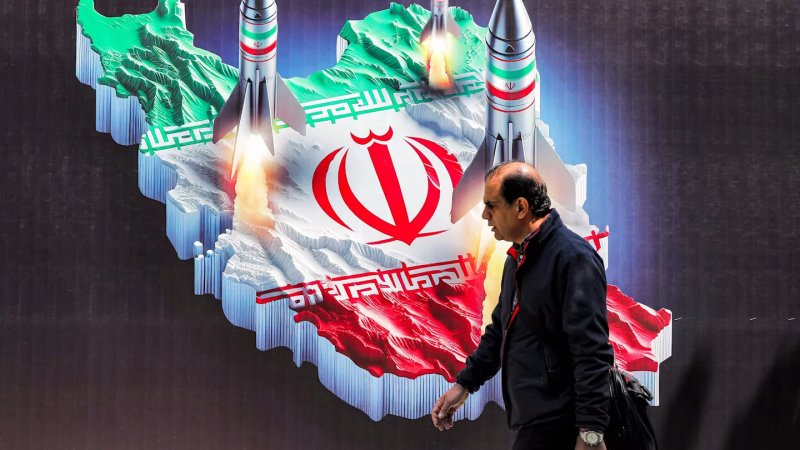
Any large scale attack on Iran by external powers would mark one of the most consequential military moments in the Middle East in decades, News.az reports.
Iran’s response would not be limited to a single battlefield or a short time frame. Instead, Tehran would likely activate a multi layered strategy designed to deter further strikes, impose costs on its adversaries, and reshape the regional balance of power.
Key takeaways
Iran’s response to a possible attack would be deliberate, multi dimensional, and strategically calculated.
Missile strikes would deliver direct retaliation and deterrent signaling. Hezbollah would serve as a powerful forward pressure tool, capable of opening a major front.
Proxy groups would extend Iran’s reach across the region, applying sustained asymmetric pressure.
Rather than choosing one option, Iran would likely blend all three, seeking to impose costs while avoiding uncontrollable escalation.
The result would be a complex, high risk confrontation with consequences far beyond the immediate battlefield.
Iran’s leadership has long argued that its security doctrine is based on deterrence rather than first strike warfare. However, deterrence in the Iranian context does not mean restraint. It means having the capacity to retaliate across several domains simultaneously. These domains include direct missile attacks, the mobilization of allied armed groups, and indirect pressure through proxy forces spread across the region.
This FAQ Explainer examines the main pathways Iran could pursue if attacked, focusing on three pillars of response: missile strikes, Hezbollah, and proxy groups operating across the Middle East.
Would Iran respond directly or indirectly?
Iran would likely do both.
Historically, Iran has preferred indirect responses that preserve deniability and reduce the risk of full scale war. However, in recent years Tehran has shown increasing willingness to engage in overt military action when it believes deterrence is at stake. A major attack on Iranian territory, particularly one targeting strategic infrastructure or leadership, would almost certainly trigger a direct response.
At the same time, Iran would seek to avoid isolation or total war by spreading retaliation across multiple fronts. This approach complicates enemy decision making and makes escalation harder to control.
Missile strikes
Does Iran have the capability to launch missile strikes?
Yes. Iran possesses one of the largest and most diverse missile arsenals in the Middle East.
Over several decades, Iran has invested heavily in ballistic and cruise missile development. This program is central to its defense doctrine, compensating for the limitations of its conventional air force. Iranian missiles vary in range, accuracy, and payload, allowing Tehran to strike targets both near and far.
Missiles are also politically significant. A missile strike provides a clear, visible signal of retaliation, demonstrating strength to domestic audiences and adversaries alike.
What targets could Iran strike with missiles?
Iran would likely prioritize targets that deliver strategic impact without automatically triggering a massive counter response.
Potential targets could include military bases, intelligence facilities, logistical hubs, and critical infrastructure linked to the attacking state. In a regional context, Iran might also target allied facilities of its adversaries, particularly those perceived as enabling or hosting attacks.
Rather than indiscriminate strikes, Iran would likely emphasize symbolic precision, choosing targets that underscore its reach and resolve.
How would missile strikes fit into Iran’s broader strategy?
Missile strikes would serve three purposes.
First, they would establish immediate retaliation, reinforcing the credibility of Iran’s deterrence posture.
Second, they would demonstrate Iran’s technological and military capabilities, signaling that further attacks would carry escalating costs.
Third, missile strikes could act as a gateway to further action, creating political and military pressure that Iran could later de escalate or intensify depending on the response it receives.
Would Iran risk a regional war through missile attacks?
Iran’s leadership is acutely aware of escalation risks. Missile strikes would likely be calibrated rather than maximalist. Tehran’s objective would not be total war, but controlled confrontation.
However, miscalculation remains a real danger. Even limited missile strikes could provoke broader retaliation, especially if they result in significant casualties or damage to sensitive sites.
Hezbollah
Why is Hezbollah central to Iran’s response options?
Hezbollah is Iran’s most powerful and strategically valuable non state ally.
Based in Lebanon, Hezbollah has evolved from a guerrilla movement into a highly organized military and political actor. It possesses a large arsenal of rockets and missiles, extensive combat experience, and deep integration into Lebanese society.
For Iran, Hezbollah represents a forward deterrent. Its presence near Israel creates a constant strategic pressure point, making it costly for Iran’s adversaries to contemplate strikes without considering the northern front.
Would Hezbollah automatically enter a conflict?
Not necessarily, but it would be a strong possibility.
Hezbollah’s leadership coordinates closely with Iran, but it also considers Lebanese political and social realities. The decision to engage in large scale conflict would depend on the severity of the attack on Iran and the broader regional context.
If Iran were directly and significantly attacked, Hezbollah would face intense pressure to act in solidarity, both to uphold its ideological commitments and to preserve its deterrent credibility.
What role could Hezbollah play militarily?
Hezbollah could open a sustained front through rocket and missile fire, targeting military installations and strategic infrastructure.
Unlike short range militant groups, Hezbollah possesses more advanced systems, including precision guided munitions. This capability allows it to threaten high value targets, significantly raising the stakes of any conflict.
Hezbollah could also conduct limited ground operations or asymmetric attacks designed to stretch enemy defenses and resources.
How does Hezbollah enhance Iran’s leverage?
Hezbollah allows Iran to project power without exposing its own territory to immediate retaliation.
By activating Hezbollah, Iran can impose costs on its adversaries indirectly, complicating their military planning and political calculations. This layered deterrence makes it harder for Iran’s opponents to respond decisively without risking a broader regional war.
What are the risks for Iran in using Hezbollah?
The primary risk is escalation.
A major Hezbollah offensive could trigger a devastating response against Lebanon, potentially weakening Hezbollah’s long term position and destabilizing a country already facing economic and political crises.
Iran would therefore weigh the immediate benefits of Hezbollah’s involvement against the potential long term costs to its most important regional ally.
Proxy groups in the region
Who are Iran’s regional proxy groups?
Iran maintains relationships with a network of armed groups across the Middle East. These groups vary in ideology, structure, and degree of Iranian control, but they share a common alignment against Iran’s adversaries.
They operate in countries such as Iraq, Syria, Yemen, and beyond. Some are deeply embedded in local political systems, while others function primarily as armed movements.
How would proxy groups be used in a response?
Proxy groups provide Iran with flexibility and deniability.
They could conduct attacks on military bases, supply routes, or maritime traffic linked to Iran’s adversaries. These actions would stretch defensive resources and create multiple pressure points without requiring Iran to claim direct responsibility.
Such operations can be scaled up or down, giving Iran options to signal resolve or pursue de escalation.
Why are proxy groups strategically valuable?
Proxy groups allow Iran to fight asymmetrically.
Rather than confronting superior conventional forces head on, Iran uses allied groups to impose costs over time. This approach exploits geographic depth, local grievances, and political complexity.
It also makes retaliation more complicated, as responding militarily against proxy groups often involves operating in fragile states with their own internal dynamics.
Could proxy actions spill into wider conflict?
Yes. Proxy operations carry inherent risks of escalation.
Attacks that cause significant casualties or disrupt critical infrastructure could provoke strong responses. Additionally, misattribution or miscalculation could draw regional actors into direct confrontation.
Iran would likely attempt to manage these risks by coordinating proxy actions carefully and maintaining channels of communication to signal intent.
How effective have proxy strategies been in the past?
Iran’s proxy strategy has generally succeeded in expanding its influence and deterring direct attacks.
However, this approach has also generated backlash, including sanctions, regional opposition, and periodic military clashes. Proxy warfare is effective in creating leverage, but it does not guarantee strategic stability.
Could Iran combine all three approaches?
Yes, and this is the most likely scenario.
Iran’s strength lies in its ability to integrate missile strikes, Hezbollah action, and proxy operations into a single, coherent response. Each element reinforces the others.
Missiles provide immediate, visible retaliation. Hezbollah raises the risk of a major regional front. Proxy groups apply sustained, distributed pressure across multiple theaters.
Together, these tools allow Iran to respond dynamically, adjusting intensity and scope based on how the situation evolves.
What role do politics and messaging play?
Military action would be accompanied by intense political messaging.
Iran would frame its response as defensive and justified, aimed at preserving sovereignty and regional stability. This narrative would be directed at domestic audiences, regional partners, and the international community.
Iran would also seek to portray its adversaries as destabilizing forces, attempting to shape diplomatic reactions and limit international support for further attacks.
How might Iran avoid total war?
Despite its willingness to retaliate, Iran has consistently signaled that it does not seek total war.
Tehran would likely leave pathways open for de escalation, using back channel communications and calibrated actions to signal limits. The goal would be to restore deterrence rather than achieve outright military victory.
However, once multiple fronts are active, controlling escalation becomes increasingly difficult.
How would this affect regional stability?
Any Iranian response would reverberate across the Middle East.
Energy markets, shipping routes, and fragile political systems would all be affected. Even limited confrontations could trigger economic shocks and humanitarian consequences.
This interconnectedness is precisely what gives Iran leverage, but it also raises the stakes for all involved.
By Faig Mahmudov


Similar news