Lana Ravandi-Fadai: Iran will expand response if pressured - INTERVIEW



Source: Reuters
It is also important to consider that the situation around the Strait of Hormuz is directly linked to the broader regional context, particularly ongoing Israeli strikes on Lebanon. From Iran’s perspective, this is not a separate theatre but part of a single conflict.
Tehran views pressure on its allies as a continuation of pressure on itself, meaning that any US actions in Hormuz overlap with existing escalation along proxy lines. This increases the risk that Iran’s response will not be limited to the strait itself, but could extend across the wider regional landscape.
Therefore, my forecast is as follows: in the short term, we are unlikely to see an immediate large-scale war, but rather a sharp intensification of pressure from both sides. For the US, this means attempts to show that the failure of negotiations will not go without consequences; for Iran, a demonstration that it is ready to endure the absence of a deal and will not negotiate from a position of weakness. After the breakdown of dialogue, a new phase has begun, centred on disputes over the maritime regime, and Iran has signalled that if pressure increases, it will broaden its response across the region.
The main reason for the failure is that the sides came to the talks with different objectives. The US sought to narrow the discussion to control over Iran’s nuclear programme and secure quick concessions that could be presented as a result. Iran, however, came to discuss not only the nuclear issue but the broader architecture of post-conflict de-escalation: Hormuz, sanctions, regional strikes, the role of allies, and the US presence. In other words, Washington was negotiating how to limit Iran, while Tehran was negotiating how to change the rules of the game in the region. In such circumstances, failure was almost inevitable.
As for future developments, I see three scenarios. The first, and most likely, is a prolonged phase of intense pressure without a complete breakdown of the ceasefire, with the sides exchanging threats, limited actions, and signals through intermediaries. The second is a partial diplomatic revival, if Pakistan or other mediators manage to bring the sides back to at least a limited technical agreement. The third, and most dangerous, is the collapse of the pause and a transition to renewed escalation around the Strait of Hormuz and regional infrastructure, particularly if the US attempts to forcibly alter navigation regimes and Iran interprets this as a de facto resumption of war. This is the scenario that currently concerns markets and regional capitals most.
Thus, the talks in Islamabad failed not because diplomacy is exhausted, but because the sides are still pursuing different visions of the future. What lies ahead is likely not peace, but a tense pause with a high risk of renewed escalation, especially around the Strait of Hormuz and Iran’s regional allies.
– The United States has stated that it is beginning a blockade of the Strait of Hormuz. What would this step give Washington?
– The US statement about a possible blockade of the Strait of Hormuz is less a classical military step and more an attempt to sharply increase pressure on Iran while reshaping the negotiation dynamics after the failure of dialogue in Islamabad.
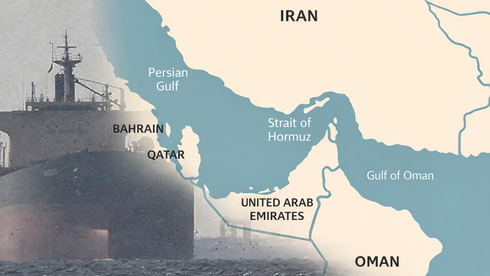
Formally, Washington is pursuing a clear objective: the Strait of Hormuz is a key artery of Iran’s economy, through which a significant portion of its oil exports passes. Control or restriction of navigation makes it possible to target Iran’s revenues, intensify the impact of sanctions, and demonstrate that the US retains coercive tools even if negotiations fail. In this sense, a blockade would be a continuation of pressure by other means.
However, at a deeper level, the Strait of Hormuz is not simply a point that can be “controlled”, but a space of mutual vulnerability. This is where the main risk for the US arises. Any attempt to forcibly restrict navigation would affect not only Iran but the entire region: oil supplies from Gulf countries, the interests of China and India, and global energy markets. In other words, this is a step whose consequences extend far beyond a bilateral conflict.
Source: Reuters
Moreover, such a blockade would be viewed as a form of economic warfare and would therefore invite a response. That response may not be symmetrical and may not be confined to the strait itself. It could involve expanded pressure across the region, targeting infrastructure and logistics, precisely because, for Iran, the Strait of Hormuz is part of a broader deterrence strategy.
In reality, this step would give the US not only a tool of pressure but also a serious challenge: it would sharply raise the cost of the conflict and reduce its manageability. This is why such statements often serve a signalling function as well – strengthening negotiating positions and demonstrating readiness for escalation without necessarily leading to immediate action.
– How is the Iranian opposition abroad reacting to the situation in Iran? How popular is it within Iranian society?
– The reaction of the Iranian opposition abroad to the current conflict is predictably harsh, but its influence within Iran remains significantly limited, and this is a key point that is often underestimated. Since the beginning of the escalation, a significant part of the émigré opposition has taken a strongly critical stance towards the Iranian authorities, in some cases even extending to indirect support for external pressure on Tehran. This applies both to the monarchist camp associated with Reza Pahlavi and to parts of the liberal diaspora. In their rhetoric, the current crisis is framed as a “window of opportunity” for systemic change.
However, inside the country such a position is perceived very negatively. Under conditions of external pressure, especially military pressure, Iranian society tends to consolidate around the state, even if serious internal contradictions existed beforehand. Historical experience shows that external threats sharply reduce the appeal of any force associated with outside actors.
This leads to a second important conclusion: the real popularity of the foreign-based opposition within Iran remains very limited. It has media visibility and is active internationally, but lacks a stable organisational base inside the country and, more importantly, public trust in wartime conditions. Moreover, even indirect support for external pressure undermines its legitimacy in the eyes of a significant part of the population, as it is seen as aligning with adversarial actions.
Thus, while the Iranian opposition abroad is vocal and visible, its influence inside the country is far more limited. The current conflict, contrary to the expectations of some émigré circles, is more likely to strengthen state consolidation than to create conditions for rapid political change.
– How could the war in the Middle East affect the positions of Türkiye and Azerbaijan?
– The war in the Middle East does not simply affect Türkiye and Azerbaijan; it places them in a position of complex strategic balancing, where any miscalculation could be costly. Both countries are not external observers but are deeply embedded in the regional system. They are connected to Iran geographically, economically, and politically, while also maintaining close relations with the West and Israel. This makes their position particularly sensitive.
As for Türkiye, it finds itself in an especially complex situation. On the one hand, Ankara traditionally advocates de-escalation and seeks to act as a mediator, in line with its recent foreign policy approach. On the other, it cannot ignore the intensification of conflict near its borders, which poses risks to security, energy, logistics, and internal stability. Turkish analytical discourse, including statements by the head of the National Intelligence Organisation (MIT), İbrahim Kalın, highlights the risk of deep regional fragmentation. Therefore, Türkiye is likely to act along three lines: maintaining diplomatic channels and mediating, avoiding direct involvement, and strengthening its own security and influence. In other words, not choosing sides, but managing risks.
As for Azerbaijan, its position is even more sensitive. It shares a long border with Iran, maintains close ties with Israel, and at the same time values its relationship with Iran. In Iranian analysis, Azerbaijan is seen as a potentially vulnerable direction, especially if the conflict expands.
Accordingly, Baku is likely to act with maximum caution: avoiding abrupt moves, preventing its territory from becoming a zone of confrontation, and maintaining a balance among its partners. In essence, the strategy is one of risk minimisation and stability preservation. For both Türkiye and Azerbaijan, this war is not an opportunity but a set of risks: the risk of being drawn in, the risk of economic shocks in energy and transport, and the risk of disrupting the regional balance.


Similar news