SpaceX set to launch its first-ever Starship V3 megarocket today


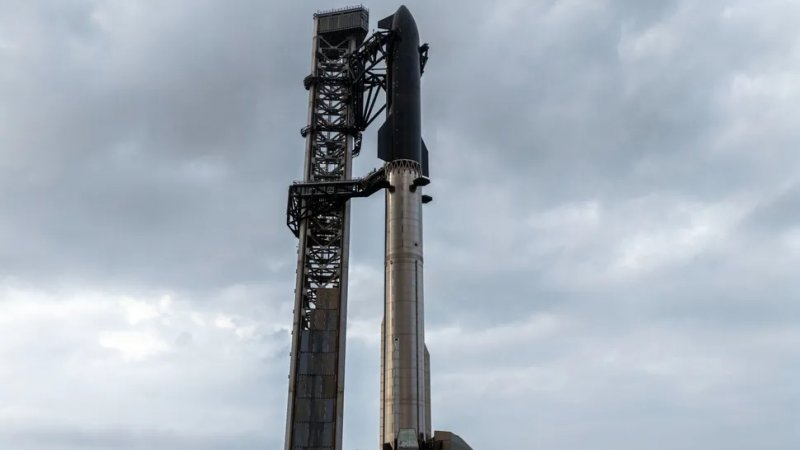
SpaceX is preparing to carry out the first-ever launch of its Starship V3 megarocket today, marking a major milestone flight with important implications for future deep-space exploration missions, including NASA’s Artemis programme and its planned lunar landings.
The Starship launch is scheduled for today (May 21) from SpaceX’s Starbase test facility in South Texas, News.Az reports, citing Space.com.
The launch window opens at 6:30 p.m. EDT (2230 GMT; 5:30 p.m. local time in Texas) and will remain open for 90 minutes.
SpaceX has stated that the event will be broadcast live, with additional updates expected throughout the countdown process and flight operations.
RECOMMENDED STORIES
This mission will represent the 12th overall flight of the Starship programme. In general terms, it will follow a similar profile to earlier test flights, involving a suborbital trajectory that concludes with controlled ocean splashdowns of both the Super Heavy booster and the Ship upper stage. However, the spacecraft being used in this flight is a significantly updated version, which SpaceX expects to deliver substantial improvements in performance.
The Starship V3, also known as Version 3, stands at approximately 408 feet (124 meters) tall, making it larger and more powerful than previous Starship configurations, which were already regarded as the largest and most powerful rockets ever built. This new version also introduces a series of major engineering upgrades.
One of the most significant changes is the introduction of the new V3 Raptor engines. The system consists of 33 engines on the Super Heavy booster and six engines on the Ship upper stage, providing increased thrust along with a more refined and efficient overall design compared to earlier versions.
The Super Heavy booster has also been modified, now featuring three grid fins instead of four. These grid fins are used to steer and stabilise the booster as it re-enters Earth’s atmosphere, allowing for controlled descent and recovery for reuse.
In another major design change, the “hot stage ring”—the structure connecting Super Heavy and Ship—has been permanently attached to the booster. This modification allows the component to be reused, whereas in previous versions it was discarded during flight. Starship uses a “hot staging” separation method, meaning the Ship upper stage ignites its engines before fully detaching from the Super Heavy booster.
SpaceX has also redesigned the fuel transfer system inside the Super Heavy booster. The fuel transfer tube, which channels propellant from the main tank to all 33 Raptor engines, has been “completely redesigned” and is now roughly comparable in size to a Falcon 9 first stage, according to the company. SpaceX says this redesign enables all 33 engines to ignite simultaneously and improves both the speed and reliability of in-flight manoeuvres.
The Ship upper stage has likewise undergone a “clean-sheet redesign” of its propulsion systems. According to SpaceX, these updates introduce a new Raptor engine startup sequence, increase propellant tank capacity, and improve the reaction control system used for steering during flight. The redesign also reduces enclosed spaces in the aft section of the vehicle where leaked propellant could potentially accumulate.
Further propulsion upgrades are also included to support longer-duration missions and to enhance control during extended periods in space.
The Ship’s payload deployment mechanism—often compared to a “PEZ-dispenser-like” system—has also been improved, enabling faster and more efficient release of payloads. During this mission, the Ship is expected to deploy 20 dummy Starlink satellites as well as two real Starlink satellites equipped with specialised cameras designed to observe and scan the Ship’s heat shield. In earlier test flights, Ship has typically deployed between eight and 10 dummy Starlink satellites.
This flight is intended to demonstrate a wide range of new capabilities. SpaceX notes that Ship V3 is designed for extended-duration missions and includes improvements such as upgraded reaction control systems, isolation valves for high-pressure gases, full vacuum jacketing of the header feed system, a high-voltage electrically actuated cryogenic recirculation system, and a dedicated system for managing cryogenic propellant behaviour around engines during long coasting phases in space.
By Nijat Babayev


Similar news