Weekly chronology of the Israel–Gaza war


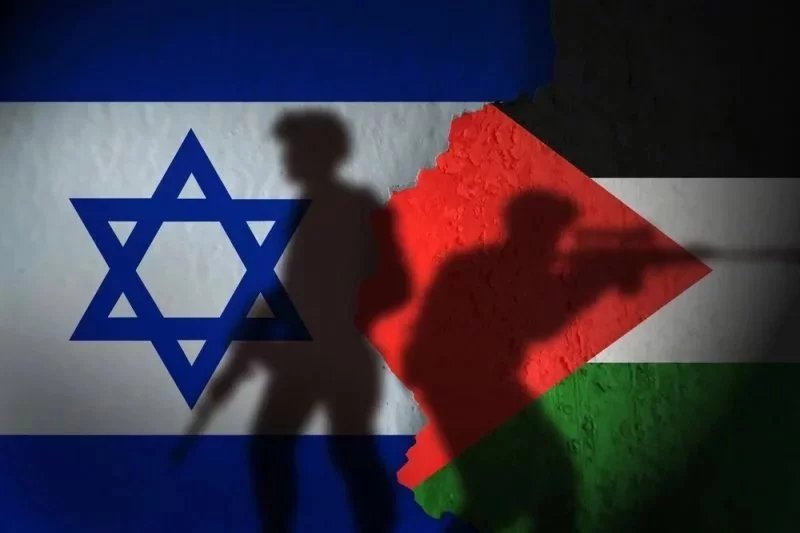
The last week of January saw the Israel–Gaza war remain defined by a familiar, difficult blend of limited military activity, heavy humanitarian strain, and diplomacy centered on what comes next after the current phase of arrangements on the ground, News.az reports.
While there was no single “turning point” day, the week featured several developments that shaped expectations for February: intensified political messaging in Israel around disarmament and demilitarization, renewed focus on who governs Gaza day to day, continued medical evacuations and aid constraints, and growing attention to border and crossing mechanisms that could determine whether civilians can move and whether humanitarian access can improve.
RECOMMENDED STORIES
Military activity remained present, but much of the week’s strategic significance came from signals about the next phase: questions of security control, enforcement of buffer areas, the future of armed groups, and the practicalities of implementing cross border movement under strict screening. Meanwhile, the humanitarian picture continued to be dominated by displacement, degraded services, and a medical system operating in chronic emergency conditions.
What follows is a day by day chronology of key themes from January 26 through February 1, 2026, written in a neutral news style and designed to be publication ready.
January 26, 2026 – Security operations and the humanitarian baseline
Monday opened with a contrast that has become typical in this war: security driven activity alongside a humanitarian system struggling to meet basic needs.
On the security track, Israeli forces continued targeted activity in and around parts of Gaza, framed as efforts to locate militants, disrupt infrastructure, and address what Israel describes as continuing threats. The operational tempo appeared lower than in peak combat periods, but the posture remained overtly military, with surveillance, intermittent strikes, and ground level searches still shaping civilian movement and access.
A key storyline on this date was the continuing focus on hostages and remains. Israeli military and political discourse remained heavily shaped by efforts to account for those missing since the 2023 attacks and subsequent fighting. Operational reporting and public discussion suggested ongoing forensic and search efforts in Gaza linked to this file, underlining how hostage related issues continue to influence both battlefield actions and negotiation dynamics.
The humanitarian baseline remained stark. Medical evacuation continued to function as a pressure valve for a health system that cannot adequately treat many conditions inside Gaza. Evacuation pathways, however, remained narrow and bureaucratically difficult, with large numbers of patients still waiting. The focus on children requiring urgent care illustrated both the scale of unmet need and the wider reality that war injuries are only part of the medical crisis, with chronic disease treatment, maternal health, and pediatric care all affected by damaged facilities, shortages, and restricted movement.
For civilians, the day’s practical reality was a continuation of the week’s theme: constrained mobility, a fragile supply of essentials, and constant uncertainty over what areas might see renewed strikes or tighter restrictions.
January 27, 2026 – Political messaging shifts toward disarmament and governance
Tuesday was notable less for dramatic battlefield change and more for a sharpened political line. Israeli leadership signaled an increased emphasis on disarmament and demilitarization of Gaza as core objectives for any next stage. The language used in public statements suggested that Israel wanted the international conversation to move from short term arrangements to longer term structural outcomes: preventing armed groups from reconstituting military capability, controlling weapons and tunnel networks, and ensuring Israel retains the ability to act against perceived threats.
This shift in emphasis also raised the question of what “day after” governance could look like in practice. If armed groups are pressured to disarm, who polices streets, manages public order, and provides basic municipal functions? That question is not theoretical. In many conflict zones, the line between governance and security is blurred, and Gaza’s institutions have been hollowed out by destruction, displacement, and political fragmentation.
On the Palestinian side, signals suggested a push to preserve some internal policing capacity, even amid talk of disarmament. That implied a potential future bargaining space where an armed movement might concede certain categories of weapons while seeking legitimacy or continuity through civil administration mechanisms. The week’s messaging hinted at the outlines of a possible trade: reduced military footprint in exchange for some form of internal order role, with external monitoring and strict constraints. Whether such a model is workable depends on verification, mutual confidence, and political buy in that has historically been difficult to achieve.
On the ground, civilians continued to experience the consequences of “buffer” logic. Restricted areas, informal lines of control, and uncertainty over what is considered a threat zone affected daily decisions about where people could live, farm, or travel. Even without a major kinetic escalation, these restrictions can be life shaping, forcing repeated displacement and limiting economic activity.
January 28, 2026 – Hostage remains, diplomacy pressure, and the next phase debate
Wednesday brought heightened attention to the hostage file after reports that Israel had recovered remains linked to the final missing hostage from a specific category of cases. Even when active combat is lower, hostage related developments can function like a political accelerant: they generate intense domestic emotion, create pressure for action or restraint, and can change the atmosphere of negotiations.
The significance went beyond symbolism. The movement of remains or hostages often marks a transition point between phases of ceasefire or security arrangements, because it can satisfy a key Israeli demand while unlocking the next diplomatic step. At the same time, such developments can provoke new disputes if either side claims violations, delays, or bad faith implementation.
This date also reinforced how the “next phase” debate is framed: Israel focused on preventing a return to conditions that enable renewed attacks, while mediators and humanitarian actors pushed for improved access, reconstruction pathways, and credible governance arrangements. In the background sat the key unresolved question: is there a credible mechanism that can both constrain armed actors and avoid creating a security vacuum that worsens lawlessness and humanitarian collapse?
Humanitarian conditions remained central. With large displacement, aid distribution is not merely about volume; it is also about security for convoys and safe access for civilians. Even when supplies enter, they do not automatically reach those in need. Movement restrictions, damaged roads, insecurity, and administrative obstacles can turn aid into a sporadic resource rather than a stable lifeline.
January 29, 2026 – Humanitarian access becomes a political battleground
Thursday’s dominant theme was access: who can deliver aid, where it can go, how quickly, and under what conditions.
International calls grew louder for safe, unhindered humanitarian expansion across Gaza and the wider occupied Palestinian territories. These calls often focus on practical bottlenecks: inspection processes, route approvals, security coordination, and predictable operating windows for aid agencies. The underlying argument is that even an improved flow through certain entry points can be undermined if distribution inside Gaza remains constrained or dangerous.
For Israel, access is inseparable from security. Israeli officials typically argue that any access system must prevent diversion of supplies to armed groups and reduce risks to Israeli forces and civilians. For humanitarian organizations, the immediate question is whether rules designed for security are calibrated in a way that still allows emergency response at the needed scale.
On the ground, civilian life remained shaped by scarcity and uncertainty. Families in displacement often face repeated tradeoffs: stay near an aid distribution point but risk overcrowding and insecurity, or move elsewhere and lose access to basic goods. The collapse of normal markets and employment compounds the problem. Even when people receive food parcels, the absence of stable water, sanitation, shelter materials, and medical care keeps the crisis acute.
Diplomatically, the day fit a pattern: urgent statements calling for humanitarian improvement, paired with limited progress toward a durable political settlement. That gap between declaratory diplomacy and on the ground reality has been one of the most persistent features of the conflict.
January 30, 2026 – Negotiations, fatigue, and the sustainability question
Friday’s storyline centered on sustainability, both in military terms and in political terms.
For Israel, sustaining a security posture around Gaza, maintaining readiness, and managing domestic expectations requires a credible narrative about what success looks like. The week’s messaging suggested that leaders wanted to define success not primarily as a single decisive battlefield victory, but as a structural outcome: Gaza demilitarized, armed threats reduced, and Israel retaining freedom of action.
For Palestinian civilians in Gaza, “sustainability” means something else entirely: whether life becomes livable again. That includes stable access to healthcare, functioning schools, predictable aid, and the ability to rebuild. The absence of a clear reconstruction pathway keeps the population trapped in a prolonged emergency.
Internationally, the question of sustainability intersects with alliance politics. External partners face competing pressures: to support Israel’s security priorities, to respond to humanitarian imperatives, and to avoid regional escalation. Over time, political fatigue can grow, not necessarily as a loss of sympathy but as a struggle to maintain unity on methods and end states.
This date also saw continued emphasis on the need for monitoring and enforcement mechanisms. Any arrangement involving disarmament, crossings, or governance requires verification. Without it, distrust dominates and each side assumes the other is exploiting pauses to regroup.
January 31, 2026 – Civil order, policing, and the “day after” puzzle
Saturday highlighted a practical issue that often gets overshadowed by battlefield headlines: civil order.
When a territory experiences prolonged war, the breakdown of policing and basic administration can become a crisis multiplier. Looting, localized violence, and the collapse of municipal services can deepen displacement and make aid delivery more dangerous. Discussions during the week suggested that any next stage for Gaza would need to address who provides policing, traffic control, protection of hospitals, and security for aid convoys.
This is where political negotiations collide with administrative reality. If Israel insists that armed groups must disarm, and if those groups still seek some role inside Gaza, a key contested space becomes “police versus militia.” A police force can be framed as a civilian institution, but in a highly militarized environment the distinction is hard to police, especially without external oversight.
Humanitarian pressure remained severe. Hospitals and clinics continued to face shortages and disrupted access. Families in makeshift shelters faced winter related challenges, including exposure to cold and illness. These conditions amplify the risk of disease spread and worsen outcomes for the injured and chronically ill.
The day underlined an uncomfortable truth: even if active fighting decreases, the humanitarian emergency can remain intense, because the destruction of systems takes far longer to reverse than the tempo of combat takes to change.
February 1, 2026 – Focus turns to crossings, movement, and what changes in February
Sunday closed the week with rising attention on cross border movement, particularly the prospect of expanded civilian passage through controlled crossings.
For Gaza, crossing arrangements are not merely logistical; they are politically charged symbols of whether Gaza is sealed off or connected to the outside world. Movement rules directly affect medical evacuations, family reunification, access to education abroad, and the ability of humanitarian actors to rotate staff. They also affect the political economy of Gaza, because restrictions on people often correlate with restrictions on goods.
Israeli thinking around crossings typically prioritizes screening and strict controls, arguing that security risks require robust checks. For Egypt and other mediators, the challenge is to make any crossing mechanism workable while preventing the process from collapsing under political disputes.
The week ended with a sense that February could bring a more explicit contest between two visions.
One vision prioritizes a security first framework: disarmament of armed groups, a monitored buffer posture, and limited controlled access, with reconstruction conditional on compliance.
The other vision prioritizes a humanitarian and governance first framework: rapid expansion of aid and movement, creation of a credible technocratic administration mechanism, and phased security arrangements designed to reduce violence while rebuilding civilian life.
In reality, any workable path likely requires elements of both. Security objectives without humanitarian stabilization risk perpetual crisis and radicalization. Humanitarian objectives without security enforcement risk collapse into renewed violence or lawlessness.
What this week reveals
The war is now as much administrative as it is military
This week showed that Gaza’s future is increasingly framed in administrative terms: who controls crossings, who provides policing, how aid is distributed, and what institutions replace what has been destroyed. These questions are often more difficult than battlefield tactics because they require political compromise, durable oversight, and legitimacy among a traumatized population.
Hostage and detainee dynamics remain the hinge
Hostage related developments continue to shape the pace and tone of the conflict. Even small shifts in that file can trigger diplomatic moves or political recalculations. It remains the key lever mediators try to use to translate temporary arrangements into more durable phases.
Humanitarian constraints are not only about quantity
The week reinforced that the central humanitarian problem is not solely how much aid enters, but whether it can be distributed safely and predictably. Access corridors, security guarantees for convoys, and the ability of civilians to move without fear often matter more than headline shipment numbers.
Political messaging is positioning for the next phase
Israel’s emphasis on disarmament and demilitarization suggests preparation for a negotiating posture in which reconstruction and easing of restrictions are explicitly tied to security outcomes. On the other side, pressures to preserve internal order mechanisms indicate attempts to retain influence in Gaza’s internal governance landscape, even if military capabilities face constraints.
Conclusion
From January 26 to February 1, 2026, the Israel–Gaza war remained locked in a tense balance: limited but persistent security activity, severe humanitarian strain, and a diplomatic track focused on what a “next phase” could realistically mean.
The week’s defining features were not a sudden escalation or a decisive battlefield breakthrough. Instead, the significance lay in the emerging shape of the argument about Gaza’s future: disarmament, governance, crossings, and the enforceable rules that would determine whether civilians experience a genuine change in daily life.
As February begins, the key question is whether political actors can convert this phase of discussions into practical improvements on the ground: safer access for aid, meaningful medical evacuation pathways, credible civil order arrangements, and a framework that reduces violence rather than simply freezing it until the next crisis.
If you want, I can also write a second version in the same format but with bold subheadings for each day’s five fixed categories (operations, casualties and damage, aid and access, talks and statements, what it means), so it reads like a strict newsroom log.
By Faig Mahmudov


Similar news