Alexander Leonov: The Ukraine war is entering its most dangerous phase -INTERVIEW


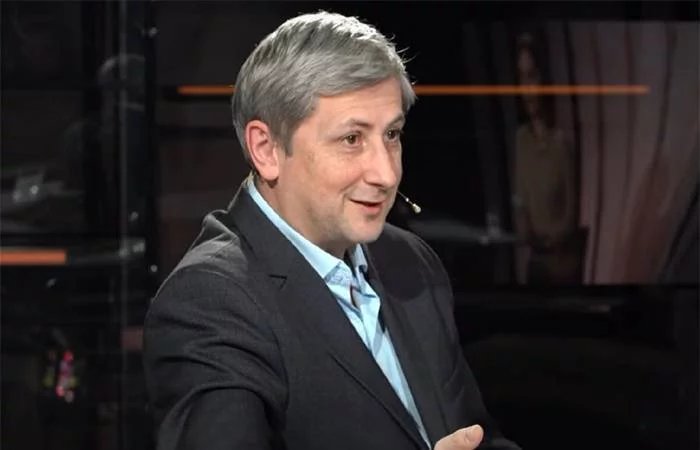
In an exclusive interview with News.Az, Alexander Leonov, Executive Director of the Center for Applied Political Research Penta and a Ukrainian political analyst, assesses the current operational situation along the front line, evaluates the balance of forces between Russia and Ukraine, and analyses the key military and political factors that could shape developments in the coming months.
Leonov also comments on the sustainability of Russia’s military campaign, Western arms supplies to Kyiv, and the strategic implications of sanctions and long-range weapons for the course of the war.
- How would you characterise the current operational situation along the front line? Which sectors are seeing the most intense fighting today?
- Today, the Russian army is achieving tactical successes in several sections of the front. However, the price it is paying for this advance is disproportionate to the gains achieved. According to some estimates, the situation is already developing in such a way that the Russian armed forces are losing more personnel per month than they are able to recruit.
RECOMMENDED STORIES
The heaviest fighting is taking place in the Donetsk and Zaporizhzhia sectors. Russian forces are advancing, but at the cost of extremely high losses. How long Russia will be able to sustain this pace, especially against the backdrop of a rapidly deteriorating economic situation in the country, remains an open question.
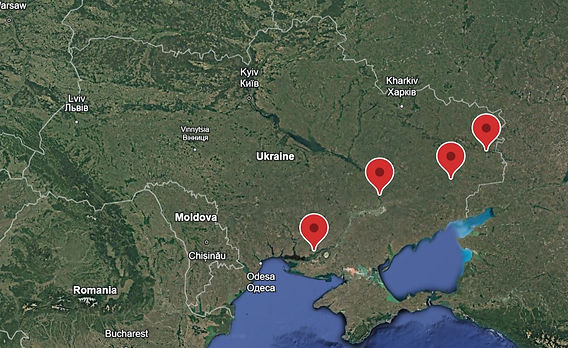
Source: wixstatic
From time to time, the Armed Forces of Ukraine conduct counterattacks and regain control over certain settlements. One illustrative example is Kupyansk, whose capture was claimed personally by Putin. Today, however, control over the city has largely been restored by Ukraine.
- Can we say that the strategic initiative currently belongs to one of the sides? If so, in whose favour is the balance of forces shifting, and due to what factors?
- I would rather describe the situation as one of strategic paralysis. At present, neither side is capable of achieving a strategic breakthrough in the war. Russia has already mobilised all available resources and can increase pressure only through the announcement of a new mobilisation. Putin refrained from taking this step even during the Armed Forces of Ukraine’s operation in the Kursk region, and it remains a major question whether he will dare to do so now, given that the Russian economy is showing signs of a systemic crisis.
By the way, the episode involving the shutdown of Starlink services for the Russian army demonstrates its critical dependence on Western technologies.
Ukraine, for its part, enjoys stable support from its allies but is still unable to fundamentally turn the tide on the battlefield. At the same time, strikes on Russia’s oil and gas sector have exposed its vulnerabilities. The appearance of domestically produced Ukrainian cruise or ballistic missiles could change the situation by exerting systemic pressure on the Russian economy. In addition, further sanctions against Russia’s shadow tanker fleet would significantly reduce the revenues Moscow uses to wage war at its current intensity and to plug gaps in the economy.
- How do you assess the current situation with arms and ammunition supplies to Ukraine? Are they sufficient to maintain the combat effectiveness of the Armed Forces of Ukraine at this stage of the war?
- As they say in Ukraine, there is never too much weaponry and ammunition. It is obvious that current supplies are insufficient, especially air defence missiles. However, the core problem is that increasing deliveries requires a significant expansion of production capacity — in Europe, in the United States, and in Ukraine itself.
/https%3A%2F%2Fengelsbergideas.com%2Fwp-content%2Fuploads%2F2022%2F10%2Fukraine-adaptation-winning-war-ptq7zwkph9vcwiytlwwm2ybwpzs2gdlqyn7a9zqxeg.jpg)
Source: Reuters
For example, Germany’s Rheinmetall is launching a new plant capable of producing 150,000 shells per year. A similar facility is planned to be built in Ukraine. All of this requires time.
- Do political debates and domestic political developments in Western countries affect the pace and volume of military assistance to Kyiv? How critical has this factor become?
- Undoubtedly, they do. One example is Hungary’s blocking of direct EU mechanisms for financing ammunition and weapons supplies to Ukraine. Nevertheless, Europe is finding ways to bypass these obstacles. The fact that funding of €90 billion for Ukraine has been secured for 2026–2027 is of strategic importance.
The United States has now largely lost the ability to exert direct pressure on Ukraine. It is not financing Ukraine’s economy and is providing almost no direct military assistance. American weapons for Ukraine are being purchased by Europe under the PURL programme. According to French President Emmanuel Macron, France currently provides about two-thirds of Ukraine’s intelligence data. Within two to three months, Europe will be able to fully cover all Ukrainian intelligence needs.
The United States has now largely lost the ability to exert direct pressure on Ukraine. It is not financing Ukraine’s economy and is providing almost no direct military assistance. American weapons for Ukraine are being purchased by Europe under the PURL programme. According to French President Emmanuel Macron, France currently provides about two-thirds of Ukraine’s intelligence data. Within two to three months, Europe will be able to fully cover all Ukrainian intelligence needs.
- What key military and political variables could have a decisive impact on the situation at the front in the coming months?
- There are several such factors. Most obviously, a qualitative intensification of mobilisation in Ukraine or the declaration of general mobilisation in Russia. All other factors are related to increasing sanctions pressure on Russia, which could lead to a collapse of its economy, and on its allies, with the aim of depriving Moscow of funds and access to critical dual-use components.
Another decisive factor would be Ukraine’s acquisition of long-range cruise missiles, such as American Tomahawks, JASSM, or German Taurus missiles.


Similar news