Azerbaijan to launch CIS’s largest battery energy storage systems
The largest battery energy storage system (BESS) facilities in the CIS region are set to be commissioned in Azerbaijan’s Absheron and Agdash districts in the coming months.
The announcement was made by Azerbaijan’s state power utility, Azerenerji OJSC.
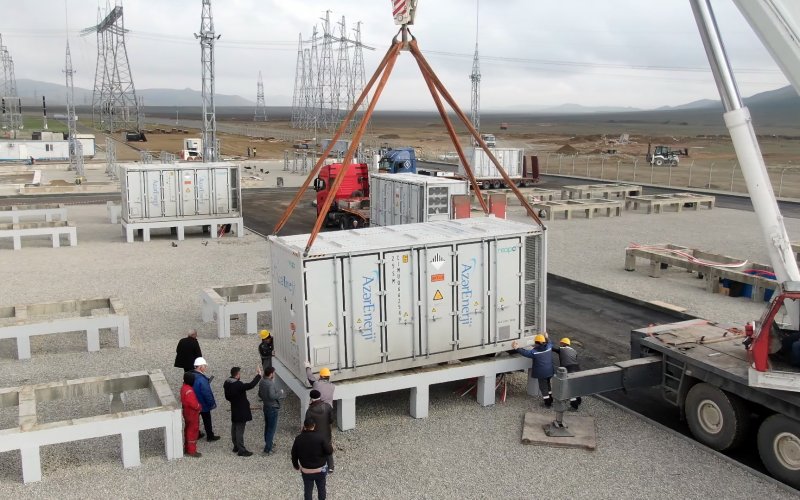
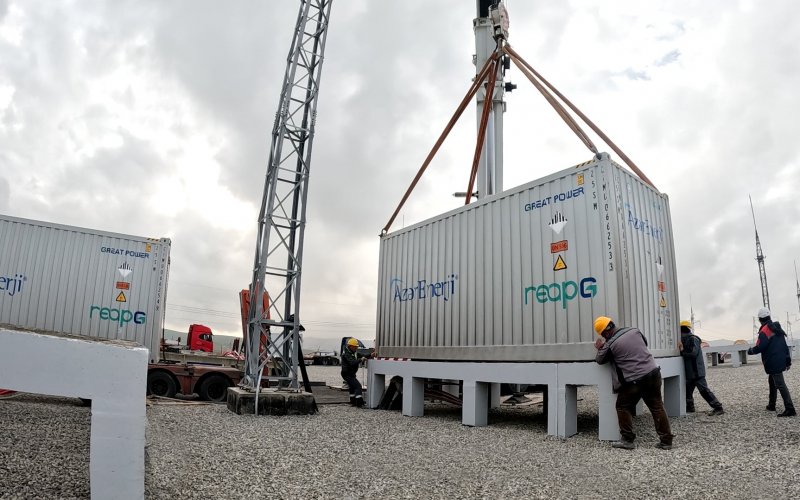
The systems are being installed at the Absheron 500-kilovolt and Agdash 220-kilovolt substations. Together, the two facilities will have a total power capacity of 250 megawatts and an energy storage capacity of 500 megawatt-hours. Projects of this scale are being implemented for the first time not only in Azerbaijan, but across the entire CIS region.
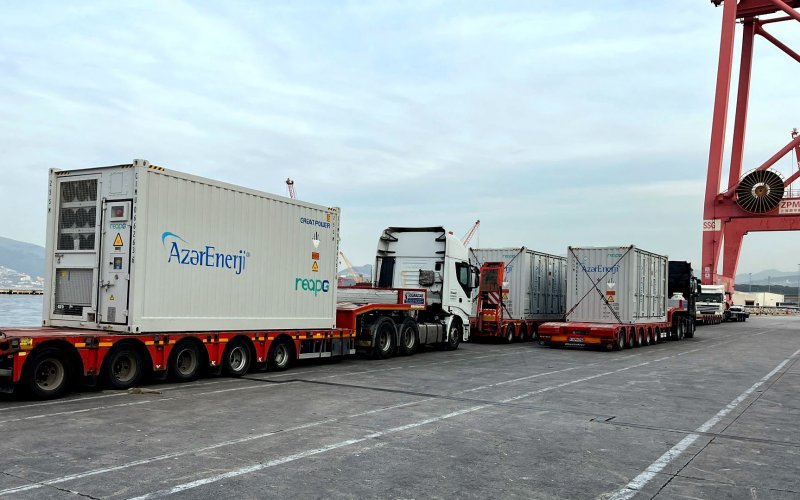
The first batch of equipment has already been delivered to Azerbaijan. The systems were ordered from Great Power Energy & Technology Co., Ltd., a Chinese manufacturer, with the remaining deliveries and installation expected to be completed by April.
Information about Azerbaijan’s BESS project first became public in early September. At the time, officials stressed that battery-based energy storage systems are critical for improving grid resilience, stabilizing frequency, reducing disruptions caused by intermittent renewable energy sources, compensating for power deficits, covering peak loads, smoothing post-sunset demand curves, and restoring the power system in emergency situations. The deployment of these systems is expected to strengthen Azerbaijan’s energy independence and ensure reliable grid operation both in synchronization with neighboring countries and in isolated mode.
Source: AzerEnergy
Earlier reports indicated that two storage systems with capacities of 125 MW / 250 MWh each would be integrated into the grid by the end of the year. A $90.5 million contract for their construction was signed with the Azerbaijani branch of the Turkish company YEO Elektrik Otomasyon. The company has been involved in roughly 70 percent of transformer substation construction projects in Azerbaijan and also cooperates with the country in renewable energy development.
Battery energy storage systems use rechargeable batteries — primarily lithium-ion — to store electricity generated from various sources, including solar and wind power, and supply it to the grid when needed. Such systems help ensure grid stability, provide backup power, balance loads, reduce peak demand, and support the integration of renewable energy sources.
Globally, BESS facilities are gaining traction as energy storage becomes a key component of energy security. These systems store electricity when supply is abundant or costs are low — such as during daylight hours for solar generation — and release it during periods of higher demand. Given the intermittent nature of solar and wind power, energy storage plays a vital role in maintaining uninterrupted electricity supplies for households, industry, and transport.
In May, a large-scale BESS with a capacity of 124 MW / 496.2 MWh was commissioned in the Bulgarian city of Lovech. Bulgaria’s Ministry of Energy described it as the largest battery energy storage facility in the European Union. The system has been integrated into the national grid to enhance stability and renewable energy integration. Meanwhile, some of Europe’s largest operating BESS projects are located in the United Kingdom, including the Thurrock Storage project, which has a capacity of 300 MW / 600 MWh.
In early December, Australia commissioned one of the world’s largest energy storage facilities — the Melbourne Renewable Energy Hub. The project has a storage capacity of 1.6 gigawatt-hours and a power output of 600 MW, sufficient to supply electricity to up to 200,000 homes during evening peak demand.
Source: AzerEnergy
In January this year, Saudi Arabia launched its largest energy storage system, with a capacity of 500 MW and 2,000 MWh, in the Asir Province. At the time, it was described as the world’s largest operating single-phase energy storage project. However, in November, China brought a 500 MW / 2,000 MWh facility into commercial operation in the Inner Mongolia Autonomous Region, making it the country’s largest new-type energy storage installation.
Saudi Arabia is nevertheless poised to remain among global leaders in energy storage. In February, the Saudi Electricity Company signed an agreement with BYD Energy Storage for the supply of systems totaling 12.5 GWh across five projects. The deal supports the Kingdom’s goal of generating 50 percent of its electricity from renewable sources by 2030. Once completed, the system is expected to become the largest energy storage project in the world, surpassing Australia’s facilities and exceeding — by four times — the capacity of the hybrid solar-storage complex launched in California in 2024, which has an installed capacity of about 3.287 GWh.
Most current energy storage systems rely on lithium-ion or lithium iron phosphate (LiFePO₄) batteries, which typically last 10 to 15 years and can withstand more than 6,000 charge-discharge cycles. However, Australian researchers have developed a promising alternative closer to commercial application: a next-generation sodium battery with a solid polymer electrolyte.
According to Vesti.Az, citing the Journal of the American Chemical Society, the new prototype is designed to reduce the risks of overheating and fire and is intended primarily for stationary energy storage at solar and wind facilities. Unlike conventional sodium batteries that use liquid electrolytes, the new design employs a rigid yet flexible block copolymer. One segment binds sodium ions effectively, while another fluorinated segment enables their smooth movement, preventing the formation of metallic dendrites that can cause short circuits and fires.
Laboratory tests showed that the battery retained more than 91 percent of its initial capacity after 1,000 rapid charge-discharge cycles at 80°C, with total operating time exceeding 5,000 hours.
Replacing scarce lithium with abundant sodium significantly lowers costs and makes the technology more accessible to countries without rare metal reserves. In addition, the cathodes contain neither cobalt nor nickel, easing supply chain pressures and reducing environmental risks.
The prototype was developed at the University of Queensland under the leadership of Dr. Cheng Zhang from the Australian Institute for Bioengineering and Nanotechnology (AIBN). Researchers say the technology could play a key role in advancing safer, more sustainable energy storage solutions.
As global energy demand rises and concerns over energy security intensify, large-scale deployment of energy storage systems is increasingly viewed as one of the most effective ways to ensure reliable and resilient power supplies worldwide.
By Tural Heybatov
News.Az