Digital slavery of the 21st century: How scam centers in Myanmar operate



Just ten years ago, international online fraud was widely perceived as the activity of scattered hacker groups or small criminal networks. Today, it has evolved into a large-scale transnational industry built on human trafficking, forced labour, and highly organised schemes of digital deception. One of the key hubs of this industry has become Myanmar, where, amid internal conflict and weakened state control, hundreds of so-called scam centres have emerged.
These compounds are closed territories where thousands of people are held against their will and forced to scam users around the world every day. The victims themselves often become part of the criminal machine, working under the constant threat of violence and with no realistic possibility of escape.
RECOMMENDED STORIES
Following the military coup in 2021, Myanmar descended into prolonged instability. Large parts of border regions effectively slipped out of the central government’s control and came under the influence of various armed groups. These territories proved to be an ideal environment for transnational criminal structures. Proximity to Thailand, well-developed illicit logistics networks, and entrenched corruption enabled criminal syndicates to establish real “fraud factories” in the region, targeting victims in China, Europe, Russia, Central Asia, and Latin America.
A scam center is not an ordinary office. Most are multi-story complexes or fenced-off districts with their own security forces. Inside are dormitories for detained workers, large halls filled with computers and phones, so-called training rooms, and punishment rooms. From the outside, such places may resemble business centers or residential compounds, but inside they operate under a harsh regime based on coercion.

Source: ABC News
One of the most notorious symbols of this industry is the city of Shwe Kokko. Officially promoted as an investment and tourism project, in reality a significant portion of its buildings is used to house scam centers. According to investigative journalism reports, thousands of people may be working simultaneously on fraudulent schemes there. The area is heavily guarded, and movement in and out is strictly controlled.
Another major cluster is located near the town of Myawaddy, where the KK Park complex operates. It is effectively an autonomous city with its own rules, security apparatus, and internal hierarchy. Former captives describe strict daily revenue quotas and constant video surveillance. Any form of disobedience is met with severe punishment.
Recruitment most often begins online through Facebook, Telegram, and other platforms. Potential victims are offered jobs as chat operators or support managers, salaries of $1,000–$3,000 per month, free airfare and accommodation, and no experience requirements. They are told the job is located in Thailand or Cambodia. After arrival, under the pretext of paperwork, they are transported across the border into Myanmar.
Once across the border, the person’s passport and phone are confiscated. They are informed of a “debt” for transportation and housing and told they must work it off. From that moment, any attempt to leave is treated as a violation punishable by force.
Newcomers are trained using standardized manuals that include romance scams, pseudo-investments in cryptocurrencies, fake trading platforms, and fake customer support services. A special role is played by the so-called “pig butchering” scheme — the long-term cultivation of trust before persuading the victim to invest large sums.
For refusal to work, low performance, or escape attempts, punishments include beatings, electric shocks, food deprivation, and solitary confinement. Fear becomes the primary tool of control.
If a person is deemed unprofitable, they may be sold to another scam center. Prices range from several thousand to tens of thousands of dollars. The so-called debt is wiped and then imposed again.
Victims most often include citizens of China and Southeast Asian countries, residents of Central Asia, Russians, Ukrainians, and people from Eastern Europe, and occasionally Western Europeans and Latin Americans. The common factor is job-seeking and trust in online offers.
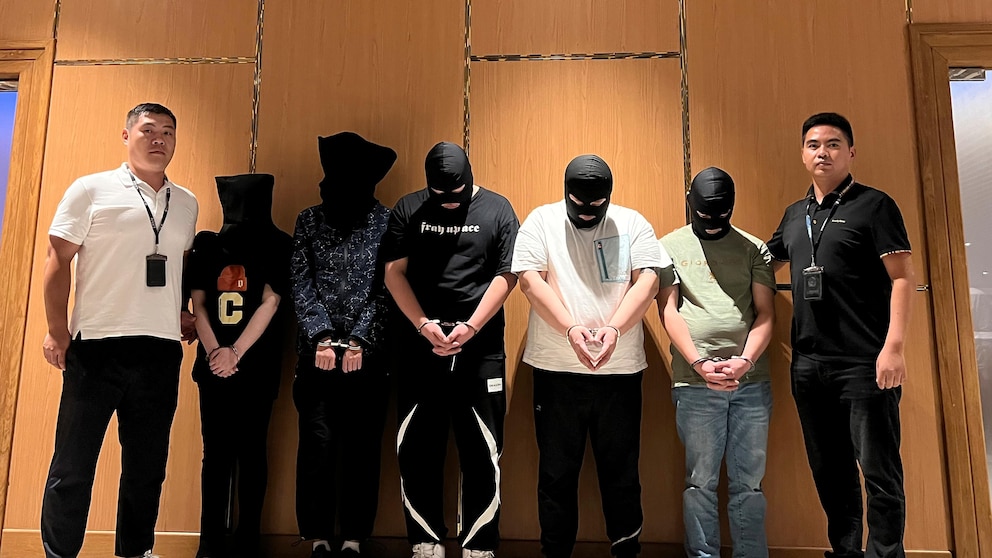
Despite the scale of the problem, some states have begun moving from declarations to tough practical measures. China, in particular, views scam networks linked to centers in Myanmar as a national security threat. In late January and early February 2026, Chinese authorities officially confirmed a series of executions of individuals identified as organizers and key participants in fraud networks operating from Myanmar’s border areas. A court in Shenzhen announced the carrying out of death sentences against four individuals convicted of creating and running criminal structures involved in online fraud, kidnappings, illegal gambling operations, and extortion. Investigators concluded that their activities led to the deaths of at least six Chinese citizens and caused damages exceeding 29 billion yuan, or approximately $4.2 billion.
Source: abcnewsfe
Chinese media also reported that at least eleven other individuals convicted earlier in similar cases had already been executed as part of a broader campaign against transnational fraud networks. At the same time, Beijing has intensified joint operations with Myanmar and other regional governments. Raids have resulted in the release of detained citizens, arrests of administrators, guards, and intermediaries, and the repatriation of thousands of Chinese nationals. Hundreds of criminal cases have been opened against recruiters and coordinators.
Myanmar authorities also periodically conduct raids in border areas, freeing hundreds of people and transferring some detainees to China. However, the effectiveness of these measures remains limited by the country’s internal conflict and fragmented territorial control.
Scam centers in Myanmar are not a regional anomaly but a key node in the global digital fraud industry. Their activities cause billions of dollars in financial losses, undermine trust in digital services, and fuel human trafficking. Every fraudulent message may be sent by someone who is themselves a captive.
To protect oneself, it is essential not to trust job offers with high salaries and no experience requirements, to verify companies through official registries, to avoid agreeing to urgent foreign travel initiated by strangers, and to never send money or personal documents to unknown individuals.
Scam centers in Myanmar represent one of the darkest sides of the digital age. Behind the façade of modern technology lies a system built on violence, fear, and exploitation. Understanding how this industry operates is the first step toward avoiding becoming its victim and depriving it of the space to exist.


Similar news