The battle for rare earths: How China left the U.S. far behind


China continues to dominate the mining and processing of rare earth elements, a reality that remains a major headache for the United States.
According to data published by Naked Science, based on figures from Benchmark Mineral Intelligence and the U.S. Geological Survey (USGS), global rare earth production volumes have undergone dramatic changes between 1994 and 2024. The accompanying infographics reveal a complete transformation of the rare earth industry. Over the past two decades, China has emerged as the undisputed leader, a position that now seems impossible to challenge.
In the 1990s, the United States held leading positions in the sector. The Mountain Pass mine in California supplied 20,000–22,000 tons of rare earth ore annually until 1997. Environmental protests and legal disputes over wastewater pollution led to its closure, and production only resumed in 2010. Eleven years later, it reached 46,000 tons, but by then, China had already surged far ahead. For several years, Beijing was even the main supplier of rare earths to the United States.
During this 30-year period, China increased its production tenfold: from 31,000 tons in 1994 to 270,000 tons in 2024. American analysts attribute this success to cheap labor, lenient environmental standards, and massive state investment. Whatever the reasons, the growing importance of rare earths to modern civilization has made Washington acutely aware of its strategic lag.
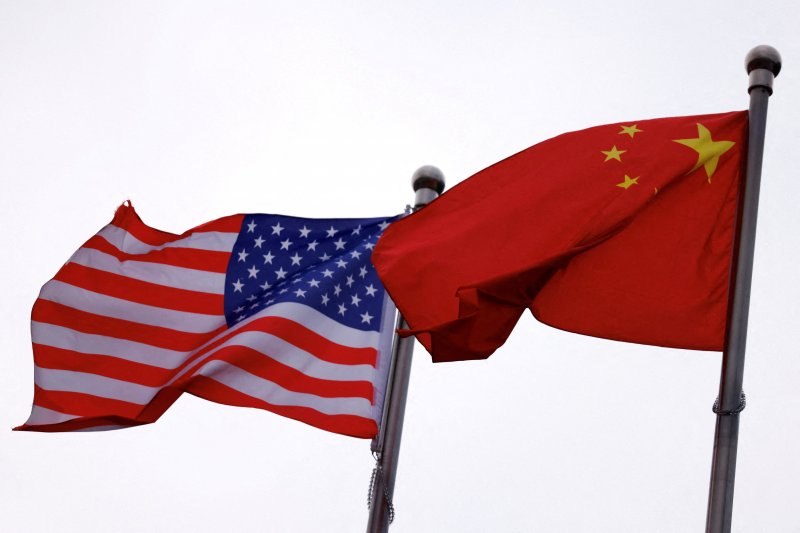 Photo: Reuters
Rare earth elements are classified as critical raw materials, and Western countries fear that Beijing could use them as a geopolitical weapon. Those fears are not unfounded: China has already leveraged its advantage in the ongoing trade war with Washington. The introduction of strict export controls on rare earth materials was one of the key factors that led Donald Trump to soften his stance toward Beijing. Initially determined to impose harsh sanctions, the White House eventually recognized that China held powerful retaliatory options.
Both gallium and germanium, essential for semiconductors, fiber optics, and advanced optics, are critical to U.S. and European industries. China supplies about 90% of global germanium and is the world’s only producer of gallium. It also controls around 60% of global lithium refining and 65% of cobalt processing.
Rare earth elements include 17 chemical components (scandium, yttrium, and 15 lanthanides) that share similar properties and are indispensable in modern technologies. Despite their name, these elements are not particularly rare, but their extraction and separation are technically complex and environmentally challenging. They are crucial for producing electronics, batteries, lasers, high-performance magnets, and military technology. Today, China holds the most advanced technologies for mining, separating, and purifying rare earth elements, and that, rather than cheap labor, is the true foundation of its dominance.
A global race for rare earth resources is now unfolding across Africa and Central Asia. Many countries have joined the search. Recently, Belarusian President Alexander Lukashenko instructed his government to begin exploring the republic’s own reserves of rare earths and other strategic minerals.
Central Asian nations have become the focal point of Western interest due to their vast untapped reserves. A summit between Donald Trump and Central Asian leaders is expected soon in Washington, where rare earth cooperation will likely top the agenda.
In April, Kazakh media reported the discovery of a major rare earth deposit in Karaganda, with potential reserves estimated at 20 million tons, potentially the third-largest in the world if further exploration confirms the findings. Notably, Astana announced the discovery just before the EU–Central Asia summit. The “New Kazakhstan” deposit reportedly contains nearly 1 million tons of cerium, lanthanum, neodymium, and yttrium - key components in smartphones, digital cameras, and computer hard drives.
Ukraine has also turned out to possess significant rare earth potential. These resources long went unnoticed until the new U.S. administration began showing interest. Ukraine holds 21 of the 30 substances defined by the European Union as critical raw materials, accounting for about 5% of the world’s reserves. However, no industrial-scale extraction has ever been developed. Rare earths there have only been obtained as by-products of other mining operations.
Africa, meanwhile, is considered the most promising frontier of the rare earth industry. The continent holds vast untapped reserves, but limited technological capacity prevents local economies from benefiting. Foreign companies are rapidly filling that gap.
In 2022, Canadian exploration firm Mkango Resources announced that its Songwe Hill rare earth mine in Malawi is expected to begin production in 2025. Australian company Bannerman Energy acquired 41.8% of Namibia Critical Metals, which owns 95% of operations at the Lofdal heavy rare earth mine. The site produces 2,000 tons of rare earth oxides annually and boasts rich deposits of two of the most valuable heavy rare earths - dysprosium and terbium, according to Naked Science.
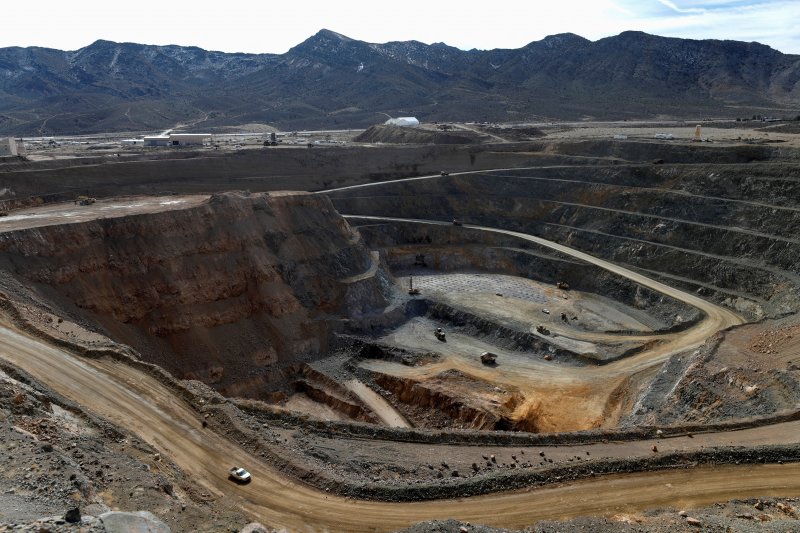 Photo: Reuters
The Steenkampskraal mine in South Africa holds one of the world’s highest concentrations of rare earths: 86,900 tons of rare earth oxides across 15 elements, including substantial deposits of neodymium and praseodymium.
In 2020, the Angolan subsidiary of British firm Pensana Rare Earths obtained exclusive 35-year rights to develop the Longonjo mine.
In February 2022, the European Union launched a €150 billion “Africa–Europe” investment program officially aimed at infrastructure development, though experts believe much of the funding will go into mining projects.
At a late-October summit in Busan, U.S. and Chinese leaders reached a tentative truce in their trade war. Beijing agreed to lift excessive export restrictions on rare earths in exchange for Washington’s decision to halt its tariff escalation.
It is increasingly evident that rare earth metals are gradually replacing oil as the world’s most critical resource, especially for Europe, which once depended on energy imports but now faces a new era of strategic dependency.
By Tural Heybatov


Similar news